https://www.profitableratecpm.com/shc711j7ic?key=ff7159c55aa2fea5a5e4cdda1135ce92 Best Information at Shuksgyan

Pages

Friday, April 3, 2026

India’s Strategy Against Pakistani Terrorism & the POK Question

India’s Strategy Against Pakistani Terrorism & the POK Question
Modi Government's War on Terror: India's Strategy Against Pakistani Terrorism & the POK Question
Modi Government's War on Terror: India's Strategy Against Pakistani Terrorism & the POK Question

By Col. Rajendra Shukla (Retd.)  |  April 3, 2026  |  Defence & National Security

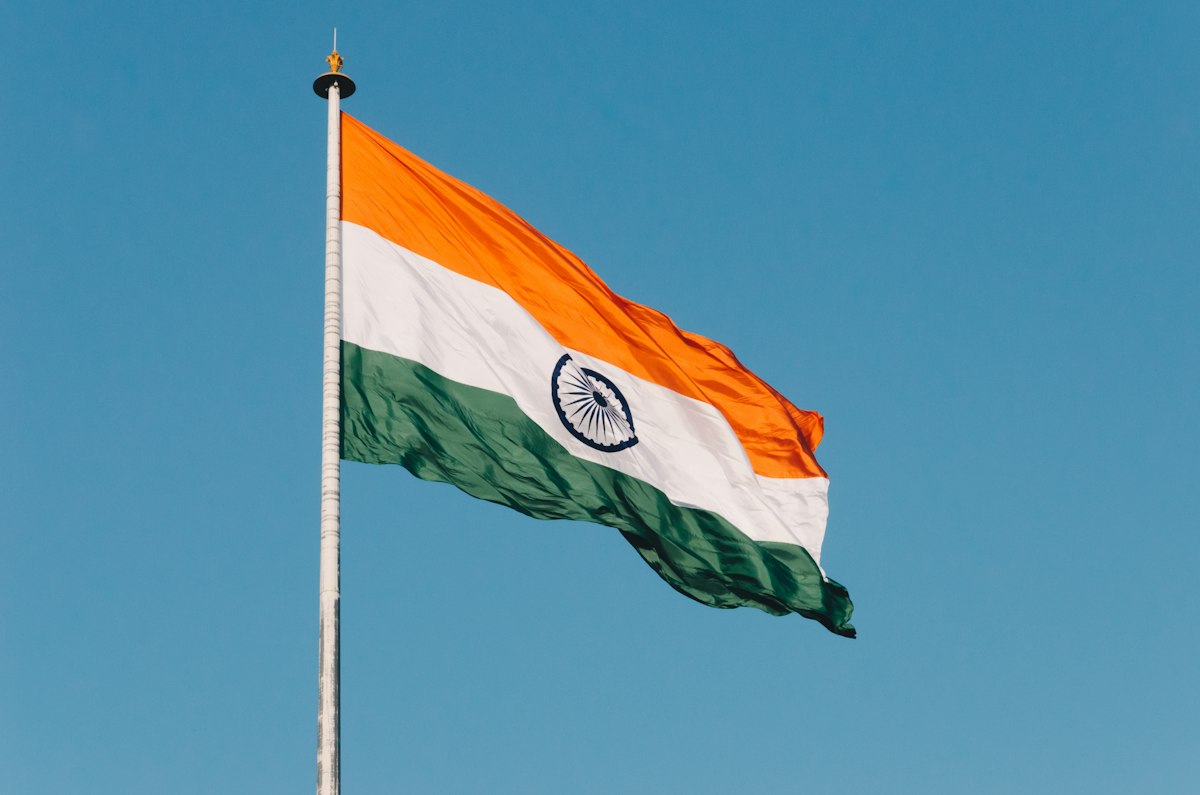
Indian national flag — symbol of India's resolve against terrorism
India's resolve against cross-border terrorism has hardened decisively under the Modi government. (Representative image – Unsplash)

India's battle against cross-border terrorism, particularly the threat emanating from Pakistan-based terror outfits, has entered a decisive new chapter under Prime Minister Narendra Modi. With a series of bold policy shifts, military modernisation drives, and diplomatic offensives, the Modi government has signalled that New Delhi will no longer absorb terror strikes passively. This comprehensive analysis examines the government's multi-pronged counter-terrorism strategy, the surgical precision of India's retaliatory posture, and the simmering strategic debate around Pakistan-Occupied Kashmir (POK).

The Persistent Threat: Pakistan-Backed Terror Networks in India

For over three decades, India has faced a relentless campaign of cross-border terrorism, orchestrated by Pakistan-based organisations such as Lashkar-e-Taiba (LeT), Jaish-e-Mohammed (JeM), and Hizbul Mujahideen. These groups operate with visible impunity from Pakistani soil, enjoy covert support from elements within Pakistan's Inter-Services Intelligence (ISI), and continue to funnel armed militants, weapons, and funds across the Line of Control (LoC) into Jammu & Kashmir.

Key incidents that define the security landscape include the 2016 Uri attack (18 Indian Army personnel killed), the 2019 Pulwama bombing (40 CRPF jawans martyred), and numerous fidayeen attacks on security camps. Each was subsequently linked to JeM — headquartered in Bahawalpur, Pakistan — with New Delhi presenting irrefutable dossiers to the international community. Yet Pakistan has consistently denied state complicity, shielding terror masterminds behind a veneer of sovereign deniability.

The Modi Doctrine: Zero Tolerance and Strategic Deterrence

Strategic national security planning — India's new defence doctrine
India's counter-terrorism strategy has evolved to embrace proactive deterrence and precision strike capability. (Representative image – Unsplash)

When Prime Minister Modi assumed office in May 2014, he inherited a defence establishment still operating under a doctrine of strategic restraint — absorbing terrorist provocations without crossing the international border. By 2016, that doctrine had been fundamentally rewritten.

1. Surgical Strikes (2016): Crossing the Rubicon

In the early hours of September 29, 2016 — eleven days after the Uri attack — Indian Army Special Forces conducted cross-LoC surgical strikes on seven terror launch pads in Pakistan-Occupied Kashmir. This was the first time India had officially acknowledged and publicly declared an offensive military operation across the LoC. The strikes shattered the long-standing Pakistani narrative that nuclear deterrence protects its terror infrastructure and permanently reset India's escalation threshold in the minds of military planners and terror financiers in Rawalpindi.

2. Balakot Airstrike (2019): Taking the Fight Into Pakistan Proper

Following the Pulwama massacre of February 14, 2019, the Modi government crossed an even more significant threshold. On February 26, 2019, Indian Air Force Mirage-2000 jets struck a Jaish-e-Mohammed training facility in Balakot — located not in POK but in Pakistan's Khyber Pakhtunkhwa province. This was the first Indian air strike inside undisputed Pakistani territory since the 1971 war — a monumental departure from decades of restraint, signalling a permanent shift in India's red lines.

Current Planning: India's Counter-Terrorism Framework (2024–2026)

Advanced military surveillance and drone technology — India defence modernisation
India's defence modernisation encompasses advanced surveillance, drone warfare, and precision-strike systems. (Representative image – Unsplash)

The Modi government's current counter-terrorism architecture rests on five interlocking pillars:

Pillar I: Intelligence Grid Overhaul

The NTRO, IB, and RAW have received expanded mandates, enhanced budgets, and significantly upgraded technical surveillance infrastructure — including satellite imagery, signals intelligence (SIGINT), and human intelligence (HUMINT) assets deep inside Pakistani territory and POK. The Multi-Agency Centre (MAC) has been streamlined to enable real-time intelligence sharing between the Army, paramilitary forces, state police, and central agencies — resulting in multiple high-value terror modules being neutralised before executing attacks.

Pillar II: Kinetic Operations — Grid Deployment in J&K

On the ground in J&K, the Army and CRPF have adopted an aggressive "grid pattern" deployment, eliminating safe havens and reducing infiltration corridors. Rashtriya Rifles battalions have been restructured with drone-fed real-time targeting and night-fighting capabilities. Militant casualties have risen while security force casualties have simultaneously declined — a testament to improved tactical intelligence and precision operations.

Pillar III: Diplomatic Isolation of Pakistan

India lobbied successfully for Pakistan's placement on the FATF grey list (2018–2022), crippling Pakistan's access to international capital markets. India also pushed for the UNSC designation of JeM chief Masood Azhar as a global terrorist — achieved in May 2019 after a decade-long diplomatic campaign that finally overcame China's repeated vetoes at the Security Council.

Pillar IV: Smart Border Management

The Comprehensive Integrated Border Management System (CIBMS) and Smart Fence Project (SFP) along the LoC represent a technological leap in border security. Laser fencing, thermal imaging sensors, ground-vibration sensors, and drone surveillance have made infiltration exponentially more difficult and costly for terrorist organisations.

Pillar V: Revocation of Article 370 — J&K's Constitutional Transformation

The abrogation of Article 370 on August 5, 2019 fundamentally altered the administrative and political landscape of J&K, bifurcating it into two Union Territories. As of 2026, J&K has conducted its first state assembly elections since 2014 — signalling democratic normalcy and undermining the Pakistan-sponsored narrative of Kashmiri alienation from India.

The POK Question: Strategic Debate and India's Position

Kashmir mountains — the strategic terrain of POK and J&K
The Line of Control divides the Kashmir region between Indian-administered J&K and Pakistan-Occupied Kashmir (POK). (Representative image – Unsplash)

Pakistan-Occupied Kashmir (POK) — spanning approximately 13,297 sq km — has been under Pakistani control since 1947. India considers it an integral part of its territory illegally occupied by Pakistan. Home Minister Amit Shah's statement that any discussion on J&K includes POK, and Defence Minister Rajnath Singh's declaration that "POK is ours and will remain ours," have significantly raised the political temperature on this issue.

India's Official Position: Firm but Strategically Calibrated

India's current posture is one of maintaining strategic ambiguity — keeping Pakistan guessing about India's red lines — while demonstrating the military capability and political will to act when provoked. There is no credible, publicly disclosed evidence of an imminent military plan to forcibly reclaim POK, but the strategic intent is unmistakably clear and being backed by rapidly growing capability.

Strategic Constraints on a POK Military Campaign

Both India and Pakistan are nuclear-armed states. Pakistan's "Full Spectrum Deterrence" doctrine suggests a lower nuclear threshold than publicly acknowledged. Moreover, China's stakes in POK — through CPEC infrastructure, the Karakoram Highway, and energy projects — introduce a third actor into any military calculus, requiring India to simultaneously manage pressure on two fronts (LoC and LAC) — a complex two-front strategic challenge.

Building Military Capability: India's Defence Modernisation

India is methodically building real military options. The Mountain Strike Corps (17 Corps) is designed for offensive operations in high-altitude terrain. The Cold Start Doctrine's Integrated Battle Groups (IBGs) enable rapid, shallow thrusts below Pakistan's nuclear threshold. The IAF's Rafale jets with SCALP cruise missiles provide precision deep-strike capability. The induction of 30 armed MQ-9B Predator drones from the US (approved 2023) adds persistent surveillance and strike capability along the entire LoC.

Geopolitical Leverage: The Indus Waters Treaty Suspension

Following the Pahalgam terror attack in April 2025, India took the unprecedented step of suspending the Indus Waters Treaty (IWT) of 1960 — a treaty that had survived three wars. India also closed the Wagah-Attari border crossing, suspended the SAARC Visa Exemption Scheme for Pakistani nationals, and downgraded diplomatic relations. These measures apply maximum coercive pressure on Pakistan's crisis-ridden economy without triggering the military escalation that nuclear deterrence constrains — a sophisticated application of calibrated statecraft.

Internal Security: NIA, UAPA, and Counter-Radicalisation

The National Investigation Agency (NIA) has been empowered under the 2019 NIA Act amendment, granting jurisdiction over crimes involving Indian citizens committed abroad. The NIA has systematically dismantled LeT and JeM funding channels operating through hawala networks, fake currency distribution, and narco-terrorism routes. The strengthened UAPA enables designation of individuals (not just organisations) as terrorists — targeting the financial and logistical backbone of terror ecosystems operating inside India. Counter-radicalisation programmes in J&K and fast-tracked infrastructure development complete the soft-power dimension of the strategy.

Strategic Assessment: India's Trajectory in 2026

Strategic analysis and planning — India's national security calculus
India's strategic calculus in 2026 balances military capability, diplomatic leverage, and economic coercion into a coherent national security doctrine. (Representative image – Unsplash)

India's counter-terrorism strategy under the Modi government represents a fundamental paradigm shift: from strategic restraint to calibrated, proactive deterrence. The building blocks — military modernisation, intelligence overhaul, diplomatic isolation of Pakistan, economic coercion, and the political transformation of J&K — collectively signal an India that is no longer willing to accept terrorism as a cost of doing business with its western neighbour.

On POK, India's position is one of stated intent backed by rapidly growing capability, combined with strategic patience. The conditions for a military reclamation of POK remain extraordinarily complex — nuclear, diplomatic, and geographic constraints are real. But the Modi government has moved the goalposts: POK is no longer a frozen status-quo issue. It is an active political and military objective being pursued across multiple timescales and instruments of national power.

For Pakistan, the strategic calculus has become increasingly unfavourable — a chronic economic crisis, a historic diplomatic low, a nuclear trump card increasingly offset by India's own triad and conventional military superiority, and a primary benefactor (China) facing its own strategic pressures. The variables that for decades allowed Pakistan to "bleed India through a thousand cuts" are rapidly converging against Islamabad's interests.

Conclusion: The New Normal in India's Counter-Terror Posture

India's war on terrorism has entered its most assertive phase. The old rules no longer apply. India will strike back with precision and intent. It will pursue diplomatic and economic isolation of Pakistan alongside military deterrence. And it will keep the POK question firmly on the agenda until a final resolution consistent with India's constitutional position is achieved.

The question is not whether India will act — but when, how, and under what strategic circumstances the conditions will align to translate declared intent into decisive, irreversible action.


Colonel Rajendra Shukla (Retd.) is a veteran of the Indian Army with extensive experience in counter-insurgency operations in Jammu & Kashmir. He writes on defence, national security, and geopolitics for Colonel Shukla — Defence · Geopolitics · Strategy.
Tags: Modi Government · Counter-Terrorism · Pakistan · Pakistani Terrorism · India Security · POK · Pakistan Occupied Kashmir · Indian Army · Surgical Strikes · Balakot · Jammu and Kashmir · NIA · UAPA · Indian Defence · National Security · Line of Control · Indus Waters Treaty · Article 370

via Blogger https://ift.tt/q73Z9tI
April 3, 2026 at 01:14PM
via Blogger https://ift.tt/76VWhm9
April 3, 2026 at 02:13PM
via Blogger https://ift.tt/fY2ovOt
April 3, 2026 at 03:13PM
via Blogger https://ift.tt/StUub6y
April 3, 2026 at 04:13PM
via Blogger https://ift.tt/RhLExZk
April 3, 2026 at 05:13PM

India’s Strategy Against Pakistani Terrorism & the POK Question

India’s Strategy Against Pakistani Terrorism & the POK Question
Modi Government's War on Terror: India's Strategy Against Pakistani Terrorism & the POK Question

Modi Government's War on Terror: India's Strategy Against Pakistani Terrorism & the POK Question

By Col. Rajendra Shukla (Retd.)  |  April 3, 2026  |  Defence & National Security

Indian national flag — symbol of India's resolve against terrorism
India's resolve against cross-border terrorism has hardened decisively under the Modi government. (Representative image – Unsplash)

India's battle against cross-border terrorism, particularly the threat emanating from Pakistan-based terror outfits, has entered a decisive new chapter under Prime Minister Narendra Modi. With a series of bold policy shifts, military modernisation drives, and diplomatic offensives, the Modi government has signalled that New Delhi will no longer absorb terror strikes passively. This comprehensive analysis examines the government's multi-pronged counter-terrorism strategy, the surgical precision of India's retaliatory posture, and the simmering strategic debate around Pakistan-Occupied Kashmir (POK).

The Persistent Threat: Pakistan-Backed Terror Networks in India

For over three decades, India has faced a relentless campaign of cross-border terrorism, orchestrated by Pakistan-based organisations such as Lashkar-e-Taiba (LeT), Jaish-e-Mohammed (JeM), and Hizbul Mujahideen. These groups operate with visible impunity from Pakistani soil, enjoy covert support from elements within Pakistan's Inter-Services Intelligence (ISI), and continue to funnel armed militants, weapons, and funds across the Line of Control (LoC) into Jammu & Kashmir.

Key incidents that define the security landscape include the 2016 Uri attack (18 Indian Army personnel killed), the 2019 Pulwama bombing (40 CRPF jawans martyred), and numerous fidayeen attacks on security camps. Each was subsequently linked to JeM — headquartered in Bahawalpur, Pakistan — with New Delhi presenting irrefutable dossiers to the international community. Yet Pakistan has consistently denied state complicity, shielding terror masterminds behind a veneer of sovereign deniability.

The Modi Doctrine: Zero Tolerance and Strategic Deterrence

Strategic national security planning — India's new defence doctrine
India's counter-terrorism strategy has evolved to embrace proactive deterrence and precision strike capability. (Representative image – Unsplash)

When Prime Minister Modi assumed office in May 2014, he inherited a defence establishment still operating under a doctrine of strategic restraint — absorbing terrorist provocations without crossing the international border. By 2016, that doctrine had been fundamentally rewritten.

1. Surgical Strikes (2016): Crossing the Rubicon

In the early hours of September 29, 2016 — eleven days after the Uri attack — Indian Army Special Forces conducted cross-LoC surgical strikes on seven terror launch pads in Pakistan-Occupied Kashmir. This was the first time India had officially acknowledged and publicly declared an offensive military operation across the LoC. The strikes shattered the long-standing Pakistani narrative that nuclear deterrence protects its terror infrastructure and permanently reset India's escalation threshold in the minds of military planners and terror financiers in Rawalpindi.

2. Balakot Airstrike (2019): Taking the Fight Into Pakistan Proper

Following the Pulwama massacre of February 14, 2019, the Modi government crossed an even more significant threshold. On February 26, 2019, Indian Air Force Mirage-2000 jets struck a Jaish-e-Mohammed training facility in Balakot — located not in POK but in Pakistan's Khyber Pakhtunkhwa province. This was the first Indian air strike inside undisputed Pakistani territory since the 1971 war — a monumental departure from decades of restraint, signalling a permanent shift in India's red lines.

Current Planning: India's Counter-Terrorism Framework (2024–2026)

Advanced military surveillance and drone technology — India defence modernisation
India's defence modernisation encompasses advanced surveillance, drone warfare, and precision-strike systems. (Representative image – Unsplash)

The Modi government's current counter-terrorism architecture rests on five interlocking pillars:

Pillar I: Intelligence Grid Overhaul

The NTRO, IB, and RAW have received expanded mandates, enhanced budgets, and significantly upgraded technical surveillance infrastructure — including satellite imagery, signals intelligence (SIGINT), and human intelligence (HUMINT) assets deep inside Pakistani territory and POK. The Multi-Agency Centre (MAC) has been streamlined to enable real-time intelligence sharing between the Army, paramilitary forces, state police, and central agencies — resulting in multiple high-value terror modules being neutralised before executing attacks.

Pillar II: Kinetic Operations — Grid Deployment in J&K

On the ground in J&K, the Army and CRPF have adopted an aggressive "grid pattern" deployment, eliminating safe havens and reducing infiltration corridors. Rashtriya Rifles battalions have been restructured with drone-fed real-time targeting and night-fighting capabilities. Militant casualties have risen while security force casualties have simultaneously declined — a testament to improved tactical intelligence and precision operations.

Pillar III: Diplomatic Isolation of Pakistan

India lobbied successfully for Pakistan's placement on the FATF grey list (2018–2022), crippling Pakistan's access to international capital markets. India also pushed for the UNSC designation of JeM chief Masood Azhar as a global terrorist — achieved in May 2019 after a decade-long diplomatic campaign that finally overcame China's repeated vetoes at the Security Council.

Pillar IV: Smart Border Management

The Comprehensive Integrated Border Management System (CIBMS) and Smart Fence Project (SFP) along the LoC represent a technological leap in border security. Laser fencing, thermal imaging sensors, ground-vibration sensors, and drone surveillance have made infiltration exponentially more difficult and costly for terrorist organisations.

Pillar V: Revocation of Article 370 — J&K's Constitutional Transformation

The abrogation of Article 370 on August 5, 2019 fundamentally altered the administrative and political landscape of J&K, bifurcating it into two Union Territories. As of 2026, J&K has conducted its first state assembly elections since 2014 — signalling democratic normalcy and undermining the Pakistan-sponsored narrative of Kashmiri alienation from India.

The POK Question: Strategic Debate and India's Position

Kashmir mountains — the strategic terrain of POK and J&K
The Line of Control divides the Kashmir region between Indian-administered J&K and Pakistan-Occupied Kashmir (POK). (Representative image – Unsplash)

Pakistan-Occupied Kashmir (POK) — spanning approximately 13,297 sq km — has been under Pakistani control since 1947. India considers it an integral part of its territory illegally occupied by Pakistan. Home Minister Amit Shah's statement that any discussion on J&K includes POK, and Defence Minister Rajnath Singh's declaration that "POK is ours and will remain ours," have significantly raised the political temperature on this issue.

India's Official Position: Firm but Strategically Calibrated

India's current posture is one of maintaining strategic ambiguity — keeping Pakistan guessing about India's red lines — while demonstrating the military capability and political will to act when provoked. There is no credible, publicly disclosed evidence of an imminent military plan to forcibly reclaim POK, but the strategic intent is unmistakably clear and being backed by rapidly growing capability.

Strategic Constraints on a POK Military Campaign

Both India and Pakistan are nuclear-armed states. Pakistan's "Full Spectrum Deterrence" doctrine suggests a lower nuclear threshold than publicly acknowledged. Moreover, China's stakes in POK — through CPEC infrastructure, the Karakoram Highway, and energy projects — introduce a third actor into any military calculus, requiring India to simultaneously manage pressure on two fronts (LoC and LAC) — a complex two-front strategic challenge.

Building Military Capability: India's Defence Modernisation

India is methodically building real military options. The Mountain Strike Corps (17 Corps) is designed for offensive operations in high-altitude terrain. The Cold Start Doctrine's Integrated Battle Groups (IBGs) enable rapid, shallow thrusts below Pakistan's nuclear threshold. The IAF's Rafale jets with SCALP cruise missiles provide precision deep-strike capability. The induction of 30 armed MQ-9B Predator drones from the US (approved 2023) adds persistent surveillance and strike capability along the entire LoC.

Geopolitical Leverage: The Indus Waters Treaty Suspension

Following the Pahalgam terror attack in April 2025, India took the unprecedented step of suspending the Indus Waters Treaty (IWT) of 1960 — a treaty that had survived three wars. India also closed the Wagah-Attari border crossing, suspended the SAARC Visa Exemption Scheme for Pakistani nationals, and downgraded diplomatic relations. These measures apply maximum coercive pressure on Pakistan's crisis-ridden economy without triggering the military escalation that nuclear deterrence constrains — a sophisticated application of calibrated statecraft.

Internal Security: NIA, UAPA, and Counter-Radicalisation

The National Investigation Agency (NIA) has been empowered under the 2019 NIA Act amendment, granting jurisdiction over crimes involving Indian citizens committed abroad. The NIA has systematically dismantled LeT and JeM funding channels operating through hawala networks, fake currency distribution, and narco-terrorism routes. The strengthened UAPA enables designation of individuals (not just organisations) as terrorists — targeting the financial and logistical backbone of terror ecosystems operating inside India. Counter-radicalisation programmes in J&K and fast-tracked infrastructure development complete the soft-power dimension of the strategy.

Strategic Assessment: India's Trajectory in 2026

Strategic analysis and planning — India's national security calculus
India's strategic calculus in 2026 balances military capability, diplomatic leverage, and economic coercion into a coherent national security doctrine. (Representative image – Unsplash)

India's counter-terrorism strategy under the Modi government represents a fundamental paradigm shift: from strategic restraint to calibrated, proactive deterrence. The building blocks — military modernisation, intelligence overhaul, diplomatic isolation of Pakistan, economic coercion, and the political transformation of J&K — collectively signal an India that is no longer willing to accept terrorism as a cost of doing business with its western neighbour.

On POK, India's position is one of stated intent backed by rapidly growing capability, combined with strategic patience. The conditions for a military reclamation of POK remain extraordinarily complex — nuclear, diplomatic, and geographic constraints are real. But the Modi government has moved the goalposts: POK is no longer a frozen status-quo issue. It is an active political and military objective being pursued across multiple timescales and instruments of national power.

For Pakistan, the strategic calculus has become increasingly unfavourable — a chronic economic crisis, a historic diplomatic low, a nuclear trump card increasingly offset by India's own triad and conventional military superiority, and a primary benefactor (China) facing its own strategic pressures. The variables that for decades allowed Pakistan to "bleed India through a thousand cuts" are rapidly converging against Islamabad's interests.

Conclusion: The New Normal in India's Counter-Terror Posture

India's war on terrorism has entered its most assertive phase. The old rules no longer apply. India will strike back with precision and intent. It will pursue diplomatic and economic isolation of Pakistan alongside military deterrence. And it will keep the POK question firmly on the agenda until a final resolution consistent with India's constitutional position is achieved.

The question is not whether India will act — but when, how, and under what strategic circumstances the conditions will align to translate declared intent into decisive, irreversible action.


Colonel Rajendra Shukla (Retd.) is a veteran of the Indian Army with extensive experience in counter-insurgency operations in Jammu & Kashmir. He writes on defence, national security, and geopolitics for Colonel Shukla — Defence · Geopolitics · Strategy.
Tags: Modi Government · Counter-Terrorism · Pakistan · Pakistani Terrorism · India Security · POK · Pakistan Occupied Kashmir · Indian Army · Surgical Strikes · Balakot · Jammu and Kashmir · NIA · UAPA · Indian Defence · National Security · Line of Control · Indus Waters Treaty · Article 370

via Blogger https://ift.tt/q73Z9tI
April 3, 2026 at 01:14PM
via Blogger https://ift.tt/76VWhm9
April 3, 2026 at 02:13PM
via Blogger https://ift.tt/fY2ovOt
April 3, 2026 at 03:13PM
via Blogger https://ift.tt/StUub6y
April 3, 2026 at 04:13PM

India’s Strategy Against Pakistani Terrorism & the POK Question

India’s Strategy Against Pakistani Terrorism & the POK Question
Modi Government's War on Terror: India's Strategy Against Pakistani Terrorism & the POK Question

Modi Government's War on Terror: India's Strategy Against Pakistani Terrorism & the POK Question

By Col. Rajendra Shukla (Retd.)  |  April 3, 2026  |  Defence & National Security

Indian national flag — symbol of India's resolve against terrorism
India's resolve against cross-border terrorism has hardened decisively under the Modi government. (Representative image – Unsplash)

India's battle against cross-border terrorism, particularly the threat emanating from Pakistan-based terror outfits, has entered a decisive new chapter under Prime Minister Narendra Modi. With a series of bold policy shifts, military modernisation drives, and diplomatic offensives, the Modi government has signalled that New Delhi will no longer absorb terror strikes passively. This comprehensive analysis examines the government's multi-pronged counter-terrorism strategy, the surgical precision of India's retaliatory posture, and the simmering strategic debate around Pakistan-Occupied Kashmir (POK).

The Persistent Threat: Pakistan-Backed Terror Networks in India

For over three decades, India has faced a relentless campaign of cross-border terrorism, orchestrated by Pakistan-based organisations such as Lashkar-e-Taiba (LeT), Jaish-e-Mohammed (JeM), and Hizbul Mujahideen. These groups operate with visible impunity from Pakistani soil, enjoy covert support from elements within Pakistan's Inter-Services Intelligence (ISI), and continue to funnel armed militants, weapons, and funds across the Line of Control (LoC) into Jammu & Kashmir.

Key incidents that define the security landscape include the 2016 Uri attack (18 Indian Army personnel killed), the 2019 Pulwama bombing (40 CRPF jawans martyred), and numerous fidayeen attacks on security camps. Each was subsequently linked to JeM — headquartered in Bahawalpur, Pakistan — with New Delhi presenting irrefutable dossiers to the international community. Yet Pakistan has consistently denied state complicity, shielding terror masterminds behind a veneer of sovereign deniability.

The Modi Doctrine: Zero Tolerance and Strategic Deterrence

Strategic national security planning — India's new defence doctrine
India's counter-terrorism strategy has evolved to embrace proactive deterrence and precision strike capability. (Representative image – Unsplash)

When Prime Minister Modi assumed office in May 2014, he inherited a defence establishment still operating under a doctrine of strategic restraint — absorbing terrorist provocations without crossing the international border. By 2016, that doctrine had been fundamentally rewritten.

1. Surgical Strikes (2016): Crossing the Rubicon

In the early hours of September 29, 2016 — eleven days after the Uri attack — Indian Army Special Forces conducted cross-LoC surgical strikes on seven terror launch pads in Pakistan-Occupied Kashmir. This was the first time India had officially acknowledged and publicly declared an offensive military operation across the LoC. The strikes shattered the long-standing Pakistani narrative that nuclear deterrence protects its terror infrastructure and permanently reset India's escalation threshold in the minds of military planners and terror financiers in Rawalpindi.

2. Balakot Airstrike (2019): Taking the Fight Into Pakistan Proper

Following the Pulwama massacre of February 14, 2019, the Modi government crossed an even more significant threshold. On February 26, 2019, Indian Air Force Mirage-2000 jets struck a Jaish-e-Mohammed training facility in Balakot — located not in POK but in Pakistan's Khyber Pakhtunkhwa province. This was the first Indian air strike inside undisputed Pakistani territory since the 1971 war — a monumental departure from decades of restraint, signalling a permanent shift in India's red lines.

Current Planning: India's Counter-Terrorism Framework (2024–2026)

Advanced military surveillance and drone technology — India defence modernisation
India's defence modernisation encompasses advanced surveillance, drone warfare, and precision-strike systems. (Representative image – Unsplash)

The Modi government's current counter-terrorism architecture rests on five interlocking pillars:

Pillar I: Intelligence Grid Overhaul

The NTRO, IB, and RAW have received expanded mandates, enhanced budgets, and significantly upgraded technical surveillance infrastructure — including satellite imagery, signals intelligence (SIGINT), and human intelligence (HUMINT) assets deep inside Pakistani territory and POK. The Multi-Agency Centre (MAC) has been streamlined to enable real-time intelligence sharing between the Army, paramilitary forces, state police, and central agencies — resulting in multiple high-value terror modules being neutralised before executing attacks.

Pillar II: Kinetic Operations — Grid Deployment in J&K

On the ground in J&K, the Army and CRPF have adopted an aggressive "grid pattern" deployment, eliminating safe havens and reducing infiltration corridors. Rashtriya Rifles battalions have been restructured with drone-fed real-time targeting and night-fighting capabilities. Militant casualties have risen while security force casualties have simultaneously declined — a testament to improved tactical intelligence and precision operations.

Pillar III: Diplomatic Isolation of Pakistan

India lobbied successfully for Pakistan's placement on the FATF grey list (2018–2022), crippling Pakistan's access to international capital markets. India also pushed for the UNSC designation of JeM chief Masood Azhar as a global terrorist — achieved in May 2019 after a decade-long diplomatic campaign that finally overcame China's repeated vetoes at the Security Council.

Pillar IV: Smart Border Management

The Comprehensive Integrated Border Management System (CIBMS) and Smart Fence Project (SFP) along the LoC represent a technological leap in border security. Laser fencing, thermal imaging sensors, ground-vibration sensors, and drone surveillance have made infiltration exponentially more difficult and costly for terrorist organisations.

Pillar V: Revocation of Article 370 — J&K's Constitutional Transformation

The abrogation of Article 370 on August 5, 2019 fundamentally altered the administrative and political landscape of J&K, bifurcating it into two Union Territories. As of 2026, J&K has conducted its first state assembly elections since 2014 — signalling democratic normalcy and undermining the Pakistan-sponsored narrative of Kashmiri alienation from India.

The POK Question: Strategic Debate and India's Position

Kashmir mountains — the strategic terrain of POK and J&K
The Line of Control divides the Kashmir region between Indian-administered J&K and Pakistan-Occupied Kashmir (POK). (Representative image – Unsplash)

Pakistan-Occupied Kashmir (POK) — spanning approximately 13,297 sq km — has been under Pakistani control since 1947. India considers it an integral part of its territory illegally occupied by Pakistan. Home Minister Amit Shah's statement that any discussion on J&K includes POK, and Defence Minister Rajnath Singh's declaration that "POK is ours and will remain ours," have significantly raised the political temperature on this issue.

India's Official Position: Firm but Strategically Calibrated

India's current posture is one of maintaining strategic ambiguity — keeping Pakistan guessing about India's red lines — while demonstrating the military capability and political will to act when provoked. There is no credible, publicly disclosed evidence of an imminent military plan to forcibly reclaim POK, but the strategic intent is unmistakably clear and being backed by rapidly growing capability.

Strategic Constraints on a POK Military Campaign

Both India and Pakistan are nuclear-armed states. Pakistan's "Full Spectrum Deterrence" doctrine suggests a lower nuclear threshold than publicly acknowledged. Moreover, China's stakes in POK — through CPEC infrastructure, the Karakoram Highway, and energy projects — introduce a third actor into any military calculus, requiring India to simultaneously manage pressure on two fronts (LoC and LAC) — a complex two-front strategic challenge.

Building Military Capability: India's Defence Modernisation

India is methodically building real military options. The Mountain Strike Corps (17 Corps) is designed for offensive operations in high-altitude terrain. The Cold Start Doctrine's Integrated Battle Groups (IBGs) enable rapid, shallow thrusts below Pakistan's nuclear threshold. The IAF's Rafale jets with SCALP cruise missiles provide precision deep-strike capability. The induction of 30 armed MQ-9B Predator drones from the US (approved 2023) adds persistent surveillance and strike capability along the entire LoC.

Geopolitical Leverage: The Indus Waters Treaty Suspension

Following the Pahalgam terror attack in April 2025, India took the unprecedented step of suspending the Indus Waters Treaty (IWT) of 1960 — a treaty that had survived three wars. India also closed the Wagah-Attari border crossing, suspended the SAARC Visa Exemption Scheme for Pakistani nationals, and downgraded diplomatic relations. These measures apply maximum coercive pressure on Pakistan's crisis-ridden economy without triggering the military escalation that nuclear deterrence constrains — a sophisticated application of calibrated statecraft.

Internal Security: NIA, UAPA, and Counter-Radicalisation

The National Investigation Agency (NIA) has been empowered under the 2019 NIA Act amendment, granting jurisdiction over crimes involving Indian citizens committed abroad. The NIA has systematically dismantled LeT and JeM funding channels operating through hawala networks, fake currency distribution, and narco-terrorism routes. The strengthened UAPA enables designation of individuals (not just organisations) as terrorists — targeting the financial and logistical backbone of terror ecosystems operating inside India. Counter-radicalisation programmes in J&K and fast-tracked infrastructure development complete the soft-power dimension of the strategy.

Strategic Assessment: India's Trajectory in 2026

Strategic analysis and planning — India's national security calculus
India's strategic calculus in 2026 balances military capability, diplomatic leverage, and economic coercion into a coherent national security doctrine. (Representative image – Unsplash)

India's counter-terrorism strategy under the Modi government represents a fundamental paradigm shift: from strategic restraint to calibrated, proactive deterrence. The building blocks — military modernisation, intelligence overhaul, diplomatic isolation of Pakistan, economic coercion, and the political transformation of J&K — collectively signal an India that is no longer willing to accept terrorism as a cost of doing business with its western neighbour.

On POK, India's position is one of stated intent backed by rapidly growing capability, combined with strategic patience. The conditions for a military reclamation of POK remain extraordinarily complex — nuclear, diplomatic, and geographic constraints are real. But the Modi government has moved the goalposts: POK is no longer a frozen status-quo issue. It is an active political and military objective being pursued across multiple timescales and instruments of national power.

For Pakistan, the strategic calculus has become increasingly unfavourable — a chronic economic crisis, a historic diplomatic low, a nuclear trump card increasingly offset by India's own triad and conventional military superiority, and a primary benefactor (China) facing its own strategic pressures. The variables that for decades allowed Pakistan to "bleed India through a thousand cuts" are rapidly converging against Islamabad's interests.

Conclusion: The New Normal in India's Counter-Terror Posture

India's war on terrorism has entered its most assertive phase. The old rules no longer apply. India will strike back with precision and intent. It will pursue diplomatic and economic isolation of Pakistan alongside military deterrence. And it will keep the POK question firmly on the agenda until a final resolution consistent with India's constitutional position is achieved.

The question is not whether India will act — but when, how, and under what strategic circumstances the conditions will align to translate declared intent into decisive, irreversible action.


Colonel Rajendra Shukla (Retd.) is a veteran of the Indian Army with extensive experience in counter-insurgency operations in Jammu & Kashmir. He writes on defence, national security, and geopolitics for Colonel Shukla — Defence · Geopolitics · Strategy.
Tags: Modi Government · Counter-Terrorism · Pakistan · Pakistani Terrorism · India Security · POK · Pakistan Occupied Kashmir · Indian Army · Surgical Strikes · Balakot · Jammu and Kashmir · NIA · UAPA · Indian Defence · National Security · Line of Control · Indus Waters Treaty · Article 370

via Blogger https://ift.tt/q73Z9tI
April 3, 2026 at 01:14PM
via Blogger https://ift.tt/76VWhm9
April 3, 2026 at 02:13PM
via Blogger https://ift.tt/fY2ovOt
April 3, 2026 at 03:13PM

India’s Strategy Against Pakistani Terrorism & the POK Question

India’s Strategy Against Pakistani Terrorism & the POK Question
Modi Government's War on Terror: India's Strategy Against Pakistani Terrorism & the POK Question

Modi Government's War on Terror: India's Strategy Against Pakistani Terrorism & the POK Question

By Col. Rajendra Shukla (Retd.)  |  April 3, 2026  |  Defence & National Security

Indian national flag — symbol of India's resolve against terrorism
India's resolve against cross-border terrorism has hardened decisively under the Modi government. (Representative image – Unsplash)

India's battle against cross-border terrorism, particularly the threat emanating from Pakistan-based terror outfits, has entered a decisive new chapter under Prime Minister Narendra Modi. With a series of bold policy shifts, military modernisation drives, and diplomatic offensives, the Modi government has signalled that New Delhi will no longer absorb terror strikes passively. This comprehensive analysis examines the government's multi-pronged counter-terrorism strategy, the surgical precision of India's retaliatory posture, and the simmering strategic debate around Pakistan-Occupied Kashmir (POK).

The Persistent Threat: Pakistan-Backed Terror Networks in India

For over three decades, India has faced a relentless campaign of cross-border terrorism, orchestrated by Pakistan-based organisations such as Lashkar-e-Taiba (LeT), Jaish-e-Mohammed (JeM), and Hizbul Mujahideen. These groups operate with visible impunity from Pakistani soil, enjoy covert support from elements within Pakistan's Inter-Services Intelligence (ISI), and continue to funnel armed militants, weapons, and funds across the Line of Control (LoC) into Jammu & Kashmir.

Key incidents that define the security landscape include the 2016 Uri attack (18 Indian Army personnel killed), the 2019 Pulwama bombing (40 CRPF jawans martyred), and numerous fidayeen attacks on security camps. Each was subsequently linked to JeM — headquartered in Bahawalpur, Pakistan — with New Delhi presenting irrefutable dossiers to the international community. Yet Pakistan has consistently denied state complicity, shielding terror masterminds behind a veneer of sovereign deniability.

The Modi Doctrine: Zero Tolerance and Strategic Deterrence

Strategic national security planning — India's new defence doctrine
India's counter-terrorism strategy has evolved to embrace proactive deterrence and precision strike capability. (Representative image – Unsplash)

When Prime Minister Modi assumed office in May 2014, he inherited a defence establishment still operating under a doctrine of strategic restraint — absorbing terrorist provocations without crossing the international border. By 2016, that doctrine had been fundamentally rewritten.

1. Surgical Strikes (2016): Crossing the Rubicon

In the early hours of September 29, 2016 — eleven days after the Uri attack — Indian Army Special Forces conducted cross-LoC surgical strikes on seven terror launch pads in Pakistan-Occupied Kashmir. This was the first time India had officially acknowledged and publicly declared an offensive military operation across the LoC. The strikes shattered the long-standing Pakistani narrative that nuclear deterrence protects its terror infrastructure and permanently reset India's escalation threshold in the minds of military planners and terror financiers in Rawalpindi.

2. Balakot Airstrike (2019): Taking the Fight Into Pakistan Proper

Following the Pulwama massacre of February 14, 2019, the Modi government crossed an even more significant threshold. On February 26, 2019, Indian Air Force Mirage-2000 jets struck a Jaish-e-Mohammed training facility in Balakot — located not in POK but in Pakistan's Khyber Pakhtunkhwa province. This was the first Indian air strike inside undisputed Pakistani territory since the 1971 war — a monumental departure from decades of restraint, signalling a permanent shift in India's red lines.

Current Planning: India's Counter-Terrorism Framework (2024–2026)

Advanced military surveillance and drone technology — India defence modernisation
India's defence modernisation encompasses advanced surveillance, drone warfare, and precision-strike systems. (Representative image – Unsplash)

The Modi government's current counter-terrorism architecture rests on five interlocking pillars:

Pillar I: Intelligence Grid Overhaul

The NTRO, IB, and RAW have received expanded mandates, enhanced budgets, and significantly upgraded technical surveillance infrastructure — including satellite imagery, signals intelligence (SIGINT), and human intelligence (HUMINT) assets deep inside Pakistani territory and POK. The Multi-Agency Centre (MAC) has been streamlined to enable real-time intelligence sharing between the Army, paramilitary forces, state police, and central agencies — resulting in multiple high-value terror modules being neutralised before executing attacks.

Pillar II: Kinetic Operations — Grid Deployment in J&K

On the ground in J&K, the Army and CRPF have adopted an aggressive "grid pattern" deployment, eliminating safe havens and reducing infiltration corridors. Rashtriya Rifles battalions have been restructured with drone-fed real-time targeting and night-fighting capabilities. Militant casualties have risen while security force casualties have simultaneously declined — a testament to improved tactical intelligence and precision operations.

Pillar III: Diplomatic Isolation of Pakistan

India lobbied successfully for Pakistan's placement on the FATF grey list (2018–2022), crippling Pakistan's access to international capital markets. India also pushed for the UNSC designation of JeM chief Masood Azhar as a global terrorist — achieved in May 2019 after a decade-long diplomatic campaign that finally overcame China's repeated vetoes at the Security Council.

Pillar IV: Smart Border Management

The Comprehensive Integrated Border Management System (CIBMS) and Smart Fence Project (SFP) along the LoC represent a technological leap in border security. Laser fencing, thermal imaging sensors, ground-vibration sensors, and drone surveillance have made infiltration exponentially more difficult and costly for terrorist organisations.

Pillar V: Revocation of Article 370 — J&K's Constitutional Transformation

The abrogation of Article 370 on August 5, 2019 fundamentally altered the administrative and political landscape of J&K, bifurcating it into two Union Territories. As of 2026, J&K has conducted its first state assembly elections since 2014 — signalling democratic normalcy and undermining the Pakistan-sponsored narrative of Kashmiri alienation from India.

The POK Question: Strategic Debate and India's Position

Kashmir mountains — the strategic terrain of POK and J&K
The Line of Control divides the Kashmir region between Indian-administered J&K and Pakistan-Occupied Kashmir (POK). (Representative image – Unsplash)

Pakistan-Occupied Kashmir (POK) — spanning approximately 13,297 sq km — has been under Pakistani control since 1947. India considers it an integral part of its territory illegally occupied by Pakistan. Home Minister Amit Shah's statement that any discussion on J&K includes POK, and Defence Minister Rajnath Singh's declaration that "POK is ours and will remain ours," have significantly raised the political temperature on this issue.

India's Official Position: Firm but Strategically Calibrated

India's current posture is one of maintaining strategic ambiguity — keeping Pakistan guessing about India's red lines — while demonstrating the military capability and political will to act when provoked. There is no credible, publicly disclosed evidence of an imminent military plan to forcibly reclaim POK, but the strategic intent is unmistakably clear and being backed by rapidly growing capability.

Strategic Constraints on a POK Military Campaign

Both India and Pakistan are nuclear-armed states. Pakistan's "Full Spectrum Deterrence" doctrine suggests a lower nuclear threshold than publicly acknowledged. Moreover, China's stakes in POK — through CPEC infrastructure, the Karakoram Highway, and energy projects — introduce a third actor into any military calculus, requiring India to simultaneously manage pressure on two fronts (LoC and LAC) — a complex two-front strategic challenge.

Building Military Capability: India's Defence Modernisation

India is methodically building real military options. The Mountain Strike Corps (17 Corps) is designed for offensive operations in high-altitude terrain. The Cold Start Doctrine's Integrated Battle Groups (IBGs) enable rapid, shallow thrusts below Pakistan's nuclear threshold. The IAF's Rafale jets with SCALP cruise missiles provide precision deep-strike capability. The induction of 30 armed MQ-9B Predator drones from the US (approved 2023) adds persistent surveillance and strike capability along the entire LoC.

Geopolitical Leverage: The Indus Waters Treaty Suspension

Following the Pahalgam terror attack in April 2025, India took the unprecedented step of suspending the Indus Waters Treaty (IWT) of 1960 — a treaty that had survived three wars. India also closed the Wagah-Attari border crossing, suspended the SAARC Visa Exemption Scheme for Pakistani nationals, and downgraded diplomatic relations. These measures apply maximum coercive pressure on Pakistan's crisis-ridden economy without triggering the military escalation that nuclear deterrence constrains — a sophisticated application of calibrated statecraft.

Internal Security: NIA, UAPA, and Counter-Radicalisation

The National Investigation Agency (NIA) has been empowered under the 2019 NIA Act amendment, granting jurisdiction over crimes involving Indian citizens committed abroad. The NIA has systematically dismantled LeT and JeM funding channels operating through hawala networks, fake currency distribution, and narco-terrorism routes. The strengthened UAPA enables designation of individuals (not just organisations) as terrorists — targeting the financial and logistical backbone of terror ecosystems operating inside India. Counter-radicalisation programmes in J&K and fast-tracked infrastructure development complete the soft-power dimension of the strategy.

Strategic Assessment: India's Trajectory in 2026

Strategic analysis and planning — India's national security calculus
India's strategic calculus in 2026 balances military capability, diplomatic leverage, and economic coercion into a coherent national security doctrine. (Representative image – Unsplash)

India's counter-terrorism strategy under the Modi government represents a fundamental paradigm shift: from strategic restraint to calibrated, proactive deterrence. The building blocks — military modernisation, intelligence overhaul, diplomatic isolation of Pakistan, economic coercion, and the political transformation of J&K — collectively signal an India that is no longer willing to accept terrorism as a cost of doing business with its western neighbour.

On POK, India's position is one of stated intent backed by rapidly growing capability, combined with strategic patience. The conditions for a military reclamation of POK remain extraordinarily complex — nuclear, diplomatic, and geographic constraints are real. But the Modi government has moved the goalposts: POK is no longer a frozen status-quo issue. It is an active political and military objective being pursued across multiple timescales and instruments of national power.

For Pakistan, the strategic calculus has become increasingly unfavourable — a chronic economic crisis, a historic diplomatic low, a nuclear trump card increasingly offset by India's own triad and conventional military superiority, and a primary benefactor (China) facing its own strategic pressures. The variables that for decades allowed Pakistan to "bleed India through a thousand cuts" are rapidly converging against Islamabad's interests.

Conclusion: The New Normal in India's Counter-Terror Posture

India's war on terrorism has entered its most assertive phase. The old rules no longer apply. India will strike back with precision and intent. It will pursue diplomatic and economic isolation of Pakistan alongside military deterrence. And it will keep the POK question firmly on the agenda until a final resolution consistent with India's constitutional position is achieved.

The question is not whether India will act — but when, how, and under what strategic circumstances the conditions will align to translate declared intent into decisive, irreversible action.


Colonel Rajendra Shukla (Retd.) is a veteran of the Indian Army with extensive experience in counter-insurgency operations in Jammu & Kashmir. He writes on defence, national security, and geopolitics for Colonel Shukla — Defence · Geopolitics · Strategy.
Tags: Modi Government · Counter-Terrorism · Pakistan · Pakistani Terrorism · India Security · POK · Pakistan Occupied Kashmir · Indian Army · Surgical Strikes · Balakot · Jammu and Kashmir · NIA · UAPA · Indian Defence · National Security · Line of Control · Indus Waters Treaty · Article 370

via Blogger https://ift.tt/q73Z9tI
April 3, 2026 at 01:14PM
via Blogger https://ift.tt/76VWhm9
April 3, 2026 at 02:13PM

India’s Strategy Against Pakistani Terrorism & the POK Question

India’s Strategy Against Pakistani Terrorism & the POK Question
Modi Government's War on Terror: India's Strategy Against Pakistani Terrorism & the POK Question

Modi Government's War on Terror: India's Strategy Against Pakistani Terrorism & the POK Question

By Col. Rajendra Shukla (Retd.)  |  April 3, 2026  |  Defence & National Security

Indian national flag — symbol of India's resolve against terrorism
India's resolve against cross-border terrorism has hardened decisively under the Modi government. (Representative image – Unsplash)

India's battle against cross-border terrorism, particularly the threat emanating from Pakistan-based terror outfits, has entered a decisive new chapter under Prime Minister Narendra Modi. With a series of bold policy shifts, military modernisation drives, and diplomatic offensives, the Modi government has signalled that New Delhi will no longer absorb terror strikes passively. This comprehensive analysis examines the government's multi-pronged counter-terrorism strategy, the surgical precision of India's retaliatory posture, and the simmering strategic debate around Pakistan-Occupied Kashmir (POK).

The Persistent Threat: Pakistan-Backed Terror Networks in India

For over three decades, India has faced a relentless campaign of cross-border terrorism, orchestrated by Pakistan-based organisations such as Lashkar-e-Taiba (LeT), Jaish-e-Mohammed (JeM), and Hizbul Mujahideen. These groups operate with visible impunity from Pakistani soil, enjoy covert support from elements within Pakistan's Inter-Services Intelligence (ISI), and continue to funnel armed militants, weapons, and funds across the Line of Control (LoC) into Jammu & Kashmir.

Key incidents that define the security landscape include the 2016 Uri attack (18 Indian Army personnel killed), the 2019 Pulwama bombing (40 CRPF jawans martyred), and numerous fidayeen attacks on security camps. Each was subsequently linked to JeM — headquartered in Bahawalpur, Pakistan — with New Delhi presenting irrefutable dossiers to the international community. Yet Pakistan has consistently denied state complicity, shielding terror masterminds behind a veneer of sovereign deniability.

The Modi Doctrine: Zero Tolerance and Strategic Deterrence

Strategic national security planning — India's new defence doctrine
India's counter-terrorism strategy has evolved to embrace proactive deterrence and precision strike capability. (Representative image – Unsplash)

When Prime Minister Modi assumed office in May 2014, he inherited a defence establishment still operating under a doctrine of strategic restraint — absorbing terrorist provocations without crossing the international border. By 2016, that doctrine had been fundamentally rewritten.

1. Surgical Strikes (2016): Crossing the Rubicon

In the early hours of September 29, 2016 — eleven days after the Uri attack — Indian Army Special Forces conducted cross-LoC surgical strikes on seven terror launch pads in Pakistan-Occupied Kashmir. This was the first time India had officially acknowledged and publicly declared an offensive military operation across the LoC. The strikes shattered the long-standing Pakistani narrative that nuclear deterrence protects its terror infrastructure and permanently reset India's escalation threshold in the minds of military planners and terror financiers in Rawalpindi.

2. Balakot Airstrike (2019): Taking the Fight Into Pakistan Proper

Following the Pulwama massacre of February 14, 2019, the Modi government crossed an even more significant threshold. On February 26, 2019, Indian Air Force Mirage-2000 jets struck a Jaish-e-Mohammed training facility in Balakot — located not in POK but in Pakistan's Khyber Pakhtunkhwa province. This was the first Indian air strike inside undisputed Pakistani territory since the 1971 war — a monumental departure from decades of restraint, signalling a permanent shift in India's red lines.

Current Planning: India's Counter-Terrorism Framework (2024–2026)

Advanced military surveillance and drone technology — India defence modernisation
India's defence modernisation encompasses advanced surveillance, drone warfare, and precision-strike systems. (Representative image – Unsplash)

The Modi government's current counter-terrorism architecture rests on five interlocking pillars:

Pillar I: Intelligence Grid Overhaul

The NTRO, IB, and RAW have received expanded mandates, enhanced budgets, and significantly upgraded technical surveillance infrastructure — including satellite imagery, signals intelligence (SIGINT), and human intelligence (HUMINT) assets deep inside Pakistani territory and POK. The Multi-Agency Centre (MAC) has been streamlined to enable real-time intelligence sharing between the Army, paramilitary forces, state police, and central agencies — resulting in multiple high-value terror modules being neutralised before executing attacks.

Pillar II: Kinetic Operations — Grid Deployment in J&K

On the ground in J&K, the Army and CRPF have adopted an aggressive "grid pattern" deployment, eliminating safe havens and reducing infiltration corridors. Rashtriya Rifles battalions have been restructured with drone-fed real-time targeting and night-fighting capabilities. Militant casualties have risen while security force casualties have simultaneously declined — a testament to improved tactical intelligence and precision operations.

Pillar III: Diplomatic Isolation of Pakistan

India lobbied successfully for Pakistan's placement on the FATF grey list (2018–2022), crippling Pakistan's access to international capital markets. India also pushed for the UNSC designation of JeM chief Masood Azhar as a global terrorist — achieved in May 2019 after a decade-long diplomatic campaign that finally overcame China's repeated vetoes at the Security Council.

Pillar IV: Smart Border Management

The Comprehensive Integrated Border Management System (CIBMS) and Smart Fence Project (SFP) along the LoC represent a technological leap in border security. Laser fencing, thermal imaging sensors, ground-vibration sensors, and drone surveillance have made infiltration exponentially more difficult and costly for terrorist organisations.

Pillar V: Revocation of Article 370 — J&K's Constitutional Transformation

The abrogation of Article 370 on August 5, 2019 fundamentally altered the administrative and political landscape of J&K, bifurcating it into two Union Territories. As of 2026, J&K has conducted its first state assembly elections since 2014 — signalling democratic normalcy and undermining the Pakistan-sponsored narrative of Kashmiri alienation from India.

The POK Question: Strategic Debate and India's Position

Kashmir mountains — the strategic terrain of POK and J&K
The Line of Control divides the Kashmir region between Indian-administered J&K and Pakistan-Occupied Kashmir (POK). (Representative image – Unsplash)

Pakistan-Occupied Kashmir (POK) — spanning approximately 13,297 sq km — has been under Pakistani control since 1947. India considers it an integral part of its territory illegally occupied by Pakistan. Home Minister Amit Shah's statement that any discussion on J&K includes POK, and Defence Minister Rajnath Singh's declaration that "POK is ours and will remain ours," have significantly raised the political temperature on this issue.

India's Official Position: Firm but Strategically Calibrated

India's current posture is one of maintaining strategic ambiguity — keeping Pakistan guessing about India's red lines — while demonstrating the military capability and political will to act when provoked. There is no credible, publicly disclosed evidence of an imminent military plan to forcibly reclaim POK, but the strategic intent is unmistakably clear and being backed by rapidly growing capability.

Strategic Constraints on a POK Military Campaign

Both India and Pakistan are nuclear-armed states. Pakistan's "Full Spectrum Deterrence" doctrine suggests a lower nuclear threshold than publicly acknowledged. Moreover, China's stakes in POK — through CPEC infrastructure, the Karakoram Highway, and energy projects — introduce a third actor into any military calculus, requiring India to simultaneously manage pressure on two fronts (LoC and LAC) — a complex two-front strategic challenge.

Building Military Capability: India's Defence Modernisation

India is methodically building real military options. The Mountain Strike Corps (17 Corps) is designed for offensive operations in high-altitude terrain. The Cold Start Doctrine's Integrated Battle Groups (IBGs) enable rapid, shallow thrusts below Pakistan's nuclear threshold. The IAF's Rafale jets with SCALP cruise missiles provide precision deep-strike capability. The induction of 30 armed MQ-9B Predator drones from the US (approved 2023) adds persistent surveillance and strike capability along the entire LoC.

Geopolitical Leverage: The Indus Waters Treaty Suspension

Following the Pahalgam terror attack in April 2025, India took the unprecedented step of suspending the Indus Waters Treaty (IWT) of 1960 — a treaty that had survived three wars. India also closed the Wagah-Attari border crossing, suspended the SAARC Visa Exemption Scheme for Pakistani nationals, and downgraded diplomatic relations. These measures apply maximum coercive pressure on Pakistan's crisis-ridden economy without triggering the military escalation that nuclear deterrence constrains — a sophisticated application of calibrated statecraft.

Internal Security: NIA, UAPA, and Counter-Radicalisation

The National Investigation Agency (NIA) has been empowered under the 2019 NIA Act amendment, granting jurisdiction over crimes involving Indian citizens committed abroad. The NIA has systematically dismantled LeT and JeM funding channels operating through hawala networks, fake currency distribution, and narco-terrorism routes. The strengthened UAPA enables designation of individuals (not just organisations) as terrorists — targeting the financial and logistical backbone of terror ecosystems operating inside India. Counter-radicalisation programmes in J&K and fast-tracked infrastructure development complete the soft-power dimension of the strategy.

Strategic Assessment: India's Trajectory in 2026

Strategic analysis and planning — India's national security calculus
India's strategic calculus in 2026 balances military capability, diplomatic leverage, and economic coercion into a coherent national security doctrine. (Representative image – Unsplash)

India's counter-terrorism strategy under the Modi government represents a fundamental paradigm shift: from strategic restraint to calibrated, proactive deterrence. The building blocks — military modernisation, intelligence overhaul, diplomatic isolation of Pakistan, economic coercion, and the political transformation of J&K — collectively signal an India that is no longer willing to accept terrorism as a cost of doing business with its western neighbour.

On POK, India's position is one of stated intent backed by rapidly growing capability, combined with strategic patience. The conditions for a military reclamation of POK remain extraordinarily complex — nuclear, diplomatic, and geographic constraints are real. But the Modi government has moved the goalposts: POK is no longer a frozen status-quo issue. It is an active political and military objective being pursued across multiple timescales and instruments of national power.

For Pakistan, the strategic calculus has become increasingly unfavourable — a chronic economic crisis, a historic diplomatic low, a nuclear trump card increasingly offset by India's own triad and conventional military superiority, and a primary benefactor (China) facing its own strategic pressures. The variables that for decades allowed Pakistan to "bleed India through a thousand cuts" are rapidly converging against Islamabad's interests.

Conclusion: The New Normal in India's Counter-Terror Posture

India's war on terrorism has entered its most assertive phase. The old rules no longer apply. India will strike back with precision and intent. It will pursue diplomatic and economic isolation of Pakistan alongside military deterrence. And it will keep the POK question firmly on the agenda until a final resolution consistent with India's constitutional position is achieved.

The question is not whether India will act — but when, how, and under what strategic circumstances the conditions will align to translate declared intent into decisive, irreversible action.


Colonel Rajendra Shukla (Retd.) is a veteran of the Indian Army with extensive experience in counter-insurgency operations in Jammu & Kashmir. He writes on defence, national security, and geopolitics for Colonel Shukla — Defence · Geopolitics · Strategy.
Tags: Modi Government · Counter-Terrorism · Pakistan · Pakistani Terrorism · India Security · POK · Pakistan Occupied Kashmir · Indian Army · Surgical Strikes · Balakot · Jammu and Kashmir · NIA · UAPA · Indian Defence · National Security · Line of Control · Indus Waters Treaty · Article 370

via Blogger https://ift.tt/q73Z9tI
April 3, 2026 at 01:14PM

India’s Strategy Against Pakistani Terrorism & the POK Question

Modi Government's War on Terror: India's Strategy Against Pakistani Terrorism & the POK Question

Modi Government's War on Terror: India's Strategy Against Pakistani Terrorism & the POK Question

By Col. Rajendra Shukla (Retd.)  |  April 3, 2026  |  Defence & National Security

Indian national flag — symbol of India's resolve against terrorism
India's resolve against cross-border terrorism has hardened decisively under the Modi government. (Representative image – Unsplash)

India's battle against cross-border terrorism, particularly the threat emanating from Pakistan-based terror outfits, has entered a decisive new chapter under Prime Minister Narendra Modi. With a series of bold policy shifts, military modernisation drives, and diplomatic offensives, the Modi government has signalled that New Delhi will no longer absorb terror strikes passively. This comprehensive analysis examines the government's multi-pronged counter-terrorism strategy, the surgical precision of India's retaliatory posture, and the simmering strategic debate around Pakistan-Occupied Kashmir (POK).

The Persistent Threat: Pakistan-Backed Terror Networks in India

For over three decades, India has faced a relentless campaign of cross-border terrorism, orchestrated by Pakistan-based organisations such as Lashkar-e-Taiba (LeT), Jaish-e-Mohammed (JeM), and Hizbul Mujahideen. These groups operate with visible impunity from Pakistani soil, enjoy covert support from elements within Pakistan's Inter-Services Intelligence (ISI), and continue to funnel armed militants, weapons, and funds across the Line of Control (LoC) into Jammu & Kashmir.

Key incidents that define the security landscape include the 2016 Uri attack (18 Indian Army personnel killed), the 2019 Pulwama bombing (40 CRPF jawans martyred), and numerous fidayeen attacks on security camps. Each was subsequently linked to JeM — headquartered in Bahawalpur, Pakistan — with New Delhi presenting irrefutable dossiers to the international community. Yet Pakistan has consistently denied state complicity, shielding terror masterminds behind a veneer of sovereign deniability.

The Modi Doctrine: Zero Tolerance and Strategic Deterrence

Strategic national security planning — India's new defence doctrine
India's counter-terrorism strategy has evolved to embrace proactive deterrence and precision strike capability. (Representative image – Unsplash)

When Prime Minister Modi assumed office in May 2014, he inherited a defence establishment still operating under a doctrine of strategic restraint — absorbing terrorist provocations without crossing the international border. By 2016, that doctrine had been fundamentally rewritten.

1. Surgical Strikes (2016): Crossing the Rubicon

In the early hours of September 29, 2016 — eleven days after the Uri attack — Indian Army Special Forces conducted cross-LoC surgical strikes on seven terror launch pads in Pakistan-Occupied Kashmir. This was the first time India had officially acknowledged and publicly declared an offensive military operation across the LoC. The strikes shattered the long-standing Pakistani narrative that nuclear deterrence protects its terror infrastructure and permanently reset India's escalation threshold in the minds of military planners and terror financiers in Rawalpindi.

2. Balakot Airstrike (2019): Taking the Fight Into Pakistan Proper

Following the Pulwama massacre of February 14, 2019, the Modi government crossed an even more significant threshold. On February 26, 2019, Indian Air Force Mirage-2000 jets struck a Jaish-e-Mohammed training facility in Balakot — located not in POK but in Pakistan's Khyber Pakhtunkhwa province. This was the first Indian air strike inside undisputed Pakistani territory since the 1971 war — a monumental departure from decades of restraint, signalling a permanent shift in India's red lines.

Current Planning: India's Counter-Terrorism Framework (2024–2026)

Advanced military surveillance and drone technology — India defence modernisation
India's defence modernisation encompasses advanced surveillance, drone warfare, and precision-strike systems. (Representative image – Unsplash)

The Modi government's current counter-terrorism architecture rests on five interlocking pillars:

Pillar I: Intelligence Grid Overhaul

The NTRO, IB, and RAW have received expanded mandates, enhanced budgets, and significantly upgraded technical surveillance infrastructure — including satellite imagery, signals intelligence (SIGINT), and human intelligence (HUMINT) assets deep inside Pakistani territory and POK. The Multi-Agency Centre (MAC) has been streamlined to enable real-time intelligence sharing between the Army, paramilitary forces, state police, and central agencies — resulting in multiple high-value terror modules being neutralised before executing attacks.

Pillar II: Kinetic Operations — Grid Deployment in J&K

On the ground in J&K, the Army and CRPF have adopted an aggressive "grid pattern" deployment, eliminating safe havens and reducing infiltration corridors. Rashtriya Rifles battalions have been restructured with drone-fed real-time targeting and night-fighting capabilities. Militant casualties have risen while security force casualties have simultaneously declined — a testament to improved tactical intelligence and precision operations.

Pillar III: Diplomatic Isolation of Pakistan

India lobbied successfully for Pakistan's placement on the FATF grey list (2018–2022), crippling Pakistan's access to international capital markets. India also pushed for the UNSC designation of JeM chief Masood Azhar as a global terrorist — achieved in May 2019 after a decade-long diplomatic campaign that finally overcame China's repeated vetoes at the Security Council.

Pillar IV: Smart Border Management

The Comprehensive Integrated Border Management System (CIBMS) and Smart Fence Project (SFP) along the LoC represent a technological leap in border security. Laser fencing, thermal imaging sensors, ground-vibration sensors, and drone surveillance have made infiltration exponentially more difficult and costly for terrorist organisations.

Pillar V: Revocation of Article 370 — J&K's Constitutional Transformation

The abrogation of Article 370 on August 5, 2019 fundamentally altered the administrative and political landscape of J&K, bifurcating it into two Union Territories. As of 2026, J&K has conducted its first state assembly elections since 2014 — signalling democratic normalcy and undermining the Pakistan-sponsored narrative of Kashmiri alienation from India.

The POK Question: Strategic Debate and India's Position

Kashmir mountains — the strategic terrain of POK and J&K
The Line of Control divides the Kashmir region between Indian-administered J&K and Pakistan-Occupied Kashmir (POK). (Representative image – Unsplash)

Pakistan-Occupied Kashmir (POK) — spanning approximately 13,297 sq km — has been under Pakistani control since 1947. India considers it an integral part of its territory illegally occupied by Pakistan. Home Minister Amit Shah's statement that any discussion on J&K includes POK, and Defence Minister Rajnath Singh's declaration that "POK is ours and will remain ours," have significantly raised the political temperature on this issue.

India's Official Position: Firm but Strategically Calibrated

India's current posture is one of maintaining strategic ambiguity — keeping Pakistan guessing about India's red lines — while demonstrating the military capability and political will to act when provoked. There is no credible, publicly disclosed evidence of an imminent military plan to forcibly reclaim POK, but the strategic intent is unmistakably clear and being backed by rapidly growing capability.

Strategic Constraints on a POK Military Campaign

Both India and Pakistan are nuclear-armed states. Pakistan's "Full Spectrum Deterrence" doctrine suggests a lower nuclear threshold than publicly acknowledged. Moreover, China's stakes in POK — through CPEC infrastructure, the Karakoram Highway, and energy projects — introduce a third actor into any military calculus, requiring India to simultaneously manage pressure on two fronts (LoC and LAC) — a complex two-front strategic challenge.

Building Military Capability: India's Defence Modernisation

India is methodically building real military options. The Mountain Strike Corps (17 Corps) is designed for offensive operations in high-altitude terrain. The Cold Start Doctrine's Integrated Battle Groups (IBGs) enable rapid, shallow thrusts below Pakistan's nuclear threshold. The IAF's Rafale jets with SCALP cruise missiles provide precision deep-strike capability. The induction of 30 armed MQ-9B Predator drones from the US (approved 2023) adds persistent surveillance and strike capability along the entire LoC.

Geopolitical Leverage: The Indus Waters Treaty Suspension

Following the Pahalgam terror attack in April 2025, India took the unprecedented step of suspending the Indus Waters Treaty (IWT) of 1960 — a treaty that had survived three wars. India also closed the Wagah-Attari border crossing, suspended the SAARC Visa Exemption Scheme for Pakistani nationals, and downgraded diplomatic relations. These measures apply maximum coercive pressure on Pakistan's crisis-ridden economy without triggering the military escalation that nuclear deterrence constrains — a sophisticated application of calibrated statecraft.

Internal Security: NIA, UAPA, and Counter-Radicalisation

The National Investigation Agency (NIA) has been empowered under the 2019 NIA Act amendment, granting jurisdiction over crimes involving Indian citizens committed abroad. The NIA has systematically dismantled LeT and JeM funding channels operating through hawala networks, fake currency distribution, and narco-terrorism routes. The strengthened UAPA enables designation of individuals (not just organisations) as terrorists — targeting the financial and logistical backbone of terror ecosystems operating inside India. Counter-radicalisation programmes in J&K and fast-tracked infrastructure development complete the soft-power dimension of the strategy.

Strategic Assessment: India's Trajectory in 2026

Strategic analysis and planning — India's national security calculus
India's strategic calculus in 2026 balances military capability, diplomatic leverage, and economic coercion into a coherent national security doctrine. (Representative image – Unsplash)

India's counter-terrorism strategy under the Modi government represents a fundamental paradigm shift: from strategic restraint to calibrated, proactive deterrence. The building blocks — military modernisation, intelligence overhaul, diplomatic isolation of Pakistan, economic coercion, and the political transformation of J&K — collectively signal an India that is no longer willing to accept terrorism as a cost of doing business with its western neighbour.

On POK, India's position is one of stated intent backed by rapidly growing capability, combined with strategic patience. The conditions for a military reclamation of POK remain extraordinarily complex — nuclear, diplomatic, and geographic constraints are real. But the Modi government has moved the goalposts: POK is no longer a frozen status-quo issue. It is an active political and military objective being pursued across multiple timescales and instruments of national power.

For Pakistan, the strategic calculus has become increasingly unfavourable — a chronic economic crisis, a historic diplomatic low, a nuclear trump card increasingly offset by India's own triad and conventional military superiority, and a primary benefactor (China) facing its own strategic pressures. The variables that for decades allowed Pakistan to "bleed India through a thousand cuts" are rapidly converging against Islamabad's interests.

Conclusion: The New Normal in India's Counter-Terror Posture

India's war on terrorism has entered its most assertive phase. The old rules no longer apply. India will strike back with precision and intent. It will pursue diplomatic and economic isolation of Pakistan alongside military deterrence. And it will keep the POK question firmly on the agenda until a final resolution consistent with India's constitutional position is achieved.

The question is not whether India will act — but when, how, and under what strategic circumstances the conditions will align to translate declared intent into decisive, irreversible action.


Colonel Rajendra Shukla (Retd.) is a veteran of the Indian Army with extensive experience in counter-insurgency operations in Jammu & Kashmir. He writes on defence, national security, and geopolitics for Colonel Shukla — Defence · Geopolitics · Strategy.
Tags: Modi Government · Counter-Terrorism · Pakistan · Pakistani Terrorism · India Security · POK · Pakistan Occupied Kashmir · Indian Army · Surgical Strikes · Balakot · Jammu and Kashmir · NIA · UAPA · Indian Defence · National Security · Line of Control · Indus Waters Treaty · Article 370

Wednesday, April 1, 2026

India at the Crossroads: Reservation Politics, Minority Appeasement, Islamic Terror & Modi's Political Future

India at the Crossroads: Reservation Politics, Minority Appeasement, Islamic Terror & Modi's Political Future

By Our Political Desk | April 1, 2026  |  Tags: Modi Government, Reservation Policy, SC ST OBC, General Category, Islamic Terror, India Elections, BJP 2029

Prime Minister of India - Modi Government Policy Analysis
India's political landscape is at a decisive turning point under the Modi government. (Image: Wikimedia Commons)

Introduction: A Nation Divided?

India — the world's largest democracy — stands at a turbulent crossroads in 2026. After more than a decade under the Bharatiya Janata Party (BJP) and Prime Minister Narendra Modi, the nation is grappling with deep-seated social fractures, contentious reservation politics, escalating concerns over Islamic extremism, and a rapidly approaching electoral test. Critics across the political spectrum argue that the general category — India's middle-class Hindu majority that does not fall under Scheduled Caste (SC), Scheduled Tribe (ST), Other Backward Classes (OBC), or religious minority quotas — has been systematically sidelined in a republic supposedly founded on the principle of equality before the law.

The question that haunts India's drawing rooms, university campuses, and corporate boardrooms alike is blunt: Is the Modi government — which rose to power on the promise of "Sabka Saath, Sabka Vikas" (Together with all, development for all) — actually governing for all, or has it surrendered to the same vote-bank arithmetic that it once promised to dismantle?


The Reservation Paradox: 75 Years and Counting

Constitution of India reservation policy SC ST OBC
India's Constitution originally envisioned reservation as a temporary measure. (Image: Wikimedia Commons)

India's reservation system was designed by Dr. B.R. Ambedkar as a transitional measure to uplift historically oppressed communities. The Constitution originally reserved 22.5% of government jobs and educational seats for SCs and STs, with provisions for review after ten years. Yet, 75 years later, not only has this system never been reviewed, it has been exponentially expanded. The Mandal Commission's implementation in 1990 added a 27% OBC quota, bringing the total reserved seats to 49.5% — just below the Supreme Court's 50% ceiling.

Under the Modi government, the BJP introduced the 10% Economically Weaker Section (EWS) quota in 2019 for the general category — a move hailed as a historic correction. However, critics note that this has been poorly implemented, with EWS certificates difficult to obtain and the benefit barely scratching the surface compared to 50% reservations for other categories. Furthermore, the sub-categorisation within SC/ST quotas, recently upheld by the Supreme Court, threatens to further dilute meritocratic competition, pushing general category youth deeper into frustration.

The general category — encompassing upper castes and economically struggling middle-class Hindus — pays the largest share of income tax, subsidises welfare schemes through GST, and yet finds itself last in line for government jobs, college admissions, and public sector benefits. This demographic increasingly feels like a second-class citizen in its own country, a sentiment that the opposition eagerly stokes while being equally guilty of reservation expansion when in power.


Muslim Appeasement: Reality or Political Rhetoric?

A recurring BJP campaign argument is that Congress and regional parties have long practiced Muslim vote-bank politics at the expense of Hindu majority interests. Modi's BJP positioned itself as an antidote to this appeasement. However, the ground reality in 2026 is more complicated. While the BJP has indeed revoked Article 370 in Jammu & Kashmir, criminalised triple talaq, and passed the Citizenship Amendment Act (CAA), critics from both the Hindu right and Muslim community argue that the underlying structural issues remain unaddressed.

Opposition parties continue to advocate for expanding OBC and SC/ST sub-quotas that de facto benefit specific Muslim communities in states like Andhra Pradesh, West Bengal, and Bihar. The Samajwadi Party, AIMIM, and the Congress-backed "INDIA" alliance have openly promised to extend or restore Muslim reservation in several state manifestos. The BJP, cornered electorally, has responded by aggressively courting OBC-Hindu voters, leading political observers to question whether Modi's governance model has devolved into competitive communalism rather than genuine equitable governance.


The Shadow of Islamic Terrorism: India's Unfinished Battle

India national security Islamic terrorism internal security
India's internal security architecture faces a multi-front challenge. (Image: Wikimedia Commons)

Beyond social politics, India's internal security apparatus faces an acute and evolving threat from Islamist radicalism. The National Investigation Agency (NIA) has in recent years dismantled multiple cells affiliated with the Popular Front of India (PFI), ISIS-Khorasan, Al-Qaeda in the Indian Subcontinent (AQIS), and the revived Indian Mujahideen network. The PFI ban of 2022 was a significant step, yet intelligence agencies warn that ideological radicalization continues — particularly among urban educated Muslim youth — through encrypted social media, foreign-funded madrassas, and transnational Islamist networks operating from Bangladesh, Pakistan, and the Gulf states.

The Kashmir valley, despite the revocation of Article 370, remains a tinderbox. Targeted killings of Kashmiri Pandits, Hindu migrants, and security personnel — often attributed to The Resistance Front (TRF), a Pakistani proxy — have intensified. Meanwhile, in states like Kerala, Karnataka, and Uttar Pradesh, law enforcement has flagged rising cases of lone-wolf radicalisation. The "Love Jihad" controversy, regardless of political colouring, reflects a deeper communal tension that the state has failed to defuse through meaningful dialogue or socio-economic integration.

India's challenge is geopolitical as much as internal. Pakistan's deep-state continues to use terror as a policy instrument, with the April 2025 Pahalgam massacre — in which 26 Hindu tourists were killed by Pakistani-linked terrorists — triggering India's unprecedented military response under Operation Sindoor. While Modi's decisive military posture earned him significant domestic approval, the underlying threat has not been eliminated. The durability of India's counter-terrorism strategy will be a critical determinant of both national security and Modi's political legacy.


Election Horizon: Can Modi Deliver a Fourth Term?

The next general elections are constitutionally due by mid-2029. The BJP's electoral mathematics has undergone seismic shifts since its 2019 peak. In the 2024 general election, the BJP fell short of a majority on its own for the first time since 2014, forced into dependence on the NDA coalition partners TDP and JDU. This coalition arithmetic has constrained Modi's policy choices, particularly on reservation reform, uniform civil code, and anti-terror legislation, as coalition partners fear alienating their own vote banks.

The opposition "INDIA" alliance, though fractious and ideologically inconsistent, has demonstrated it can consolidate anti-BJP votes when unified. Rahul Gandhi's aggressive posturing on caste census, OBC data, and "Constitution in danger" narrative has resonated with certain demographics. A caste census — which Modi has resisted but recently been compelled to partially concede — risks redrawing India's political map in ways that could benefit regional parties and the Congress at the expense of the BJP's pan-Hindu consolidation strategy.

In 2026, the key battleground states of Uttar Pradesh, Bihar, Maharashtra, and West Bengal remain fiercely contested. Unemployment among educated general category youth, inflation in essential commodities, and farmer distress continue to be Achilles' heels for the BJP. Yet, the opposition's credibility deficit on national security, governance track record, and internal contradictions give Modi a fighting chance — provided the NDA coalition holds and the economy delivers visible growth to the middle class.


The Critical Question: How Long Can Modi Sustain This Balancing Act?

Modi has proven himself an extraordinary political survivor — but the structural contradictions of his governance model are becoming harder to paper over. He cannot simultaneously claim to be the champion of Hindus while presiding over a reservation system that discriminates against Hindu upper castes. He cannot claim to be fighting Islamic terror while tolerating vote-bank-driven soft-pedalling of radical networks. The general category voter who brought him to power in 2014 with the dream of "Achhe Din" is increasingly disillusioned.

If Modi is to consolidate power through 2029 and beyond, he will need to deliver on three fronts simultaneously: (1) a credible, time-bound reform of the reservation system that provides genuine relief to the economically struggling general category without dismantling constitutionally mandated SC/ST protections; (2) a zero-tolerance, apolitical approach to Islamic radicalism that is firmly distinguished from anti-Muslim bigotry; and (3) robust economic growth that translates into jobs for India's educated youth across all communities.

Failure on any one of these fronts could trigger a collapse of the BJP's coalition from within — and hand the opposition an opportunity it has been seeking since 2019. India is not just voting for a Prime Minister in 2029 — it is choosing between competing visions of its own identity: a Hindu-first nationalist state, a redistributive socialist republic, or a genuinely meritocratic democracy. The answer will define the country for the next generation.


Key Takeaways

  • Reservation expansion continues unchecked, leaving general category youth increasingly marginalised in government employment and education.
  • The BJP's reservation politics has evolved from anti-appeasement to competitive caste management, blurring ideological lines.
  • Islamic terrorism remains a multi-dimensional threat requiring structural solutions beyond military responses.
  • The 2029 elections will be the most consequential since 1977, with coalition fragility and caste census politics reshaping the electoral map.
  • Modi's political longevity depends on delivering genuine economic opportunity and security to India's aspirational, tax-paying middle class.

This article reflects the political analysis perspective of the author and does not constitute the editorial position of any party or institution. All views are subject to ongoing developments.


via Blogger https://ift.tt/FTwM8gq
April 1, 2026 at 05:09PM
via Blogger https://ift.tt/orVMh7l
April 1, 2026 at 05:13PM
via Blogger https://ift.tt/Q7lrk9P
April 1, 2026 at 06:13PM
via Blogger https://ift.tt/hG6Pmdc
April 1, 2026 at 07:13PM

India’s Strategy Against Pakistani Terrorism & the POK Question

India’s Strategy Against Pakistani Terrorism & the POK Question India’s Strategy Against Pakistani Terrorism & the POK Question In...