https://www.profitableratecpm.com/shc711j7ic?key=ff7159c55aa2fea5a5e4cdda1135ce92 Best Information at Shuksgyan

Pages

Friday, November 15, 2024

PM Modi's return from Deoghar, Jharkhand to New Delhi was delayed on Friday due to an aircraft glitch


PM Modi's return from Deoghar, Jharkhand to New Delhi was delayed on Friday due to an aircraft glitch. The aircraft will need to stay at the airport until the technical issue is resolved. Prime Minister Modi had addressed two rallies in Jharkhand earlier that day to mark the tribal icon Birsa Munda anniversary, also known as Janjatiya Gaurav Diwas, ahead of the state's upcoming Assembly elections. Similarly, Congress leader Rahul Gandhi's helicopter in Godda, Jharkhand was grounded on Friday, waiting for clearance from Air Traffic Control. After a 45-minute delay, the chopper was finally allowed to take off. The Congress claimed that it was a plot to interfere with Gandhi's election campaign schedule in the state. The Congress alleged that the ATC gave preference to PM Modi's event over the Leader of Opposition. "The top opposition leader of the country was made to wait in the helicopter for more than an hour." He is being denied permission to depart. I fail to comprehend the rationale behind the actions of the BJP," stated Dipika Pandey Singh, a Minister from Jharkhand and a member of the Congress party, during an interview with India Today.

Delhi transforms into a 'gas chamber': Residents struggle to breathe as harmful smog covers the city

Delhi transforms into a 'gas chamber': Residents struggle to breathe as harmful smog covers the city


Delhi transforms into a 'gas chamber': Residents struggle to breathe as harmful smog covers the city

As the winter season arrives in northern India, a common yet concerning occurrence is spreading over urban areas, suburbs, and rural communities: smog. This thick, suffocating blanket of pollution is now a yearly event in the northern region of the country, encompassing Punjab, Haryana, Delhi, and sections of Uttar Pradesh. However, this year, haze has emerged much sooner, just as winter begins, leading to a notable drop in air quality and affecting public health, transportation, and daily activities. So, why has haze become so widespread, especially at the start of winter? The Indian Express offers an explanation. What exactly is haze? Haze is a form of air pollution that produces a murky or foggy environment, diminishing visibility and impacting air quality. Initially used in the early 1900s to delineate a combination of smoke and fog, the phrase "smog" denoted contamination emanating from coal combustion, predominantly prevalent in industrial regions. Currently, smog remains widespread in crowded urban areas with substantial industrial and vehicular discharges.


Smog develops when pollutants like nitrogen oxides, volatile organic compounds (VOCs), and other detrimental particles are discharged into the air from various sources such as factories, vehicles, and power plants. These contaminants undergo chemical reactions when exposed to sunlight, resulting in a dangerous blend. When mixed with fog or high moisture, this process generates a dense mist, which can decrease visibility and create health hazards. Does smog occur annually during the winter season? Yes, it occurs each year, typically by late November or December in the Northern plains. Winter results in reduced temperatures and decreased sunlight, causing atmospheric inversion. This occurs when a layer of warmer air prevents cold air from rising, trapping it near the surface. The inversion layer traps pollutants close to the ground, which stops them from spreading out.


via Blogger https://ift.tt/VYTGOLr
November 15, 2024 at 12:34PM
via Blogger https://ift.tt/XWQCpSK
November 15, 2024 at 01:13PM
via Blogger https://ift.tt/Sj6PQ0E
November 15, 2024 at 02:13PM
via Blogger https://ift.tt/8xrv0uL
November 15, 2024 at 03:13PM

Delhi transforms into a 'gas chamber': Residents struggle to breathe as harmful smog covers the city

Delhi transforms into a 'gas chamber': Residents struggle to breathe as harmful smog covers the city


Delhi transforms into a 'gas chamber': Residents struggle to breathe as harmful smog covers the city

As the winter season arrives in northern India, a common yet concerning occurrence is spreading over urban areas, suburbs, and rural communities: smog. This thick, suffocating blanket of pollution is now a yearly event in the northern region of the country, encompassing Punjab, Haryana, Delhi, and sections of Uttar Pradesh. However, this year, haze has emerged much sooner, just as winter begins, leading to a notable drop in air quality and affecting public health, transportation, and daily activities. So, why has haze become so widespread, especially at the start of winter? The Indian Express offers an explanation. What exactly is haze? Haze is a form of air pollution that produces a murky or foggy environment, diminishing visibility and impacting air quality. Initially used in the early 1900s to delineate a combination of smoke and fog, the phrase "smog" denoted contamination emanating from coal combustion, predominantly prevalent in industrial regions. Currently, smog remains widespread in crowded urban areas with substantial industrial and vehicular discharges.


Smog develops when pollutants like nitrogen oxides, volatile organic compounds (VOCs), and other detrimental particles are discharged into the air from various sources such as factories, vehicles, and power plants. These contaminants undergo chemical reactions when exposed to sunlight, resulting in a dangerous blend. When mixed with fog or high moisture, this process generates a dense mist, which can decrease visibility and create health hazards. Does smog occur annually during the winter season? Yes, it occurs each year, typically by late November or December in the Northern plains. Winter results in reduced temperatures and decreased sunlight, causing atmospheric inversion. This occurs when a layer of warmer air prevents cold air from rising, trapping it near the surface. The inversion layer traps pollutants close to the ground, which stops them from spreading out.


via Blogger https://ift.tt/VYTGOLr
November 15, 2024 at 12:34PM
via Blogger https://ift.tt/XWQCpSK
November 15, 2024 at 01:13PM
via Blogger https://ift.tt/Sj6PQ0E
November 15, 2024 at 02:13PM

Key Players in Donald Trump's Administration


Key Players in Donald Trump's Administration: From RFK Jr, Elon Musk And Tulsi Gabbard, Dynamic And Resilient Leaders


US President-elect Donald Trump is appointing a diverse group of individuals to key positions in his future White House. This lineup includes political allies, outspoken personalities, and a few more traditional figures.


These appointments are crucial, as some may face challenging confirmation processes in the Senate. However, Trump may try to bypass intense scrutiny by utilizing a tactic known as recess appointments. John F. Kennedy Junior is an experienced health and environmental activist who, at the age of 70, proudly displays his strong physique.


However, he is also a prominent anti-vaccine advocate and conspiracy theorist from the well-known US political dynasty. He has spread the debunked belief that childhood vaccines lead to autism and has made unfounded claims about the danger of Covid vaccines.


'Government Efficiency': Elon Musk


Musk, the wealthiest individual in the world, has been chosen to head a new Government Efficiency Department, alongside another affluent supporter of Trump, Vivek Ramaswamy.


Secretary of State: Marco Rubio


Trump selected the Florida senator to serve as the top diplomat, aiming to escalate the power struggle between the US and China. Rubio, a more conservative hawk, has expressed his belief that China is working to reshape global dynamics. As the child of Cuban immigrants, he strongly backs Israel and has consistently criticized Russian President Vladimir Putin. Fox News host and National Guard veteran Hegseth was nominated to lead the world's most powerful military, despite a slim CV.

Hegseth joined Fox News -- Trump's favorite network -- in 2014 and hosts a weekend program. The Pentagon hires approximately 2.9 million individuals.


 National Security Advisor: Mike Waltz


 Congressman and ex-special forces officer Waltz has been chosen as Trump's chief White House foreign policy advisor.

 Waltz criticizes China and Russia, but supports reducing aid to Ukraine.


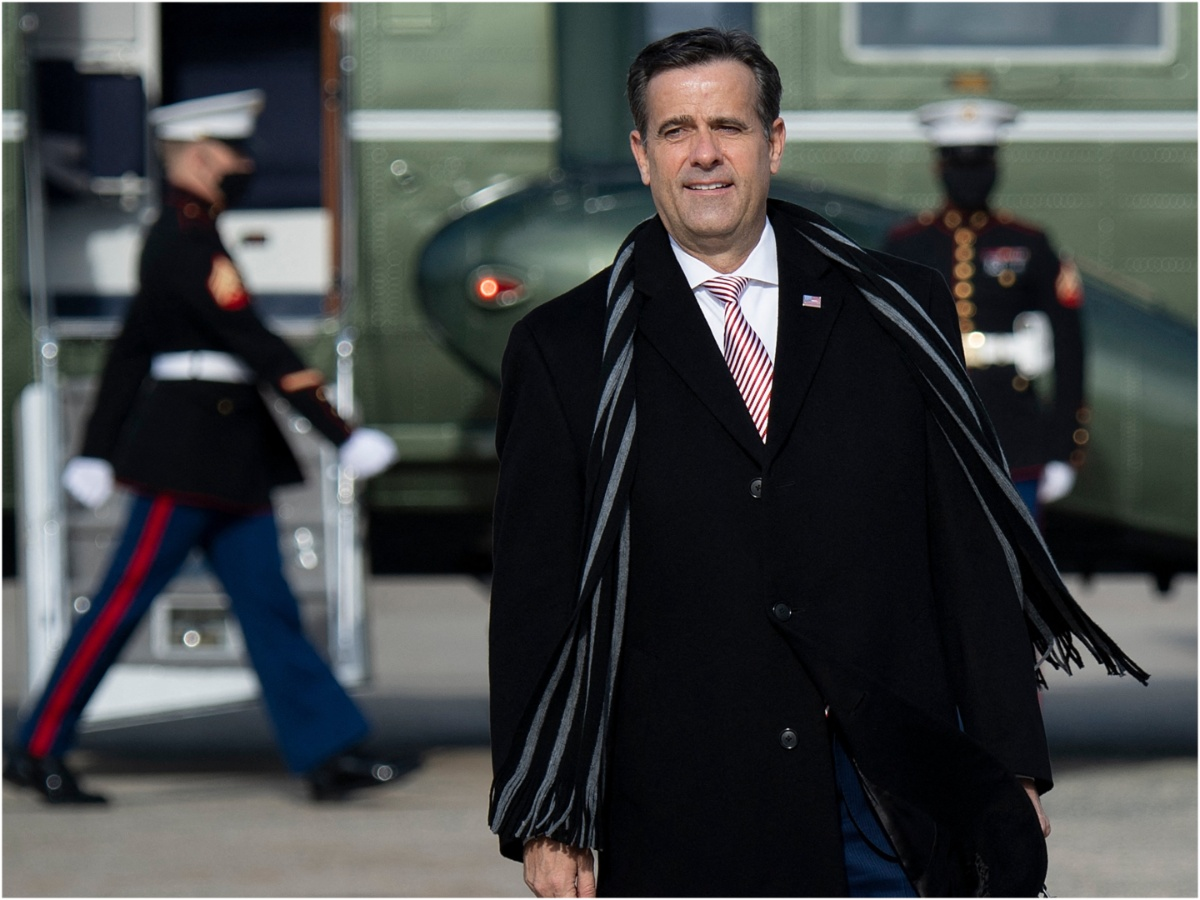
 Ratcliffe,


the former director of national intelligence during Trump's first term, has been chosen to head the Central Intelligence Agency. He supported Trump during the first impeachment trial, which involved accusations of pressuring Ukraine's president. However, he is viewed as somewhat of a traditionalist and a fairly reliable person.


Director of National Intelligence: Tulsi Gabbard

Trump has named Gabbard, a former Democratic representative and critic of the Biden administration, as his director of national intelligence

Defense Secretary: Pete Hegseth


Trump picked Hegseth as his secretary of defence. Hegseth is a Fox News commentator and veteran who has expressed disdain for the so-called “woke" policies of Pentagon leaders, including its top military officer.

Delhi transforms into a 'gas chamber': Residents struggle to breathe as harmful smog covers the city

Delhi transforms into a 'gas chamber': Residents struggle to breathe as harmful smog covers the city


Delhi transforms into a 'gas chamber': Residents struggle to breathe as harmful smog covers the city

As the winter season arrives in northern India, a common yet concerning occurrence is spreading over urban areas, suburbs, and rural communities: smog. This thick, suffocating blanket of pollution is now a yearly event in the northern region of the country, encompassing Punjab, Haryana, Delhi, and sections of Uttar Pradesh. However, this year, haze has emerged much sooner, just as winter begins, leading to a notable drop in air quality and affecting public health, transportation, and daily activities. So, why has haze become so widespread, especially at the start of winter? The Indian Express offers an explanation. What exactly is haze? Haze is a form of air pollution that produces a murky or foggy environment, diminishing visibility and impacting air quality. Initially used in the early 1900s to delineate a combination of smoke and fog, the phrase "smog" denoted contamination emanating from coal combustion, predominantly prevalent in industrial regions. Currently, smog remains widespread in crowded urban areas with substantial industrial and vehicular discharges.


Smog develops when pollutants like nitrogen oxides, volatile organic compounds (VOCs), and other detrimental particles are discharged into the air from various sources such as factories, vehicles, and power plants. These contaminants undergo chemical reactions when exposed to sunlight, resulting in a dangerous blend. When mixed with fog or high moisture, this process generates a dense mist, which can decrease visibility and create health hazards. Does smog occur annually during the winter season? Yes, it occurs each year, typically by late November or December in the Northern plains. Winter results in reduced temperatures and decreased sunlight, causing atmospheric inversion. This occurs when a layer of warmer air prevents cold air from rising, trapping it near the surface. The inversion layer traps pollutants close to the ground, which stops them from spreading out.


via Blogger https://ift.tt/VYTGOLr
November 15, 2024 at 12:34PM
via Blogger https://ift.tt/XWQCpSK
November 15, 2024 at 01:13PM

Delhi transforms into a 'gas chamber': Residents struggle to breathe as harmful smog covers the city

Delhi transforms into a 'gas chamber': Residents struggle to breathe as harmful smog covers the city


Delhi transforms into a 'gas chamber': Residents struggle to breathe as harmful smog covers the city

As the winter season arrives in northern India, a common yet concerning occurrence is spreading over urban areas, suburbs, and rural communities: smog. This thick, suffocating blanket of pollution is now a yearly event in the northern region of the country, encompassing Punjab, Haryana, Delhi, and sections of Uttar Pradesh. However, this year, haze has emerged much sooner, just as winter begins, leading to a notable drop in air quality and affecting public health, transportation, and daily activities. So, why has haze become so widespread, especially at the start of winter? The Indian Express offers an explanation. What exactly is haze? Haze is a form of air pollution that produces a murky or foggy environment, diminishing visibility and impacting air quality. Initially used in the early 1900s to delineate a combination of smoke and fog, the phrase "smog" denoted contamination emanating from coal combustion, predominantly prevalent in industrial regions. Currently, smog remains widespread in crowded urban areas with substantial industrial and vehicular discharges.


Smog develops when pollutants like nitrogen oxides, volatile organic compounds (VOCs), and other detrimental particles are discharged into the air from various sources such as factories, vehicles, and power plants. These contaminants undergo chemical reactions when exposed to sunlight, resulting in a dangerous blend. When mixed with fog or high moisture, this process generates a dense mist, which can decrease visibility and create health hazards. Does smog occur annually during the winter season? Yes, it occurs each year, typically by late November or December in the Northern plains. Winter results in reduced temperatures and decreased sunlight, causing atmospheric inversion. This occurs when a layer of warmer air prevents cold air from rising, trapping it near the surface. The inversion layer traps pollutants close to the ground, which stops them from spreading out.


via Blogger https://ift.tt/VYTGOLr
November 15, 2024 at 12:34PM

Delhi transforms into a 'gas chamber': Residents struggle to breathe as harmful smog covers the city


Delhi transforms into a 'gas chamber': Residents struggle to breathe as harmful smog covers the city

As the winter season arrives in northern India, a common yet concerning occurrence is spreading over urban areas, suburbs, and rural communities: smog. This thick, suffocating blanket of pollution is now a yearly event in the northern region of the country, encompassing Punjab, Haryana, Delhi, and sections of Uttar Pradesh. However, this year, haze has emerged much sooner, just as winter begins, leading to a notable drop in air quality and affecting public health, transportation, and daily activities. So, why has haze become so widespread, especially at the start of winter? The Indian Express offers an explanation. What exactly is haze? Haze is a form of air pollution that produces a murky or foggy environment, diminishing visibility and impacting air quality. Initially used in the early 1900s to delineate a combination of smoke and fog, the phrase "smog" denoted contamination emanating from coal combustion, predominantly prevalent in industrial regions. Currently, smog remains widespread in crowded urban areas with substantial industrial and vehicular discharges.


Smog develops when pollutants like nitrogen oxides, volatile organic compounds (VOCs), and other detrimental particles are discharged into the air from various sources such as factories, vehicles, and power plants. These contaminants undergo chemical reactions when exposed to sunlight, resulting in a dangerous blend. When mixed with fog or high moisture, this process generates a dense mist, which can decrease visibility and create health hazards. Does smog occur annually during the winter season? Yes, it occurs each year, typically by late November or December in the Northern plains. Winter results in reduced temperatures and decreased sunlight, causing atmospheric inversion. This occurs when a layer of warmer air prevents cold air from rising, trapping it near the surface. The inversion layer traps pollutants close to the ground, which stops them from spreading out.

India at the Crossroads: Reservation Politics, Minority Appeasement, Islamic Terror & Modi's Political Future

India at the Crossroads: Reservation Politics, Minority Appeasement, Islamic Terror & Modi's Political Future India at the Crossroa...