https://www.profitableratecpm.com/shc711j7ic?key=ff7159c55aa2fea5a5e4cdda1135ce92 Best Information at Shuksgyan

Pages

Wednesday, March 26, 2025

Historic Achievement’ As India’s Economy Reaches $4 Trillion Threshold; Set To Surpass Japan Soon


Historic Achievement’ As India’s Economy Reaches $4 Trillion Threshold; Set To Surpass Japan Soon


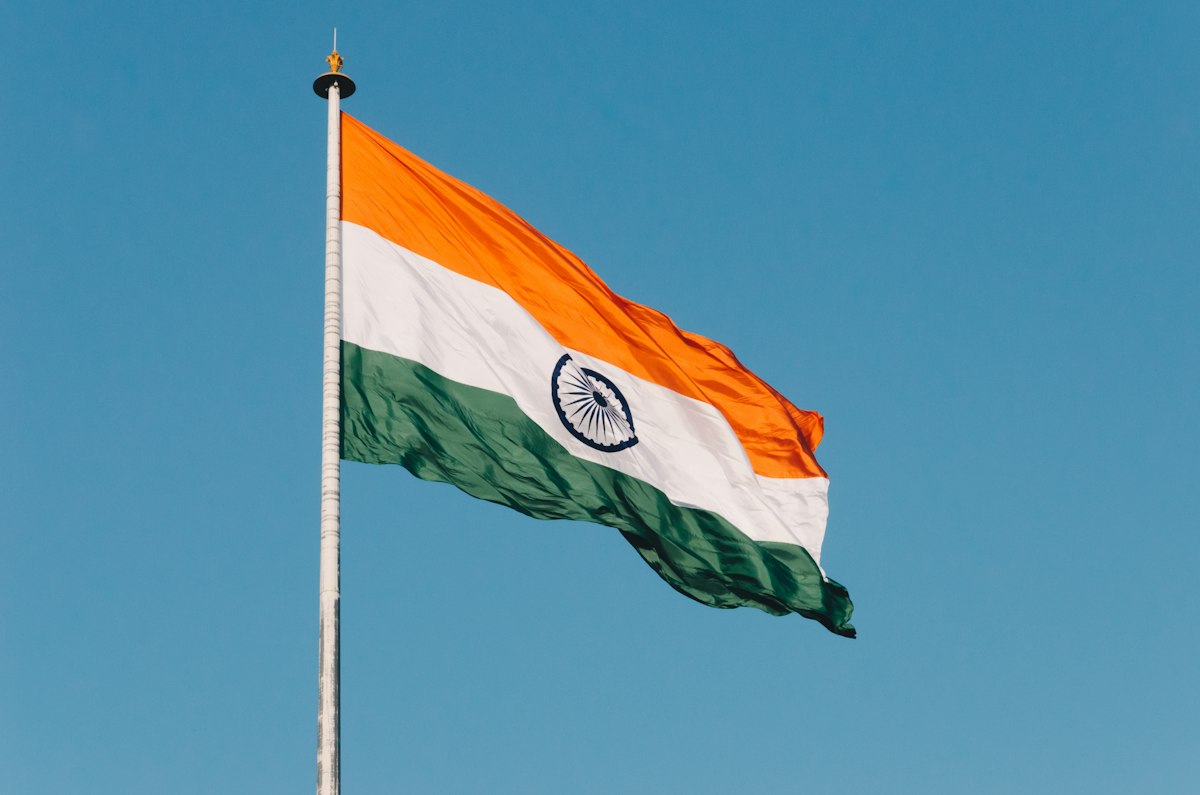
In a remarkable achievement, the Indian economy has reached the significant milestone of 4 trillion US dollars, positioning it as the fifth-largest global economy.


Recent projections suggest that by 2025, India's actual GDP will be around 4.3 trillion US dollars, closely following Japan's 4.4 trillion and Germany's 4.9 trillion. Based on the current growth trajectory, India is on track to overtake Japan in 2025 and Germany by 2027.


Importantly, data from the International Monetary Fund (IMF) indicates that India has seen its Gross Domestic Product (GDP) double in the last ten years, increasing by 105 percent from 2.1 trillion US dollars in 2015 to an anticipated 4.3 trillion US dollars in 2025.


This swift expansion positions India as one of the fastest-growing major economies globally, outpacing both the US and China. Over the past decade, the US experienced a GDP growth of 66 percent, while China's GDP saw a 76 percent increase.


According to the IMF, the United Kingdom's GDP increased modestly by 28 percent during this time. France's economy grew by 38 percent, rising from 2.4 trillion US dollars in 2015 to 3.3 trillion US dollars by 2025.


In spite of sanctions and conflict, the Russian economy expanded significantly by 57 percent, with the Australian economy growing by 58 percent and Spain’s economy increasing by 50 percent. 

In 2015, France's GDP was 2.4 trillion US dollars, larger than India's GDP of 2.1 trillion US dollars. However, by 2025, France's GDP is projected to be 3.3 trillion US dollars, while India's is expected to hit 4.3 trillion US dollars, making India's economy about 30 percent larger than France's.


The UK GDP was 2.9 trillion US dollars in 2015, also larger than India’s. Nevertheless, by 2025, the UK's GDP is forecasted to be 3.7 trillion US dollars, trailing behind India's 4.3 trillion US dollars.

Compare Indian Judiciary to U.S. judiciary

Compare Indian Judiciary to U.S. judiciary

                            Compare Indian Judiciary to U.S. judiciary


Let’s dive into a head-to-head comparison of the Indian and U.S. judicial systems. Both are pillars of democracy, but they’re built differently—India’s a single, integrated pyramid; the U.S. runs a dual federal-state split. They share some DNA (common law roots from Britain), but their flavors of justice diverge in structure, process, and vibe.

Structure

India: One unified system. The Supreme Court sits atop, followed by 25 High Courts (one per state or group of states), and then a sprawling base of district and subordinate courts (over 18,000). It’s a top-down hierarchy—cases can climb from a village court to Delhi if they’ve got legs. The Constitution (1950) is the boss, and all courts enforce it.


U.S.: Dual system—federal courts (Supreme Court, 13 Courts of Appeals, 94 District Courts) handle national law, while each of the 50 states has its own court system (state supreme courts, appellate courts, trial courts). Federal and state courts operate in parallel, only crossing paths when constitutional or federal issues pop up. The U.S. Constitution (1789) rules the feds, but states have their own charters.


Judicial Appointments

India: The “collegium system” rules—Supreme Court and High Court judges are picked by a panel of senior judges, not elected or appointed by politicians. Keeps it independent but reeks of insider privilege (cue Shukla’s “lawyers’ family” dig). Lower court judges come via exams or promotion, more merit-based but still slow.


U.S.: Federal judges (including the Supreme Court) are nominated by the President and confirmed by the Senate—political as hell, especially with lifetime tenure. State judges? Depends—some elected (e.g., Texas), some appointed (e.g., New York). Elections can mean populism; appointments can mean cronyism. No collegium here, but plenty of debate over bias.


Case Load & Speed

India: Drowning in cases—50 million pending (35M+ in lower courts, 6M in High Courts, thousands in the Supreme Court). Average disposal time? Years, sometimes decades. Only 21 judges per million people. A murder case might outlive the witnesses.


U.S.: Way leaner—about 1 million federal cases filed yearly, plus state loads (e.g., California’s 6M annually). Federal courts clear most cases in under a year; states vary (urban courts lag). With 50 judges per million, the U.S. has more horsepower. Still, complex cases (e.g., death penalty appeals) can crawl for years.


Access & Innovation

India: Public Interest Litigation (PIL) is a superpower—anyone can file for the public good (e.g., environmental messes). But access sucks for the poor—courts are urban, English-heavy, and lawyer fees sting. Tech’s creeping in (e-courts, virtual hearings post-COVID), but it’s patchy.


U.S.: No PIL equivalent—strict “standing” rules mean you need a personal stake to sue. Access varies: federal courts are elite; state courts range from decent (public defenders) to dismal (overworked, underfunded). Tech’s slicker—online filings, e-discovery—but justice still favors the rich.


Power & Scope

India: Supreme Court’s a constitutional bulldog—can strike down laws, issue binding orders (e.g., decriminalizing homosexuality in 2018). Takes on everything from divorce to national policy. Critics (like Shukla) say it overreaches, acting like a “Kingdom of Judges.”


U.S.: Supreme Court’s also a heavyweight—Marbury v. Madison (1803) gave it judicial review to nix laws. But it’s narrower, sticking to constitutional or federal disputes (about 80 cases a year vs. India’s 1,000+). State courts handle the everyday grind (traffic tickets, divorces). Politicization’s a headache—think Roe v. Wade flip-flops.


Strengths Head-to-Head

India: PIL gives it a social justice edge; unified system ensures consistency. Fierce independence via collegium (no political meddling).


U.S.: Speed and scale—more judges, faster resolution. Federalism lets states experiment (e.g., California’s environmental laws). Jury trials add a democratic twist (India ditched juries in the 1960s).


Weaknesses Head-to-Head

India: Backlog’s a nightmare; elitism and opacity in appointments fuel distrust. Rural reach is weak—justice feels distant.


U.S.: Politicized appointments (e.g., Trump’s three SCOTUS picks) spark legitimacy fights. Inequality’s stark—money buys better lawyers. State disparities mean uneven justice (Alabama’s courts ain’t Massachusetts’).


Col Shukla’s Lens

My X rant about judges vs. peons highlights India’s lack of transparent selection—U.S. federal judges face public Senate grillings, while India’s collegium meets behind closed doors. The U.S. system, for all its flaws, has clearer checks (Senate, elections); India’s independence can feel like unaccountability.

In short: India’s system is a slow, centralized beast with a big heart (PIL) but creaky bones. The U.S. is faster, decentralized, and jury-driven, but tangled in politics and cash. Neither’s perfect—India’s clogged, the U.S. is polarized. Which wins? Depends on what you value: accessibility (U.S.) or constitutional zeal (India). Thoughts?


via Blogger https://ift.tt/tvOC1YJ
March 26, 2025 at 06:57AM
via Blogger https://ift.tt/bLOo8jl
March 26, 2025 at 07:13AM
via Blogger https://ift.tt/QtWoSZa
March 26, 2025 at 08:13AM
via Blogger https://ift.tt/fRuyCtV
March 26, 2025 at 09:13AM


Trump's administration have remarked about the improper handling of classified documents


What prominent officials from Trump's administration have remarked about the improper handling of classified documents 

Criticism was directed at former President Biden and Secretary of State Clinton 

Several individuals from the Trump administration, who reportedly participated in classified conversations via an unsecured messaging service, have previously expressed disapproval of the mishandling of classified materials by others, including former President Joe Biden and ex-Secretary of State Hillary Clinton.


National Security Advisor Mike Waltz and Secretary of State Marco Rubio have insisted on “consequences” for those who inappropriately disclosed classified information, no matter their intentions. Secretary of Defense Pete Hegseth criticized Biden for “carelessly” managing classified documents, asserting that had he acted in a similar manner, he would have anticipated being “court-martialed.”


The strong language these top officials have employed regarding past violations of protocols for handling sensitive information adds an ironic dimension to what experts describe as an unacceptable misuse of classified data.


John Cohen, a former national security official who served under both Republican and Democratic administrations, stated, “from a security standpoint, there is no situation that validates discussing such information over a communication platform not controlled by the government.” 

“Exchanging sensitive operational details in this fashion raises the risk of inappropriate disclosures, putting military personnel in danger,” Cohen, who also serves as a contributor for ABC News, noted. “There will also be inquiries into whether such actions breached laws related to the protection and retention of governmental information.” 


Recently, many of these senior officials have shared their views on the lengthy investigation into Biden’s management of classified documents. The inquiry ultimately resulted in no charges being filed.

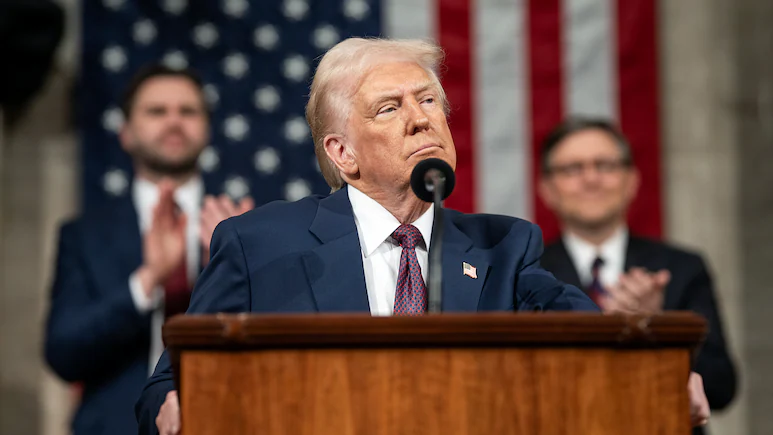
Donald Trump's Major Initiative to Alter Voting in the US, Using India as an Example


Donald Trump's Major Initiative to Alter Voting in the US, Using India as an Example


Donald Trump emphasized that the entitlement of American citizens to have their votes accurately counted and assessed, "without unlawful dilution," is crucial for identifying the true victor in an election.


On Tuesday, President Donald Trump enacted an executive order aiming to implement significant reforms in US elections. This includes requiring voters to provide evidence of their American citizenship, accepting only mail or absentee ballots that arrive by Election Day, and banning non-US citizens from supporting certain elections financially.


Referencing India and various other nations, Trump indicated that the US currently does not enforce "fundamental and essential election safeguards" that are used by both developed and developing countries.


"Countries like India and Brazil link voter ID to a biometric system, whereas the United States primarily depends on self-reporting for citizenship," he stated.


"Germany and Canada demand paper ballots during the vote counting process, while the United States has an inconsistent array of practices that frequently lack basic chain-of-custody assurances," he continued.


Trump's directive further noted that nations such as Denmark and Sweden "logically" restrict mail-in voting to those who cannot vote in person and do not accept ballots that arrive late, no matter the postmark date. Conversely, many elections in the US now involve widespread mail-in voting, with numerous officials accepting ballots that lack postmarks or that arrive long after Election Day.


President Trump, who regained office in January after defeating Democratic candidate Kamala Harris, asserted that "free, fair, and honest elections free from fraud, mistakes, or mistrust are essential for upholding our constitutional Republic."

Trump's Initiative to Transform US Elections

Proof of US Citizenship

Donald Trump's directive requested updates to the federal voter registration form, mandating that individuals seeking to register must present proof of citizenship, such as a US passport or birth certificate.


Additionally, it stated that states are required to submit their voter registration lists and records pertaining to their maintenance to the Department of Homeland Security and the Department of Government Efficiency for examination. It also ordered federal agencies to collaborate with states by sharing data to assist them in identifying noncitizens in their voter registries.


The directive indicated that states that do not cooperate with federal authorities in prosecuting electoral offenses could risk losing federal funding.


Ballots must be received by Election Day


The executive order stipulated that votes are to be "cast and received" by Election Day, determining that federal funding should be contingent upon state adherence to this timeline.


As reported by the National Conference of State Legislatures, 18 states in the United States, along with Puerto Rico, the Virgin Islands, and Washington, DC, will accept ballots postmarked on or before Election Day, regardless of their arrival time.


Voting systems should not use QR codes


The order directed the Election Assistance Commission to revise its recommendations for voting mechanisms to ensure "election integrity." This would encompass guidelines stating that ballot counting should not depend on the use of barcodes or QR codes.


Trump instructed the commission to "take suitable measures to assess and, if warranted, re-certify voting systems" according to these newly established criteria within six months of the directive.


Prohibition on foreign donations


Additionally, Donald Trump's order prohibited foreign individuals from making contributions or donations in US elections.


"Foreign individuals and non-governmental organizations have exploited loopholes in the law’s interpretation, investing millions through conduits and expenses related to ballot initiatives. Such foreign interference in our electoral process threatens the right of American citizens to govern their Republic," he stated.

Compare Indian Judiciary to U.S. judiciary

Compare Indian Judiciary to U.S. judiciary

                            Compare Indian Judiciary to U.S. judiciary


Let’s dive into a head-to-head comparison of the Indian and U.S. judicial systems. Both are pillars of democracy, but they’re built differently—India’s a single, integrated pyramid; the U.S. runs a dual federal-state split. They share some DNA (common law roots from Britain), but their flavors of justice diverge in structure, process, and vibe.

Structure

India: One unified system. The Supreme Court sits atop, followed by 25 High Courts (one per state or group of states), and then a sprawling base of district and subordinate courts (over 18,000). It’s a top-down hierarchy—cases can climb from a village court to Delhi if they’ve got legs. The Constitution (1950) is the boss, and all courts enforce it.


U.S.: Dual system—federal courts (Supreme Court, 13 Courts of Appeals, 94 District Courts) handle national law, while each of the 50 states has its own court system (state supreme courts, appellate courts, trial courts). Federal and state courts operate in parallel, only crossing paths when constitutional or federal issues pop up. The U.S. Constitution (1789) rules the feds, but states have their own charters.


Judicial Appointments

India: The “collegium system” rules—Supreme Court and High Court judges are picked by a panel of senior judges, not elected or appointed by politicians. Keeps it independent but reeks of insider privilege (cue Shukla’s “lawyers’ family” dig). Lower court judges come via exams or promotion, more merit-based but still slow.


U.S.: Federal judges (including the Supreme Court) are nominated by the President and confirmed by the Senate—political as hell, especially with lifetime tenure. State judges? Depends—some elected (e.g., Texas), some appointed (e.g., New York). Elections can mean populism; appointments can mean cronyism. No collegium here, but plenty of debate over bias.


Case Load & Speed

India: Drowning in cases—50 million pending (35M+ in lower courts, 6M in High Courts, thousands in the Supreme Court). Average disposal time? Years, sometimes decades. Only 21 judges per million people. A murder case might outlive the witnesses.


U.S.: Way leaner—about 1 million federal cases filed yearly, plus state loads (e.g., California’s 6M annually). Federal courts clear most cases in under a year; states vary (urban courts lag). With 50 judges per million, the U.S. has more horsepower. Still, complex cases (e.g., death penalty appeals) can crawl for years.


Access & Innovation

India: Public Interest Litigation (PIL) is a superpower—anyone can file for the public good (e.g., environmental messes). But access sucks for the poor—courts are urban, English-heavy, and lawyer fees sting. Tech’s creeping in (e-courts, virtual hearings post-COVID), but it’s patchy.


U.S.: No PIL equivalent—strict “standing” rules mean you need a personal stake to sue. Access varies: federal courts are elite; state courts range from decent (public defenders) to dismal (overworked, underfunded). Tech’s slicker—online filings, e-discovery—but justice still favors the rich.


Power & Scope

India: Supreme Court’s a constitutional bulldog—can strike down laws, issue binding orders (e.g., decriminalizing homosexuality in 2018). Takes on everything from divorce to national policy. Critics (like Shukla) say it overreaches, acting like a “Kingdom of Judges.”


U.S.: Supreme Court’s also a heavyweight—Marbury v. Madison (1803) gave it judicial review to nix laws. But it’s narrower, sticking to constitutional or federal disputes (about 80 cases a year vs. India’s 1,000+). State courts handle the everyday grind (traffic tickets, divorces). Politicization’s a headache—think Roe v. Wade flip-flops.


Strengths Head-to-Head

India: PIL gives it a social justice edge; unified system ensures consistency. Fierce independence via collegium (no political meddling).


U.S.: Speed and scale—more judges, faster resolution. Federalism lets states experiment (e.g., California’s environmental laws). Jury trials add a democratic twist (India ditched juries in the 1960s).


Weaknesses Head-to-Head

India: Backlog’s a nightmare; elitism and opacity in appointments fuel distrust. Rural reach is weak—justice feels distant.


U.S.: Politicized appointments (e.g., Trump’s three SCOTUS picks) spark legitimacy fights. Inequality’s stark—money buys better lawyers. State disparities mean uneven justice (Alabama’s courts ain’t Massachusetts’).


Col Shukla’s Lens

My X rant about judges vs. peons highlights India’s lack of transparent selection—U.S. federal judges face public Senate grillings, while India’s collegium meets behind closed doors. The U.S. system, for all its flaws, has clearer checks (Senate, elections); India’s independence can feel like unaccountability.

In short: India’s system is a slow, centralized beast with a big heart (PIL) but creaky bones. The U.S. is faster, decentralized, and jury-driven, but tangled in politics and cash. Neither’s perfect—India’s clogged, the U.S. is polarized. Which wins? Depends on what you value: accessibility (U.S.) or constitutional zeal (India). Thoughts?


via Blogger https://ift.tt/tvOC1YJ
March 26, 2025 at 06:57AM
via Blogger https://ift.tt/bLOo8jl
March 26, 2025 at 07:13AM
via Blogger https://ift.tt/QtWoSZa
March 26, 2025 at 08:13AM

Compare Indian Judiciary to U.S. judiciary

Compare Indian Judiciary to U.S. judiciary

                            Compare Indian Judiciary to U.S. judiciary


Let’s dive into a head-to-head comparison of the Indian and U.S. judicial systems. Both are pillars of democracy, but they’re built differently—India’s a single, integrated pyramid; the U.S. runs a dual federal-state split. They share some DNA (common law roots from Britain), but their flavors of justice diverge in structure, process, and vibe.

Structure

India: One unified system. The Supreme Court sits atop, followed by 25 High Courts (one per state or group of states), and then a sprawling base of district and subordinate courts (over 18,000). It’s a top-down hierarchy—cases can climb from a village court to Delhi if they’ve got legs. The Constitution (1950) is the boss, and all courts enforce it.


U.S.: Dual system—federal courts (Supreme Court, 13 Courts of Appeals, 94 District Courts) handle national law, while each of the 50 states has its own court system (state supreme courts, appellate courts, trial courts). Federal and state courts operate in parallel, only crossing paths when constitutional or federal issues pop up. The U.S. Constitution (1789) rules the feds, but states have their own charters.


Judicial Appointments

India: The “collegium system” rules—Supreme Court and High Court judges are picked by a panel of senior judges, not elected or appointed by politicians. Keeps it independent but reeks of insider privilege (cue Shukla’s “lawyers’ family” dig). Lower court judges come via exams or promotion, more merit-based but still slow.


U.S.: Federal judges (including the Supreme Court) are nominated by the President and confirmed by the Senate—political as hell, especially with lifetime tenure. State judges? Depends—some elected (e.g., Texas), some appointed (e.g., New York). Elections can mean populism; appointments can mean cronyism. No collegium here, but plenty of debate over bias.


Case Load & Speed

India: Drowning in cases—50 million pending (35M+ in lower courts, 6M in High Courts, thousands in the Supreme Court). Average disposal time? Years, sometimes decades. Only 21 judges per million people. A murder case might outlive the witnesses.


U.S.: Way leaner—about 1 million federal cases filed yearly, plus state loads (e.g., California’s 6M annually). Federal courts clear most cases in under a year; states vary (urban courts lag). With 50 judges per million, the U.S. has more horsepower. Still, complex cases (e.g., death penalty appeals) can crawl for years.


Access & Innovation

India: Public Interest Litigation (PIL) is a superpower—anyone can file for the public good (e.g., environmental messes). But access sucks for the poor—courts are urban, English-heavy, and lawyer fees sting. Tech’s creeping in (e-courts, virtual hearings post-COVID), but it’s patchy.


U.S.: No PIL equivalent—strict “standing” rules mean you need a personal stake to sue. Access varies: federal courts are elite; state courts range from decent (public defenders) to dismal (overworked, underfunded). Tech’s slicker—online filings, e-discovery—but justice still favors the rich.


Power & Scope

India: Supreme Court’s a constitutional bulldog—can strike down laws, issue binding orders (e.g., decriminalizing homosexuality in 2018). Takes on everything from divorce to national policy. Critics (like Shukla) say it overreaches, acting like a “Kingdom of Judges.”


U.S.: Supreme Court’s also a heavyweight—Marbury v. Madison (1803) gave it judicial review to nix laws. But it’s narrower, sticking to constitutional or federal disputes (about 80 cases a year vs. India’s 1,000+). State courts handle the everyday grind (traffic tickets, divorces). Politicization’s a headache—think Roe v. Wade flip-flops.


Strengths Head-to-Head

India: PIL gives it a social justice edge; unified system ensures consistency. Fierce independence via collegium (no political meddling).


U.S.: Speed and scale—more judges, faster resolution. Federalism lets states experiment (e.g., California’s environmental laws). Jury trials add a democratic twist (India ditched juries in the 1960s).


Weaknesses Head-to-Head

India: Backlog’s a nightmare; elitism and opacity in appointments fuel distrust. Rural reach is weak—justice feels distant.


U.S.: Politicized appointments (e.g., Trump’s three SCOTUS picks) spark legitimacy fights. Inequality’s stark—money buys better lawyers. State disparities mean uneven justice (Alabama’s courts ain’t Massachusetts’).


Col Shukla’s Lens

My X rant about judges vs. peons highlights India’s lack of transparent selection—U.S. federal judges face public Senate grillings, while India’s collegium meets behind closed doors. The U.S. system, for all its flaws, has clearer checks (Senate, elections); India’s independence can feel like unaccountability.

In short: India’s system is a slow, centralized beast with a big heart (PIL) but creaky bones. The U.S. is faster, decentralized, and jury-driven, but tangled in politics and cash. Neither’s perfect—India’s clogged, the U.S. is polarized. Which wins? Depends on what you value: accessibility (U.S.) or constitutional zeal (India). Thoughts?


via Blogger https://ift.tt/tvOC1YJ
March 26, 2025 at 06:57AM
via Blogger https://ift.tt/bLOo8jl
March 26, 2025 at 07:13AM

Compare Indian Judiciary to U.S. judiciary

Compare Indian Judiciary to U.S. judiciary

                            Compare Indian Judiciary to U.S. judiciary


Let’s dive into a head-to-head comparison of the Indian and U.S. judicial systems. Both are pillars of democracy, but they’re built differently—India’s a single, integrated pyramid; the U.S. runs a dual federal-state split. They share some DNA (common law roots from Britain), but their flavors of justice diverge in structure, process, and vibe.

Structure

India: One unified system. The Supreme Court sits atop, followed by 25 High Courts (one per state or group of states), and then a sprawling base of district and subordinate courts (over 18,000). It’s a top-down hierarchy—cases can climb from a village court to Delhi if they’ve got legs. The Constitution (1950) is the boss, and all courts enforce it.


U.S.: Dual system—federal courts (Supreme Court, 13 Courts of Appeals, 94 District Courts) handle national law, while each of the 50 states has its own court system (state supreme courts, appellate courts, trial courts). Federal and state courts operate in parallel, only crossing paths when constitutional or federal issues pop up. The U.S. Constitution (1789) rules the feds, but states have their own charters.


Judicial Appointments

India: The “collegium system” rules—Supreme Court and High Court judges are picked by a panel of senior judges, not elected or appointed by politicians. Keeps it independent but reeks of insider privilege (cue Shukla’s “lawyers’ family” dig). Lower court judges come via exams or promotion, more merit-based but still slow.


U.S.: Federal judges (including the Supreme Court) are nominated by the President and confirmed by the Senate—political as hell, especially with lifetime tenure. State judges? Depends—some elected (e.g., Texas), some appointed (e.g., New York). Elections can mean populism; appointments can mean cronyism. No collegium here, but plenty of debate over bias.


Case Load & Speed

India: Drowning in cases—50 million pending (35M+ in lower courts, 6M in High Courts, thousands in the Supreme Court). Average disposal time? Years, sometimes decades. Only 21 judges per million people. A murder case might outlive the witnesses.


U.S.: Way leaner—about 1 million federal cases filed yearly, plus state loads (e.g., California’s 6M annually). Federal courts clear most cases in under a year; states vary (urban courts lag). With 50 judges per million, the U.S. has more horsepower. Still, complex cases (e.g., death penalty appeals) can crawl for years.


Access & Innovation

India: Public Interest Litigation (PIL) is a superpower—anyone can file for the public good (e.g., environmental messes). But access sucks for the poor—courts are urban, English-heavy, and lawyer fees sting. Tech’s creeping in (e-courts, virtual hearings post-COVID), but it’s patchy.


U.S.: No PIL equivalent—strict “standing” rules mean you need a personal stake to sue. Access varies: federal courts are elite; state courts range from decent (public defenders) to dismal (overworked, underfunded). Tech’s slicker—online filings, e-discovery—but justice still favors the rich.


Power & Scope

India: Supreme Court’s a constitutional bulldog—can strike down laws, issue binding orders (e.g., decriminalizing homosexuality in 2018). Takes on everything from divorce to national policy. Critics (like Shukla) say it overreaches, acting like a “Kingdom of Judges.”


U.S.: Supreme Court’s also a heavyweight—Marbury v. Madison (1803) gave it judicial review to nix laws. But it’s narrower, sticking to constitutional or federal disputes (about 80 cases a year vs. India’s 1,000+). State courts handle the everyday grind (traffic tickets, divorces). Politicization’s a headache—think Roe v. Wade flip-flops.


Strengths Head-to-Head

India: PIL gives it a social justice edge; unified system ensures consistency. Fierce independence via collegium (no political meddling).


U.S.: Speed and scale—more judges, faster resolution. Federalism lets states experiment (e.g., California’s environmental laws). Jury trials add a democratic twist (India ditched juries in the 1960s).


Weaknesses Head-to-Head

India: Backlog’s a nightmare; elitism and opacity in appointments fuel distrust. Rural reach is weak—justice feels distant.


U.S.: Politicized appointments (e.g., Trump’s three SCOTUS picks) spark legitimacy fights. Inequality’s stark—money buys better lawyers. State disparities mean uneven justice (Alabama’s courts ain’t Massachusetts’).


Col Shukla’s Lens

My X rant about judges vs. peons highlights India’s lack of transparent selection—U.S. federal judges face public Senate grillings, while India’s collegium meets behind closed doors. The U.S. system, for all its flaws, has clearer checks (Senate, elections); India’s independence can feel like unaccountability.

In short: India’s system is a slow, centralized beast with a big heart (PIL) but creaky bones. The U.S. is faster, decentralized, and jury-driven, but tangled in politics and cash. Neither’s perfect—India’s clogged, the U.S. is polarized. Which wins? Depends on what you value: accessibility (U.S.) or constitutional zeal (India). Thoughts?


via Blogger https://ift.tt/tvOC1YJ
March 26, 2025 at 06:57AM

Exclusive research on PM Narendra Modi Govt Spending on SC ST OBC & Muslims of India- 2014-2026

Exclusive research on PM Narendra Modi Govt Spending on SC ST OBC & Muslims of India- 2014-2026 Exclusive research on PM Narendra Modi ...