https://www.profitableratecpm.com/shc711j7ic?key=ff7159c55aa2fea5a5e4cdda1135ce92 Best Information at Shuksgyan

Pages

Thursday, March 27, 2025

The Misuse of AI in Jurisprudence: Creating Fake Verdicts to Manipulate Cases


The Misuse of AI in Jurisprudence: Creating Fake Verdicts to Manipulate Cases

Introduction

Artificial Intelligence (AI) has undeniably transformed numerous sectors, including the legal industry. From legal research and document analysis to predictive analytics, AI is enhancing efficiency and decision-making processes. However, like any powerful tool, AI is susceptible to misuse. One particularly alarming scenario is the manipulation of legal proceedings through the creation of fake higher court verdicts. This unethical use of AI can severely undermine the judicial system, leading to miscarriages of justice.

Understanding AI-Generated Fake Verdicts

AI, especially advanced language models, can generate highly convincing documents that mimic authentic court judgments. By training on vast datasets of legal documents, these systems can produce fabricated judgments that are stylistically and linguistically similar to genuine ones. Malicious actors, including unethical lawyers or corrupt officials, may leverage this capability to deceive courts, legal professionals, or the public.

Methods of Manipulation

  1. Fabricating Precedents

    • Lawyers might generate fake judgments from higher courts that support their legal arguments.

    • These fabricated verdicts may be submitted to courts in jurisdictions where the authenticity of external legal documents is difficult to verify.

    • Example: A lawyer handling a corporate dispute could present a fake Supreme Court ruling that seems to favor a particular legal interpretation.

  2. Manipulating Judicial Decisions

    • Judges or court clerks with malicious intent may create false precedents to justify biased rulings.

    • AI-generated verdicts can provide fabricated legal reasoning that appears legitimate.

    • Example: In politically sensitive cases, a judge might cite a nonexistent judgment to manipulate the outcome.

  3. Public Opinion Manipulation

    • AI can generate fake legal verdicts and circulate them via social media to influence public perception.

    • This can erode trust in the judiciary and sway public sentiment on controversial legal matters.

    • Example: During high-profile cases, counterfeit judgments may be spread to mislead the masses.

Impact on the Legal System

  • Erosion of Trust: Widespread use of fake verdicts undermines public confidence in the judiciary.

  • Delayed Justice: Courts may need to spend additional time verifying documents, causing delays in proceedings.

  • Legal Precedent Pollution: If fake verdicts are mistakenly accepted and referenced in other cases, it creates a ripple effect that distorts legal jurisprudence.

Safeguards and Mitigation

To counter the misuse of AI in jurisprudence, several proactive measures can be adopted:

  1. Blockchain for Legal Records:

    • Implement blockchain technology for court verdicts to ensure immutable and verifiable records.

  2. AI-Powered Verification Tools:

    • Develop AI systems specifically designed to detect counterfeit judgments by analyzing linguistic patterns, legal citations, and metadata.

  3. Legal Document Repositories:

    • Establish centralized, government-managed repositories where all higher court judgments are archived and accessible for verification.

  4. Awareness and Training:

    • Provide legal professionals with training to identify and report potential fake verdicts.

  5. Legal Reforms:

    • Establish stringent penalties for those found guilty of fabricating or using counterfeit legal documents.

Conclusion

While AI brings remarkable advancements to the legal industry, its misuse in the creation of fake verdicts poses a grave threat to the integrity of jurisprudence. By implementing robust verification systems, fostering awareness, and leveraging technological safeguards, the legal fraternity can mitigate this risk. Upholding the sanctity of legal institutions requires vigilance and proactive measures to ensure that justice prevails untainted by manipulation.


Karnataka HC proposes action against judge for citing non-existent rulings-HT 27 April 

Col. Rajendra Shukla  Freelance Strategist, Public Speaker, and Writer on Politics, Current Affairs, and Military Strategy.


Justice Yashwant Varma(cash recovery case) requests legal counsel: Who represents him?


Justice Yashwant Varma requests legal counsel: Who represents him?


This week, Senior Advocates Siddharth Agarwal and Arundhati Katju, along with advocates Tara Narula, Stuti Gujral, and another attorney, visited Justice Varma's home on Monday and Wednesday.


On Wednesday, Justice Yashwant Varma convened with a group of lawyers to seek legal guidance ahead of his testimony before an internal inquiry panel set up by the Supreme Court to investigate the alleged cash confiscation from his residence on March 14.


This week, Justice Varma's residence hosted visits from Senior Advocates Siddharth Agarwal and Arundhati Katju, along with advocates Tara Narula, Stuti Gujral, and one additional lawyer on both Monday and Wednesday.


The inquiry panel, which includes Justice Sheel Nagu (Chief Justice of the Punjab and Haryana High Court), Justice GS Sandhawalia (Chief Justice of the High Court of Himachal Pradesh), and Justice Anu Sivaraman (Judge of the Karnataka High Court), is presently in Delhi and is anticipated to meet with Justice Varma several times within the week.


According to insiders, the judge is carefully preparing his statements for the inquiry panel, as these will significantly influence any future proceedings on the issue.


"A lot is at stake with these proceedings. This may lead to impeachment and potential criminal charges," remarked a well-informed source familiar with the legal advice being sought.

"Potentially Severe Outcomes for US Pilots": Yemen Conversations Exposed


"Potentially Severe Outcomes for US Pilots": Yemen Conversations Exposed


The Atlantic reported that specialists had consistently warned that utilizing a Signal chat for highly sensitive topics "endangers national security."


After U.S. President Donald Trump and various high-ranking officials denied that any classified material was exchanged in the messaging group that deliberated an assault on the Houthis in Yemen on March 15, The Atlantic published the complete dialogue from the chats, including screenshots, indicating that it had obtained specific details over two hours prior to the bombing's commencement.


The publication highlighted that this data, particularly the precise departure times of U.S. planes heading to Yemen, would have put American pilots and other personnel at "even greater risk" had it been accessed by unauthorized individuals. 


The Atlantic's Editor-in-Chief Jeffrey Goldberg was unintentionally included in the group chat on the Signal app where the bombing strategies were discussed. Reportedly, this group featured Vice President JD Vance, Defense Secretary Hegseth, CIA Director John Ratcliffe, National Security Adviser Mike Waltz, Secretary of State Marco Antonio Rubio, Director of National Intelligence Tulsi Gabbard, among others.


In explaining its decision to release the chat details in a new article on Wednesday, The Atlantic noted Hegseth's statement that "nobody was texting war plans," while Trump and others claimed "it wasn't classified information."


The piece, crafted by Goldberg and staff writer Shane Harris, underscored a quandary for The Atlantic. The magazine indicated it had previously held back specific details in an earlier article regarding weaponry and the timing of the attack in line with its principle to avoid disclosing military operation information that could threaten US personnel's lives.


"The remarks from Hegseth, Gabbard, Ratcliffe, and Trump—alongside claims from many officials in the administration that we are misrepresenting the Signal texts—have led us to feel that the public should view the texts to form their own opinions. There is a significant public interest in revealing the type of information that Trump's advisors included in unsecured communication channels, especially as prominent administration members attempt to minimize the importance of the messages shared," the magazine stated.


The Atlantic noted it inquired with various officials about their opposition to sharing the full text of the chat, receiving a reply from White House Press Secretary Karoline Leavitt, who reiterated that no classified content was exchanged but stressed, "we do not support the release of the conversation."


"This was meant to be an internal and confidential discussion among senior staff, and sensitive information was part of that dialogue. For those reasons, yes, we oppose the release," the report quoted Leavitt as stating.

Wednesday, March 26, 2025

Date of Birth Analysis through Lo Shu Grid

                                   Date of Birth Analysis through Lo Shu Grid


Introduction

Why Your Insights and Perspectives Are Crucial for Brands (and Yourself)  

https://ift.tt/t6diIGX 

https://ift.tt/pB8rGCF2025


 https://ift.tt/ozPK1Uf   Join and Earn in $

 https://ift.tt/u1QmLSh   Join now


 Lo Shu Grid is an ancient Chinese numerology technique used for personality analysis, life predictions, and self-discovery. It originated from the Lo Shu Square, a 3x3 magic square with deep mystical significance in Chinese metaphysics. By analyzing an individual's date of birth, the Lo Shu Grid provides insights into strengths, weaknesses, and life paths.

History of Lo Shu Grid

The Lo Shu Square traces back to ancient China, where it was discovered on the back of a divine turtle emerging from the Luo River. This square, consisting of numbers 1 to 9 arranged in a 3x3 grid, is the foundation of numerology-based life analysis. Over time, the Lo Shu Grid became a crucial tool in Feng Shui and personal numerology.

How to Create a Lo Shu Grid

  1. Write down the date of birth (DD/MM/YYYY) and separate the digits.

  2. Place the digits in the corresponding grid positions:

    • 1: Represents Water (North) - Communication, intelligence
    • 2: Represents Earth (Southwest) - Relationships, sensitivity
    • 3: Represents Wood (East) - Creativity, expression
    • 4: Represents Wood (Southeast) - Planning, discipline
    • 5: Represents Earth (Center) - Adaptability, balance
    • 6: Represents Metal (Northwest) - Responsibility, wealth
    • 7: Represents Metal (West) - Wisdom, spirituality
    • 8: Represents Earth (Northeast) - Stability, inner strength
    • 9: Represents Fire (South) - Energy, leadership
  3. Interpret the grid based on the presence or absence of numbers in each box.

Interpreting the Lo Shu Grid

  • Missing Numbers: Represents weak areas in life requiring effort.
  • Repeated Numbers: Signify strengths, dominant traits, or excessive tendencies.
  • Number Combinations:
    • 1, 2, 3: Good communication and social skills.
    • 4, 5, 6: Practical and career-oriented.
    • 7, 8, 9: Spiritually inclined and intuitive.

Example of Lo Shu Grid Calculation

For a person born on 15/07/1992: Digits: 1, 5, 0, 7, 1, 9, 9, 2

49
57
12
  • Missing 3, 6, 8 suggests a need to develop creativity, financial discipline, and inner stability.
  • Repeated 1 and 9 signifies strong leadership and intellectual capacity.

Conclusion

The Lo Shu Grid is a simple yet powerful method to gain insights into one’s personality and destiny. It helps individuals recognize their strengths and work on their weaknesses for a balanced life. Regularly analyzing and applying the principles of the Lo Shu Grid can lead to better decision-making and self-awareness.

For Analysis and Remedies of your DOB  Please pay Rs 2000/$20 through Pay Pal shuksrp@gmail.com or UPI 9868031897@ybl. Whats app DOB on +91986803189

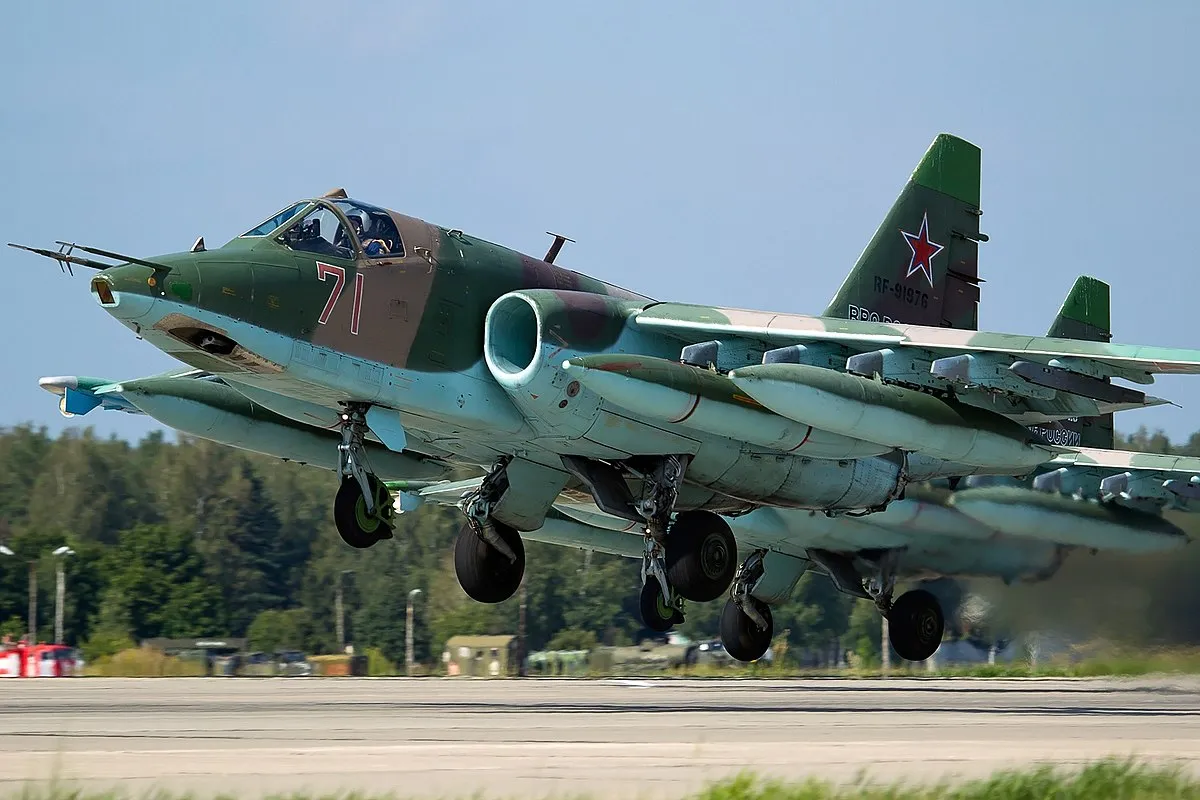
Russia’s ‘Flying Tank’ Crashes Near North Korean Border; Another Setback for Su-25,

Russia’s ‘Flying Tank’ Crashes Near North Korean Border; Another Setback for Su-25,


Russia’s ‘Flying Tank’ Crashes Near North Korean Border; Another Setback for Su-25, An A-10 Warthog Rival


On March 24, a Russian Su-25 experienced a crash during a standard training operation in the Primorye Krai region. The pilot successfully ejected and was rescued, yet this event contributes to the increasing number of Su-25 incidents in the past years.


The Russian Ministry of Defense reported that the aircraft fell in a deserted location near the border of North Korea. Preliminary evaluations indicate that a technical failure was the probable cause of the accident, and a team from the Russian Aerospace Forces has been assigned to conduct an inquiry.


The Su-25, a ground attack aircraft developed during the Soviet era, is still a vital asset in Russian military endeavors and is broadly utilized for both combat and training purposes.


This aircraft typically features a single seat (with some twin-seat models) and is powered by two engines. It has a wingspan of 14.36 meters and measures 15.33 meters in length. When armed to capacity, its top speed reaches 950 km/h, and it boasts a combat range of around 375 km. The Su-25 is outfitted with a GSh-30-2 30mm cannon and possesses multiple hardpoints for carrying bombs, rockets, and air-to-ground missiles, enhancing its effectiveness for close air support tasks.


Nevertheless, Russia has lost more than twenty Su-25s in the ongoing conflict. As per the Dutch open-source intelligence website Oryx, since the war began in February 2022, 113 Russian aircraft have been counted as destroyed or damaged, including 31 Su-25s.


The EurAsian Times has not been able to confirm these numbers independently and has reached out to the Russian Defense Ministry for their input. In spite of these losses, the Su-25 continues to be crucial for air operations in both Russia and Ukraine. Russia primarily utilizes upgraded variants like the Su-25SM and Su-25SM3, which come with enhanced avionics and electronic warfare capabilities.


Conversely, Ukraine employs older models of the Su-25, some of which have been adapted with weapons provided by Western nations. Despite their age, these aircraft are still heavily relied upon, demonstrating their reliability even amidst intense combat. However, with advancements in air defense technologies, the resilience of the Su-25 is facing unprecedented challenges.


via Blogger https://ift.tt/yHIrwN1
March 26, 2025 at 04:38PM

Historic Achievement’ As India’s Economy Reaches $4 Trillion Threshold; Set To Surpass Japan Soon

Historic Achievement’ As India’s Economy Reaches $4 Trillion Threshold; Set To Surpass Japan Soon


Historic Achievement’ As India’s Economy Reaches $4 Trillion Threshold; Set To Surpass Japan Soon


In a remarkable achievement, the Indian economy has reached the significant milestone of 4 trillion US dollars, positioning it as the fifth-largest global economy.


Recent projections suggest that by 2025, India's actual GDP will be around 4.3 trillion US dollars, closely following Japan's 4.4 trillion and Germany's 4.9 trillion. Based on the current growth trajectory, India is on track to overtake Japan in 2025 and Germany by 2027.


Importantly, data from the International Monetary Fund (IMF) indicates that India has seen its Gross Domestic Product (GDP) double in the last ten years, increasing by 105 percent from 2.1 trillion US dollars in 2015 to an anticipated 4.3 trillion US dollars in 2025.


This swift expansion positions India as one of the fastest-growing major economies globally, outpacing both the US and China. Over the past decade, the US experienced a GDP growth of 66 percent, while China's GDP saw a 76 percent increase.


According to the IMF, the United Kingdom's GDP increased modestly by 28 percent during this time. France's economy grew by 38 percent, rising from 2.4 trillion US dollars in 2015 to 3.3 trillion US dollars by 2025.


In spite of sanctions and conflict, the Russian economy expanded significantly by 57 percent, with the Australian economy growing by 58 percent and Spain’s economy increasing by 50 percent. 

In 2015, France's GDP was 2.4 trillion US dollars, larger than India's GDP of 2.1 trillion US dollars. However, by 2025, France's GDP is projected to be 3.3 trillion US dollars, while India's is expected to hit 4.3 trillion US dollars, making India's economy about 30 percent larger than France's.


The UK GDP was 2.9 trillion US dollars in 2015, also larger than India’s. Nevertheless, by 2025, the UK's GDP is forecasted to be 3.7 trillion US dollars, trailing behind India's 4.3 trillion US dollars.


via Blogger https://ift.tt/cnIUdXS
March 26, 2025 at 04:22PM

Russia’s ‘Flying Tank’ Crashes Near North Korean Border; Another Setback for Su-25,


Russia’s ‘Flying Tank’ Crashes Near North Korean Border; Another Setback for Su-25, An A-10 Warthog Rival


On March 24, a Russian Su-25 experienced a crash during a standard training operation in the Primorye Krai region. The pilot successfully ejected and was rescued, yet this event contributes to the increasing number of Su-25 incidents in the past years.


The Russian Ministry of Defense reported that the aircraft fell in a deserted location near the border of North Korea. Preliminary evaluations indicate that a technical failure was the probable cause of the accident, and a team from the Russian Aerospace Forces has been assigned to conduct an inquiry.


The Su-25, a ground attack aircraft developed during the Soviet era, is still a vital asset in Russian military endeavors and is broadly utilized for both combat and training purposes.


This aircraft typically features a single seat (with some twin-seat models) and is powered by two engines. It has a wingspan of 14.36 meters and measures 15.33 meters in length. When armed to capacity, its top speed reaches 950 km/h, and it boasts a combat range of around 375 km. The Su-25 is outfitted with a GSh-30-2 30mm cannon and possesses multiple hardpoints for carrying bombs, rockets, and air-to-ground missiles, enhancing its effectiveness for close air support tasks.


Nevertheless, Russia has lost more than twenty Su-25s in the ongoing conflict. As per the Dutch open-source intelligence website Oryx, since the war began in February 2022, 113 Russian aircraft have been counted as destroyed or damaged, including 31 Su-25s.


The EurAsian Times has not been able to confirm these numbers independently and has reached out to the Russian Defense Ministry for their input. In spite of these losses, the Su-25 continues to be crucial for air operations in both Russia and Ukraine. Russia primarily utilizes upgraded variants like the Su-25SM and Su-25SM3, which come with enhanced avionics and electronic warfare capabilities.


Conversely, Ukraine employs older models of the Su-25, some of which have been adapted with weapons provided by Western nations. Despite their age, these aircraft are still heavily relied upon, demonstrating their reliability even amidst intense combat. However, with advancements in air defense technologies, the resilience of the Su-25 is facing unprecedented challenges.

Exclusive research on PM Narendra Modi Govt Spending on SC ST OBC & Muslims of India- 2014-2026

Exclusive research on PM Narendra Modi Govt Spending on SC ST OBC & Muslims of India- 2014-2026 Exclusive research on PM Narendra Modi ...