https://www.profitableratecpm.com/shc711j7ic?key=ff7159c55aa2fea5a5e4cdda1135ce92 Best Information at Shuksgyan: IFTTT

Pages

Showing posts with label IFTTT. Show all posts

Wednesday, April 1, 2026

India at the Crossroads: Reservation Politics, Minority Appeasement, Islamic Terror & Modi's Political Future

India at the Crossroads: Reservation Politics, Minority Appeasement, Islamic Terror & Modi's Political Future

By Our Political Desk | April 1, 2026  |  Tags: Modi Government, Reservation Policy, SC ST OBC, General Category, Islamic Terror, India Elections, BJP 2029

Prime Minister of India - Modi Government Policy Analysis
India's political landscape is at a decisive turning point under the Modi government. (Image: Wikimedia Commons)

Introduction: A Nation Divided?

India — the world's largest democracy — stands at a turbulent crossroads in 2026. After more than a decade under the Bharatiya Janata Party (BJP) and Prime Minister Narendra Modi, the nation is grappling with deep-seated social fractures, contentious reservation politics, escalating concerns over Islamic extremism, and a rapidly approaching electoral test. Critics across the political spectrum argue that the general category — India's middle-class Hindu majority that does not fall under Scheduled Caste (SC), Scheduled Tribe (ST), Other Backward Classes (OBC), or religious minority quotas — has been systematically sidelined in a republic supposedly founded on the principle of equality before the law.

The question that haunts India's drawing rooms, university campuses, and corporate boardrooms alike is blunt: Is the Modi government — which rose to power on the promise of "Sabka Saath, Sabka Vikas" (Together with all, development for all) — actually governing for all, or has it surrendered to the same vote-bank arithmetic that it once promised to dismantle?


The Reservation Paradox: 75 Years and Counting

Constitution of India reservation policy SC ST OBC
India's Constitution originally envisioned reservation as a temporary measure. (Image: Wikimedia Commons)

India's reservation system was designed by Dr. B.R. Ambedkar as a transitional measure to uplift historically oppressed communities. The Constitution originally reserved 22.5% of government jobs and educational seats for SCs and STs, with provisions for review after ten years. Yet, 75 years later, not only has this system never been reviewed, it has been exponentially expanded. The Mandal Commission's implementation in 1990 added a 27% OBC quota, bringing the total reserved seats to 49.5% — just below the Supreme Court's 50% ceiling.

Under the Modi government, the BJP introduced the 10% Economically Weaker Section (EWS) quota in 2019 for the general category — a move hailed as a historic correction. However, critics note that this has been poorly implemented, with EWS certificates difficult to obtain and the benefit barely scratching the surface compared to 50% reservations for other categories. Furthermore, the sub-categorisation within SC/ST quotas, recently upheld by the Supreme Court, threatens to further dilute meritocratic competition, pushing general category youth deeper into frustration.

The general category — encompassing upper castes and economically struggling middle-class Hindus — pays the largest share of income tax, subsidises welfare schemes through GST, and yet finds itself last in line for government jobs, college admissions, and public sector benefits. This demographic increasingly feels like a second-class citizen in its own country, a sentiment that the opposition eagerly stokes while being equally guilty of reservation expansion when in power.


Muslim Appeasement: Reality or Political Rhetoric?

A recurring BJP campaign argument is that Congress and regional parties have long practiced Muslim vote-bank politics at the expense of Hindu majority interests. Modi's BJP positioned itself as an antidote to this appeasement. However, the ground reality in 2026 is more complicated. While the BJP has indeed revoked Article 370 in Jammu & Kashmir, criminalised triple talaq, and passed the Citizenship Amendment Act (CAA), critics from both the Hindu right and Muslim community argue that the underlying structural issues remain unaddressed.

Opposition parties continue to advocate for expanding OBC and SC/ST sub-quotas that de facto benefit specific Muslim communities in states like Andhra Pradesh, West Bengal, and Bihar. The Samajwadi Party, AIMIM, and the Congress-backed "INDIA" alliance have openly promised to extend or restore Muslim reservation in several state manifestos. The BJP, cornered electorally, has responded by aggressively courting OBC-Hindu voters, leading political observers to question whether Modi's governance model has devolved into competitive communalism rather than genuine equitable governance.


The Shadow of Islamic Terrorism: India's Unfinished Battle

India national security Islamic terrorism internal security
India's internal security architecture faces a multi-front challenge. (Image: Wikimedia Commons)

Beyond social politics, India's internal security apparatus faces an acute and evolving threat from Islamist radicalism. The National Investigation Agency (NIA) has in recent years dismantled multiple cells affiliated with the Popular Front of India (PFI), ISIS-Khorasan, Al-Qaeda in the Indian Subcontinent (AQIS), and the revived Indian Mujahideen network. The PFI ban of 2022 was a significant step, yet intelligence agencies warn that ideological radicalization continues — particularly among urban educated Muslim youth — through encrypted social media, foreign-funded madrassas, and transnational Islamist networks operating from Bangladesh, Pakistan, and the Gulf states.

The Kashmir valley, despite the revocation of Article 370, remains a tinderbox. Targeted killings of Kashmiri Pandits, Hindu migrants, and security personnel — often attributed to The Resistance Front (TRF), a Pakistani proxy — have intensified. Meanwhile, in states like Kerala, Karnataka, and Uttar Pradesh, law enforcement has flagged rising cases of lone-wolf radicalisation. The "Love Jihad" controversy, regardless of political colouring, reflects a deeper communal tension that the state has failed to defuse through meaningful dialogue or socio-economic integration.

India's challenge is geopolitical as much as internal. Pakistan's deep-state continues to use terror as a policy instrument, with the April 2025 Pahalgam massacre — in which 26 Hindu tourists were killed by Pakistani-linked terrorists — triggering India's unprecedented military response under Operation Sindoor. While Modi's decisive military posture earned him significant domestic approval, the underlying threat has not been eliminated. The durability of India's counter-terrorism strategy will be a critical determinant of both national security and Modi's political legacy.


Election Horizon: Can Modi Deliver a Fourth Term?

The next general elections are constitutionally due by mid-2029. The BJP's electoral mathematics has undergone seismic shifts since its 2019 peak. In the 2024 general election, the BJP fell short of a majority on its own for the first time since 2014, forced into dependence on the NDA coalition partners TDP and JDU. This coalition arithmetic has constrained Modi's policy choices, particularly on reservation reform, uniform civil code, and anti-terror legislation, as coalition partners fear alienating their own vote banks.

The opposition "INDIA" alliance, though fractious and ideologically inconsistent, has demonstrated it can consolidate anti-BJP votes when unified. Rahul Gandhi's aggressive posturing on caste census, OBC data, and "Constitution in danger" narrative has resonated with certain demographics. A caste census — which Modi has resisted but recently been compelled to partially concede — risks redrawing India's political map in ways that could benefit regional parties and the Congress at the expense of the BJP's pan-Hindu consolidation strategy.

In 2026, the key battleground states of Uttar Pradesh, Bihar, Maharashtra, and West Bengal remain fiercely contested. Unemployment among educated general category youth, inflation in essential commodities, and farmer distress continue to be Achilles' heels for the BJP. Yet, the opposition's credibility deficit on national security, governance track record, and internal contradictions give Modi a fighting chance — provided the NDA coalition holds and the economy delivers visible growth to the middle class.


The Critical Question: How Long Can Modi Sustain This Balancing Act?

Modi has proven himself an extraordinary political survivor — but the structural contradictions of his governance model are becoming harder to paper over. He cannot simultaneously claim to be the champion of Hindus while presiding over a reservation system that discriminates against Hindu upper castes. He cannot claim to be fighting Islamic terror while tolerating vote-bank-driven soft-pedalling of radical networks. The general category voter who brought him to power in 2014 with the dream of "Achhe Din" is increasingly disillusioned.

If Modi is to consolidate power through 2029 and beyond, he will need to deliver on three fronts simultaneously: (1) a credible, time-bound reform of the reservation system that provides genuine relief to the economically struggling general category without dismantling constitutionally mandated SC/ST protections; (2) a zero-tolerance, apolitical approach to Islamic radicalism that is firmly distinguished from anti-Muslim bigotry; and (3) robust economic growth that translates into jobs for India's educated youth across all communities.

Failure on any one of these fronts could trigger a collapse of the BJP's coalition from within — and hand the opposition an opportunity it has been seeking since 2019. India is not just voting for a Prime Minister in 2029 — it is choosing between competing visions of its own identity: a Hindu-first nationalist state, a redistributive socialist republic, or a genuinely meritocratic democracy. The answer will define the country for the next generation.


Key Takeaways

  • Reservation expansion continues unchecked, leaving general category youth increasingly marginalised in government employment and education.
  • The BJP's reservation politics has evolved from anti-appeasement to competitive caste management, blurring ideological lines.
  • Islamic terrorism remains a multi-dimensional threat requiring structural solutions beyond military responses.
  • The 2029 elections will be the most consequential since 1977, with coalition fragility and caste census politics reshaping the electoral map.
  • Modi's political longevity depends on delivering genuine economic opportunity and security to India's aspirational, tax-paying middle class.

This article reflects the political analysis perspective of the author and does not constitute the editorial position of any party or institution. All views are subject to ongoing developments.


via Blogger https://ift.tt/FTwM8gq
April 1, 2026 at 05:09PM
Tuesday, March 31, 2026

US-ISRAEL-IRAN CONFLICT: STRATEGIC DYNAMICS AND IMPLICATIONS FOR INDIA

US-ISRAEL-IRAN CONFLICT: STRATEGIC DYNAMICS AND IMPLICATIONS FOR INDIA
US-Israel-Iran War 2025: Military & Economic Impact on India | Expert Analysis

Military Analysis Geopolitics India

US–Israel–Iran War 2025: Strategic Dynamics and Their Military & Economic Impact on India

By  |   |  Est. reading time: 8 min


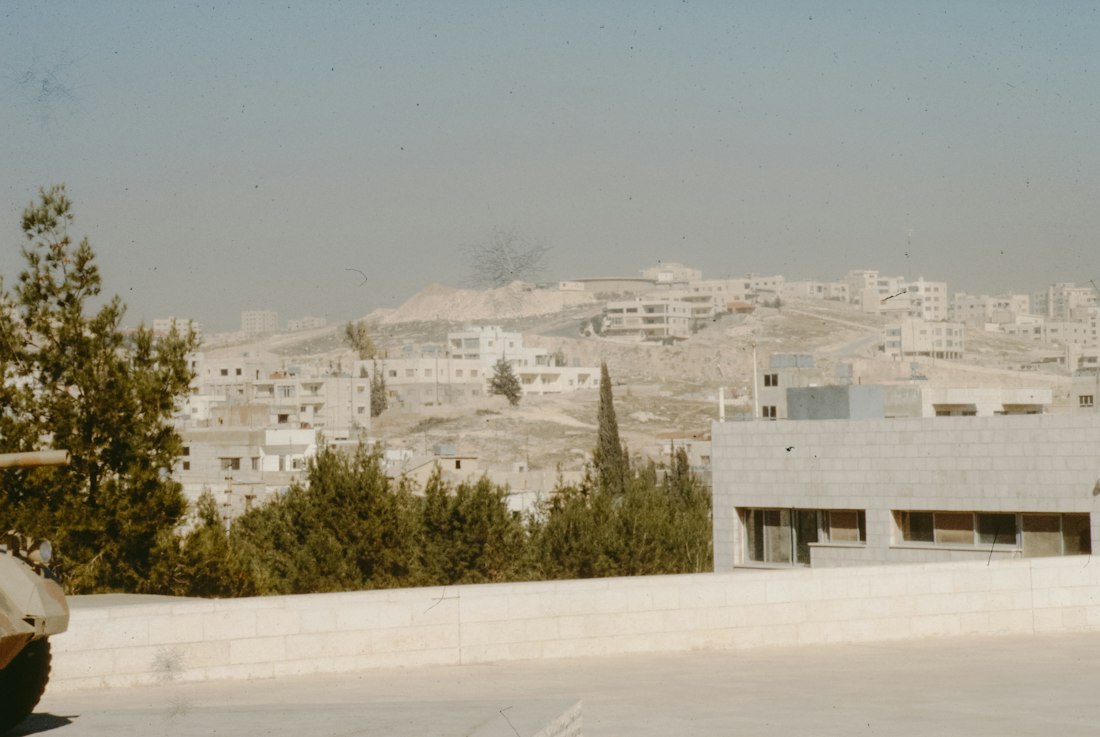
War-damaged buildings on a dusty hillside under a hazy sky — symbolizing the ongoing Middle East conflict between Israel, Iran, and US-backed forces in 2025
Buildings reduced to rubble in a conflict zone — the US-Israel-Iran war has caused widespread destruction across multiple fronts in the Middle East.
Photo by Annie Spratt / Unsplash Free License

I. The Strategic Landscape: A Powder Keg in the Middle East

The Middle East has entered one of its most volatile phases since the 2003 Iraq War. The triangle of strategic tension between the United States, Israel, and Iran has shifted from a cold shadow war to an era of direct military confrontation, fundamentally reshaping regional security architecture and sending shockwaves across global markets and geopolitical alignments.

The immediate catalyst was Hamas's October 7, 2023 attack on Israeli soil — the deadliest single-day assault on Jewish people since the Holocaust — which triggered Israel's Operation Iron Swords in Gaza. What began as a counterterrorism campaign rapidly escalated into a multi-front conflict involving Hezbollah in Lebanon, Houthi rebels in Yemen, and Iranian-backed militias across Iraq and Syria. Crucially, this culminated in two unprecedented milestones: Iran's direct ballistic missile and drone attacks on Israeli territory (April and October 2024) and Israel's retaliatory strikes on Iranian soil, marking the first time since the 1948 Arab-Israeli War that Iran and Israel engaged in direct kinetic exchanges.

The United States, for its part, deployed carrier strike groups, activated Iron Dome resupply chains, and conducted direct interceptions of Iranian projectiles — effectively becoming a co-belligerent in operational terms, even while avoiding a formal declaration of war. As of early 2025, the theater of conflict spans five operational axes: Gaza, the West Bank, Southern Lebanon, the Red Sea/Bab-el-Mandeb Strait, and Iranian-Israeli air corridors over the Persian Gulf.

Key Takeaway: Iran's "Axis of Resistance" — comprising Hezbollah, Hamas, the Houthis, and Iraqi militias — operates as a distributed deterrence architecture designed to impose attrition on Israel without triggering a full-scale conventional war. Yet the strategic calculus has grown dangerously thin.

II. Military Dimensions: Escalation Dynamics & Capability Assessments

Israel's Military Posture: The Israel Defense Forces (IDF) have demonstrated extraordinary technological capability. The layered air defense architecture — comprising Iron Dome, David's Sling, and Arrow-3 — successfully intercepted over 99% of Iranian ballistic projectiles in the April 2024 salvo, a feat without precedent in the history of missile defense. However, Iran's October 2024 strike (approximately 180 ballistic missiles) exposed the limits of interceptor inventory, highlighting an unsustainable attrition trajectory. The elimination of Hezbollah Secretary-General Hassan Nasrallah in September 2024 was a major tactical victory, yet decisive strategic outcomes in Gaza remain elusive.

Iran's Strategic Calculus: Iran's direct strikes mark a profound doctrinal shift — from proxy deterrence to overt power projection. Tehran's forces possess significant asymmetric advantages: an estimated 3,000+ ballistic missiles, advanced drone swarm capabilities, and the ability to threaten the Strait of Hormuz, through which approximately 21% of global petroleum liquids transit. Iran's nuclear program continues to advance, with enrichment levels sufficient for multiple devices, though weaponization timelines remain classified.

US Military Engagement: Washington has maintained a delicate balance — robust support for Israel alongside deliberate restraint against direct conflict with Iran. The deployment of USS Gerald R. Ford and USS Dwight D. Eisenhower carrier strike groups, forward positioning of F-22 Raptors, and active participation in intercepting Iranian projectiles signals deep operational commitment. Meanwhile, Operation Poseidon Archer — targeted strikes against Houthi missile infrastructure in Yemen — underscores US willingness to expand the theater rather than concede Red Sea access.

III. Economic Fallout: Oil Markets, Shipping, and Global Supply Chains

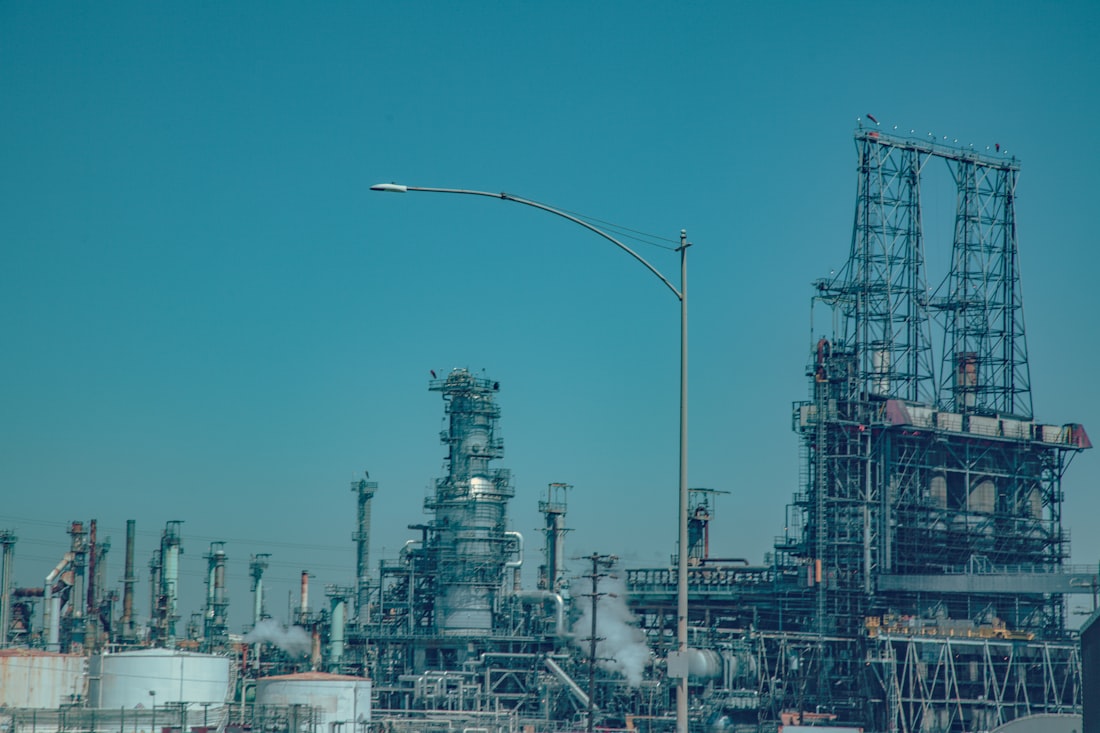
Industrial oil refinery complex under a clear blue sky — representing global energy market volatility caused by the US-Israel-Iran conflict and threats to Persian Gulf oil supply
Global oil markets have experienced severe volatility as the US-Israel-Iran conflict threatens Persian Gulf supply routes, with Brent crude prices spiking above $90/barrel during peak escalation periods.
Photo by Unsplash / Unsplash Free License

The conflict has introduced structural volatility into global energy markets. Brent crude, which traded near $75/barrel pre-October 7, 2023, spiked to $95/barrel during peak escalation periods and remains range-bound between $80–90 due to persistent risk premiums. A potential Israeli or US strike on Iranian oil infrastructure — particularly the Kharg Island terminal, which handles 90% of Iranian exports — could remove 1.5–2 million barrels per day from global supply, with analysts projecting a spike to $130–150/barrel in a worst-case scenario.

Houthi attacks on commercial shipping in the Red Sea have forced major carriers to reroute around the Cape of Good Hope, adding 10–14 days to Europe-Asia transit times and raising freight rates by over 200% on key routes. This has amplified inflationary pressures globally, particularly in Europe and South Asia, disrupting just-in-time supply chains across electronics, automotive, and consumer goods sectors. The economic cost of Red Sea disruption has already exceeded $20 billion in rerouting expenses and cargo delays globally.

IV. India's Strategic Exposure: Navigating Competing Pressures

India's Parliament and Rashtrapati Bhavan in New Delhi — India faces complex geopolitical pressures as it navigates the US-Israel-Iran conflict while protecting its strategic autonomy, energy security, and defense partnerships
New Delhi, India's geopolitical nerve center — India's strategic autonomy doctrine faces its stiffest stress test yet as Washington expects greater alignment while Tehran and Tel Aviv are both key partners in India's security and energy calculus.
Photo by Sukanya Basu / Unsplash Free License

India finds itself at a uniquely complex inflection point — economically exposed, strategically hedged, and diplomatically constrained. As the world's fifth-largest economy and third-largest oil consumer, India cannot afford to be a passive spectator in this conflict.

Military and Defense Dimensions: India maintains deep defense partnerships with Israel, which is its second-largest defense supplier after Russia. Israeli systems — including Barak-8 air defense missiles, Heron and Harop drones, Spike anti-tank missiles, and Phalcon AWACS — are deeply integrated into Indian Army, Navy, and Air Force inventories. Any prolonged Israeli military attrition, or US pressure on arms pipelines, could impact technology transfers and spares supply chains critical to Indian operational readiness.

Concurrently, India maintains historically significant ties with Iran, including a $400 million equity stake in the Chabahar Port project — India's strategic gateway to Central Asia and Afghanistan bypassing Pakistan. The US has issued waivers for Chabahar given its strategic importance, but the risk of secondary sanctions remains a persistent pressure point for Indian policymakers. India's "Strategic Autonomy" doctrine now faces its stiffest test, as Washington increasingly expects New Delhi to align more explicitly with the Western coalition against Iran.

Energy and Economic Security: India is the world's third-largest oil importer, meeting approximately 85% of crude requirements through imports. The Gulf region — including Iraq, Saudi Arabia, and the UAE — accounts for over 60% of India's crude imports. An escalation-driven oil price spike to $130+/barrel would devastate India's Current Account Deficit (CAD), weaken the Indian Rupee, and re-ignite inflation just as the RBI has brought it near target levels. India's diaspora remittances from the Gulf — approximately $40 billion annually — and its workforce of nearly 9 million expatriates in the region face direct vulnerability. The Red Sea disruption has simultaneously impacted Indian textile, pharmaceutical, and engineering goods exports to European markets, as freight surcharges erode competitiveness.

India's Balancing Act: India has been one of the few major democracies to abstain or vote neutrally on UN resolutions related to the Gaza conflict, preserving both its relationship with the Arab world and its partnership with Israel — a diplomatic tightrope walk that reflects classical Nehruvian non-alignment repackaged for the 21st century.

V. Conclusion: India's Path Forward

The US-Israel-Iran conflict is not India's war — but its consequences land squarely on India's doorstep. New Delhi must pursue a calibrated four-track strategy: First, maintain its defense-industrial relationship with Israel while accelerating domestic indigenization under the Atmanirbhar Bharat initiative; second, protect Chabahar through continued diplomatic engagement with both Washington and Tehran; third, aggressively hedge energy risk through supply diversification and strategic petroleum reserve expansion; and fourth, leverage its position as a neutral interlocutor — as it did during the Russia-Ukraine conflict — to play a constructive diplomatic de-escalation role, enhancing its global standing in the process.

India's strategic moment is not to choose sides, but to demonstrate that in a fragmenting world, a capable, neutral, and economically resilient democracy can shape outcomes — without firing a single shot. The measure of India's foreign policy sophistication over the next 12–24 months will be whether it can preserve its multivector partnerships intact while the Middle East continues to burn.


Tags: US Israel Iran War 2025 | Middle East Conflict India Impact | India Oil Prices 2025 | Red Sea Shipping Disruption | India Israel Defense Relations | India Iran Chabahar Port | India Strategic Autonomy | India Military Analysis | Iran Nuclear Program | Middle East Geopolitics 2025

Disclaimer: This analysis is based on open-source intelligence and geopolitical data available up to January 2025. The situation is rapidly evolving; readers are advised to consult current intelligence assessments and verified news sources for the latest developments. This article does not represent the official position of any government or military organization.


via Blogger https://ift.tt/L6tTXMy
March 31, 2026 at 04:17PM
via Blogger https://ift.tt/I109RLu
March 31, 2026 at 05:13PM
via Blogger https://ift.tt/zJ1WlAk
March 31, 2026 at 06:13PM
via Blogger https://ift.tt/iD61szF
March 31, 2026 at 07:13PM

US-ISRAEL-IRAN CONFLICT: STRATEGIC DYNAMICS AND IMPLICATIONS FOR INDIA

US-ISRAEL-IRAN CONFLICT: STRATEGIC DYNAMICS AND IMPLICATIONS FOR INDIA
US-Israel-Iran War 2025: Military & Economic Impact on India | Expert Analysis

Military Analysis Geopolitics India

US–Israel–Iran War 2025: Strategic Dynamics and Their Military & Economic Impact on India

By  |   |  Est. reading time: 8 min


War-damaged buildings on a dusty hillside under a hazy sky — symbolizing the ongoing Middle East conflict between Israel, Iran, and US-backed forces in 2025
Buildings reduced to rubble in a conflict zone — the US-Israel-Iran war has caused widespread destruction across multiple fronts in the Middle East.
Photo by Annie Spratt / Unsplash Free License

I. The Strategic Landscape: A Powder Keg in the Middle East

The Middle East has entered one of its most volatile phases since the 2003 Iraq War. The triangle of strategic tension between the United States, Israel, and Iran has shifted from a cold shadow war to an era of direct military confrontation, fundamentally reshaping regional security architecture and sending shockwaves across global markets and geopolitical alignments.

The immediate catalyst was Hamas's October 7, 2023 attack on Israeli soil — the deadliest single-day assault on Jewish people since the Holocaust — which triggered Israel's Operation Iron Swords in Gaza. What began as a counterterrorism campaign rapidly escalated into a multi-front conflict involving Hezbollah in Lebanon, Houthi rebels in Yemen, and Iranian-backed militias across Iraq and Syria. Crucially, this culminated in two unprecedented milestones: Iran's direct ballistic missile and drone attacks on Israeli territory (April and October 2024) and Israel's retaliatory strikes on Iranian soil, marking the first time since the 1948 Arab-Israeli War that Iran and Israel engaged in direct kinetic exchanges.

The United States, for its part, deployed carrier strike groups, activated Iron Dome resupply chains, and conducted direct interceptions of Iranian projectiles — effectively becoming a co-belligerent in operational terms, even while avoiding a formal declaration of war. As of early 2025, the theater of conflict spans five operational axes: Gaza, the West Bank, Southern Lebanon, the Red Sea/Bab-el-Mandeb Strait, and Iranian-Israeli air corridors over the Persian Gulf.

Key Takeaway: Iran's "Axis of Resistance" — comprising Hezbollah, Hamas, the Houthis, and Iraqi militias — operates as a distributed deterrence architecture designed to impose attrition on Israel without triggering a full-scale conventional war. Yet the strategic calculus has grown dangerously thin.

II. Military Dimensions: Escalation Dynamics & Capability Assessments

Israel's Military Posture: The Israel Defense Forces (IDF) have demonstrated extraordinary technological capability. The layered air defense architecture — comprising Iron Dome, David's Sling, and Arrow-3 — successfully intercepted over 99% of Iranian ballistic projectiles in the April 2024 salvo, a feat without precedent in the history of missile defense. However, Iran's October 2024 strike (approximately 180 ballistic missiles) exposed the limits of interceptor inventory, highlighting an unsustainable attrition trajectory. The elimination of Hezbollah Secretary-General Hassan Nasrallah in September 2024 was a major tactical victory, yet decisive strategic outcomes in Gaza remain elusive.

Iran's Strategic Calculus: Iran's direct strikes mark a profound doctrinal shift — from proxy deterrence to overt power projection. Tehran's forces possess significant asymmetric advantages: an estimated 3,000+ ballistic missiles, advanced drone swarm capabilities, and the ability to threaten the Strait of Hormuz, through which approximately 21% of global petroleum liquids transit. Iran's nuclear program continues to advance, with enrichment levels sufficient for multiple devices, though weaponization timelines remain classified.

US Military Engagement: Washington has maintained a delicate balance — robust support for Israel alongside deliberate restraint against direct conflict with Iran. The deployment of USS Gerald R. Ford and USS Dwight D. Eisenhower carrier strike groups, forward positioning of F-22 Raptors, and active participation in intercepting Iranian projectiles signals deep operational commitment. Meanwhile, Operation Poseidon Archer — targeted strikes against Houthi missile infrastructure in Yemen — underscores US willingness to expand the theater rather than concede Red Sea access.

III. Economic Fallout: Oil Markets, Shipping, and Global Supply Chains

Industrial oil refinery complex under a clear blue sky — representing global energy market volatility caused by the US-Israel-Iran conflict and threats to Persian Gulf oil supply
Global oil markets have experienced severe volatility as the US-Israel-Iran conflict threatens Persian Gulf supply routes, with Brent crude prices spiking above $90/barrel during peak escalation periods.
Photo by Unsplash / Unsplash Free License

The conflict has introduced structural volatility into global energy markets. Brent crude, which traded near $75/barrel pre-October 7, 2023, spiked to $95/barrel during peak escalation periods and remains range-bound between $80–90 due to persistent risk premiums. A potential Israeli or US strike on Iranian oil infrastructure — particularly the Kharg Island terminal, which handles 90% of Iranian exports — could remove 1.5–2 million barrels per day from global supply, with analysts projecting a spike to $130–150/barrel in a worst-case scenario.

Houthi attacks on commercial shipping in the Red Sea have forced major carriers to reroute around the Cape of Good Hope, adding 10–14 days to Europe-Asia transit times and raising freight rates by over 200% on key routes. This has amplified inflationary pressures globally, particularly in Europe and South Asia, disrupting just-in-time supply chains across electronics, automotive, and consumer goods sectors. The economic cost of Red Sea disruption has already exceeded $20 billion in rerouting expenses and cargo delays globally.

IV. India's Strategic Exposure: Navigating Competing Pressures

India's Parliament and Rashtrapati Bhavan in New Delhi — India faces complex geopolitical pressures as it navigates the US-Israel-Iran conflict while protecting its strategic autonomy, energy security, and defense partnerships
New Delhi, India's geopolitical nerve center — India's strategic autonomy doctrine faces its stiffest stress test yet as Washington expects greater alignment while Tehran and Tel Aviv are both key partners in India's security and energy calculus.
Photo by Sukanya Basu / Unsplash Free License

India finds itself at a uniquely complex inflection point — economically exposed, strategically hedged, and diplomatically constrained. As the world's fifth-largest economy and third-largest oil consumer, India cannot afford to be a passive spectator in this conflict.

Military and Defense Dimensions: India maintains deep defense partnerships with Israel, which is its second-largest defense supplier after Russia. Israeli systems — including Barak-8 air defense missiles, Heron and Harop drones, Spike anti-tank missiles, and Phalcon AWACS — are deeply integrated into Indian Army, Navy, and Air Force inventories. Any prolonged Israeli military attrition, or US pressure on arms pipelines, could impact technology transfers and spares supply chains critical to Indian operational readiness.

Concurrently, India maintains historically significant ties with Iran, including a $400 million equity stake in the Chabahar Port project — India's strategic gateway to Central Asia and Afghanistan bypassing Pakistan. The US has issued waivers for Chabahar given its strategic importance, but the risk of secondary sanctions remains a persistent pressure point for Indian policymakers. India's "Strategic Autonomy" doctrine now faces its stiffest test, as Washington increasingly expects New Delhi to align more explicitly with the Western coalition against Iran.

Energy and Economic Security: India is the world's third-largest oil importer, meeting approximately 85% of crude requirements through imports. The Gulf region — including Iraq, Saudi Arabia, and the UAE — accounts for over 60% of India's crude imports. An escalation-driven oil price spike to $130+/barrel would devastate India's Current Account Deficit (CAD), weaken the Indian Rupee, and re-ignite inflation just as the RBI has brought it near target levels. India's diaspora remittances from the Gulf — approximately $40 billion annually — and its workforce of nearly 9 million expatriates in the region face direct vulnerability. The Red Sea disruption has simultaneously impacted Indian textile, pharmaceutical, and engineering goods exports to European markets, as freight surcharges erode competitiveness.

India's Balancing Act: India has been one of the few major democracies to abstain or vote neutrally on UN resolutions related to the Gaza conflict, preserving both its relationship with the Arab world and its partnership with Israel — a diplomatic tightrope walk that reflects classical Nehruvian non-alignment repackaged for the 21st century.

V. Conclusion: India's Path Forward

The US-Israel-Iran conflict is not India's war — but its consequences land squarely on India's doorstep. New Delhi must pursue a calibrated four-track strategy: First, maintain its defense-industrial relationship with Israel while accelerating domestic indigenization under the Atmanirbhar Bharat initiative; second, protect Chabahar through continued diplomatic engagement with both Washington and Tehran; third, aggressively hedge energy risk through supply diversification and strategic petroleum reserve expansion; and fourth, leverage its position as a neutral interlocutor — as it did during the Russia-Ukraine conflict — to play a constructive diplomatic de-escalation role, enhancing its global standing in the process.

India's strategic moment is not to choose sides, but to demonstrate that in a fragmenting world, a capable, neutral, and economically resilient democracy can shape outcomes — without firing a single shot. The measure of India's foreign policy sophistication over the next 12–24 months will be whether it can preserve its multivector partnerships intact while the Middle East continues to burn.


Tags: US Israel Iran War 2025 | Middle East Conflict India Impact | India Oil Prices 2025 | Red Sea Shipping Disruption | India Israel Defense Relations | India Iran Chabahar Port | India Strategic Autonomy | India Military Analysis | Iran Nuclear Program | Middle East Geopolitics 2025

Disclaimer: This analysis is based on open-source intelligence and geopolitical data available up to January 2025. The situation is rapidly evolving; readers are advised to consult current intelligence assessments and verified news sources for the latest developments. This article does not represent the official position of any government or military organization.


via Blogger https://ift.tt/L6tTXMy
March 31, 2026 at 04:17PM
via Blogger https://ift.tt/I109RLu
March 31, 2026 at 05:13PM
via Blogger https://ift.tt/zJ1WlAk
March 31, 2026 at 06:13PM

US-ISRAEL-IRAN CONFLICT: STRATEGIC DYNAMICS AND IMPLICATIONS FOR INDIA

US-ISRAEL-IRAN CONFLICT: STRATEGIC DYNAMICS AND IMPLICATIONS FOR INDIA
US-Israel-Iran War 2025: Military & Economic Impact on India | Expert Analysis

Military Analysis Geopolitics India

US–Israel–Iran War 2025: Strategic Dynamics and Their Military & Economic Impact on India

By  |   |  Est. reading time: 8 min


War-damaged buildings on a dusty hillside under a hazy sky — symbolizing the ongoing Middle East conflict between Israel, Iran, and US-backed forces in 2025
Buildings reduced to rubble in a conflict zone — the US-Israel-Iran war has caused widespread destruction across multiple fronts in the Middle East.
Photo by Annie Spratt / Unsplash Free License

I. The Strategic Landscape: A Powder Keg in the Middle East

The Middle East has entered one of its most volatile phases since the 2003 Iraq War. The triangle of strategic tension between the United States, Israel, and Iran has shifted from a cold shadow war to an era of direct military confrontation, fundamentally reshaping regional security architecture and sending shockwaves across global markets and geopolitical alignments.

The immediate catalyst was Hamas's October 7, 2023 attack on Israeli soil — the deadliest single-day assault on Jewish people since the Holocaust — which triggered Israel's Operation Iron Swords in Gaza. What began as a counterterrorism campaign rapidly escalated into a multi-front conflict involving Hezbollah in Lebanon, Houthi rebels in Yemen, and Iranian-backed militias across Iraq and Syria. Crucially, this culminated in two unprecedented milestones: Iran's direct ballistic missile and drone attacks on Israeli territory (April and October 2024) and Israel's retaliatory strikes on Iranian soil, marking the first time since the 1948 Arab-Israeli War that Iran and Israel engaged in direct kinetic exchanges.

The United States, for its part, deployed carrier strike groups, activated Iron Dome resupply chains, and conducted direct interceptions of Iranian projectiles — effectively becoming a co-belligerent in operational terms, even while avoiding a formal declaration of war. As of early 2025, the theater of conflict spans five operational axes: Gaza, the West Bank, Southern Lebanon, the Red Sea/Bab-el-Mandeb Strait, and Iranian-Israeli air corridors over the Persian Gulf.

Key Takeaway: Iran's "Axis of Resistance" — comprising Hezbollah, Hamas, the Houthis, and Iraqi militias — operates as a distributed deterrence architecture designed to impose attrition on Israel without triggering a full-scale conventional war. Yet the strategic calculus has grown dangerously thin.

II. Military Dimensions: Escalation Dynamics & Capability Assessments

Israel's Military Posture: The Israel Defense Forces (IDF) have demonstrated extraordinary technological capability. The layered air defense architecture — comprising Iron Dome, David's Sling, and Arrow-3 — successfully intercepted over 99% of Iranian ballistic projectiles in the April 2024 salvo, a feat without precedent in the history of missile defense. However, Iran's October 2024 strike (approximately 180 ballistic missiles) exposed the limits of interceptor inventory, highlighting an unsustainable attrition trajectory. The elimination of Hezbollah Secretary-General Hassan Nasrallah in September 2024 was a major tactical victory, yet decisive strategic outcomes in Gaza remain elusive.

Iran's Strategic Calculus: Iran's direct strikes mark a profound doctrinal shift — from proxy deterrence to overt power projection. Tehran's forces possess significant asymmetric advantages: an estimated 3,000+ ballistic missiles, advanced drone swarm capabilities, and the ability to threaten the Strait of Hormuz, through which approximately 21% of global petroleum liquids transit. Iran's nuclear program continues to advance, with enrichment levels sufficient for multiple devices, though weaponization timelines remain classified.

US Military Engagement: Washington has maintained a delicate balance — robust support for Israel alongside deliberate restraint against direct conflict with Iran. The deployment of USS Gerald R. Ford and USS Dwight D. Eisenhower carrier strike groups, forward positioning of F-22 Raptors, and active participation in intercepting Iranian projectiles signals deep operational commitment. Meanwhile, Operation Poseidon Archer — targeted strikes against Houthi missile infrastructure in Yemen — underscores US willingness to expand the theater rather than concede Red Sea access.

III. Economic Fallout: Oil Markets, Shipping, and Global Supply Chains

Industrial oil refinery complex under a clear blue sky — representing global energy market volatility caused by the US-Israel-Iran conflict and threats to Persian Gulf oil supply
Global oil markets have experienced severe volatility as the US-Israel-Iran conflict threatens Persian Gulf supply routes, with Brent crude prices spiking above $90/barrel during peak escalation periods.
Photo by Unsplash / Unsplash Free License

The conflict has introduced structural volatility into global energy markets. Brent crude, which traded near $75/barrel pre-October 7, 2023, spiked to $95/barrel during peak escalation periods and remains range-bound between $80–90 due to persistent risk premiums. A potential Israeli or US strike on Iranian oil infrastructure — particularly the Kharg Island terminal, which handles 90% of Iranian exports — could remove 1.5–2 million barrels per day from global supply, with analysts projecting a spike to $130–150/barrel in a worst-case scenario.

Houthi attacks on commercial shipping in the Red Sea have forced major carriers to reroute around the Cape of Good Hope, adding 10–14 days to Europe-Asia transit times and raising freight rates by over 200% on key routes. This has amplified inflationary pressures globally, particularly in Europe and South Asia, disrupting just-in-time supply chains across electronics, automotive, and consumer goods sectors. The economic cost of Red Sea disruption has already exceeded $20 billion in rerouting expenses and cargo delays globally.

IV. India's Strategic Exposure: Navigating Competing Pressures

India's Parliament and Rashtrapati Bhavan in New Delhi — India faces complex geopolitical pressures as it navigates the US-Israel-Iran conflict while protecting its strategic autonomy, energy security, and defense partnerships
New Delhi, India's geopolitical nerve center — India's strategic autonomy doctrine faces its stiffest stress test yet as Washington expects greater alignment while Tehran and Tel Aviv are both key partners in India's security and energy calculus.
Photo by Sukanya Basu / Unsplash Free License

India finds itself at a uniquely complex inflection point — economically exposed, strategically hedged, and diplomatically constrained. As the world's fifth-largest economy and third-largest oil consumer, India cannot afford to be a passive spectator in this conflict.

Military and Defense Dimensions: India maintains deep defense partnerships with Israel, which is its second-largest defense supplier after Russia. Israeli systems — including Barak-8 air defense missiles, Heron and Harop drones, Spike anti-tank missiles, and Phalcon AWACS — are deeply integrated into Indian Army, Navy, and Air Force inventories. Any prolonged Israeli military attrition, or US pressure on arms pipelines, could impact technology transfers and spares supply chains critical to Indian operational readiness.

Concurrently, India maintains historically significant ties with Iran, including a $400 million equity stake in the Chabahar Port project — India's strategic gateway to Central Asia and Afghanistan bypassing Pakistan. The US has issued waivers for Chabahar given its strategic importance, but the risk of secondary sanctions remains a persistent pressure point for Indian policymakers. India's "Strategic Autonomy" doctrine now faces its stiffest test, as Washington increasingly expects New Delhi to align more explicitly with the Western coalition against Iran.

Energy and Economic Security: India is the world's third-largest oil importer, meeting approximately 85% of crude requirements through imports. The Gulf region — including Iraq, Saudi Arabia, and the UAE — accounts for over 60% of India's crude imports. An escalation-driven oil price spike to $130+/barrel would devastate India's Current Account Deficit (CAD), weaken the Indian Rupee, and re-ignite inflation just as the RBI has brought it near target levels. India's diaspora remittances from the Gulf — approximately $40 billion annually — and its workforce of nearly 9 million expatriates in the region face direct vulnerability. The Red Sea disruption has simultaneously impacted Indian textile, pharmaceutical, and engineering goods exports to European markets, as freight surcharges erode competitiveness.

India's Balancing Act: India has been one of the few major democracies to abstain or vote neutrally on UN resolutions related to the Gaza conflict, preserving both its relationship with the Arab world and its partnership with Israel — a diplomatic tightrope walk that reflects classical Nehruvian non-alignment repackaged for the 21st century.

V. Conclusion: India's Path Forward

The US-Israel-Iran conflict is not India's war — but its consequences land squarely on India's doorstep. New Delhi must pursue a calibrated four-track strategy: First, maintain its defense-industrial relationship with Israel while accelerating domestic indigenization under the Atmanirbhar Bharat initiative; second, protect Chabahar through continued diplomatic engagement with both Washington and Tehran; third, aggressively hedge energy risk through supply diversification and strategic petroleum reserve expansion; and fourth, leverage its position as a neutral interlocutor — as it did during the Russia-Ukraine conflict — to play a constructive diplomatic de-escalation role, enhancing its global standing in the process.

India's strategic moment is not to choose sides, but to demonstrate that in a fragmenting world, a capable, neutral, and economically resilient democracy can shape outcomes — without firing a single shot. The measure of India's foreign policy sophistication over the next 12–24 months will be whether it can preserve its multivector partnerships intact while the Middle East continues to burn.


Tags: US Israel Iran War 2025 | Middle East Conflict India Impact | India Oil Prices 2025 | Red Sea Shipping Disruption | India Israel Defense Relations | India Iran Chabahar Port | India Strategic Autonomy | India Military Analysis | Iran Nuclear Program | Middle East Geopolitics 2025

Disclaimer: This analysis is based on open-source intelligence and geopolitical data available up to January 2025. The situation is rapidly evolving; readers are advised to consult current intelligence assessments and verified news sources for the latest developments. This article does not represent the official position of any government or military organization.


via Blogger https://ift.tt/L6tTXMy
March 31, 2026 at 04:17PM
via Blogger https://ift.tt/I109RLu
March 31, 2026 at 05:13PM

US-ISRAEL-IRAN CONFLICT: STRATEGIC DYNAMICS AND IMPLICATIONS FOR INDIA

US-ISRAEL-IRAN CONFLICT: STRATEGIC DYNAMICS AND IMPLICATIONS FOR INDIA
US-Israel-Iran War 2025: Military & Economic Impact on India | Expert Analysis

Military Analysis Geopolitics India

US–Israel–Iran War 2025: Strategic Dynamics and Their Military & Economic Impact on India

By  |   |  Est. reading time: 8 min


War-damaged buildings on a dusty hillside under a hazy sky — symbolizing the ongoing Middle East conflict between Israel, Iran, and US-backed forces in 2025
Buildings reduced to rubble in a conflict zone — the US-Israel-Iran war has caused widespread destruction across multiple fronts in the Middle East.
Photo by Annie Spratt / Unsplash Free License

I. The Strategic Landscape: A Powder Keg in the Middle East

The Middle East has entered one of its most volatile phases since the 2003 Iraq War. The triangle of strategic tension between the United States, Israel, and Iran has shifted from a cold shadow war to an era of direct military confrontation, fundamentally reshaping regional security architecture and sending shockwaves across global markets and geopolitical alignments.

The immediate catalyst was Hamas's October 7, 2023 attack on Israeli soil — the deadliest single-day assault on Jewish people since the Holocaust — which triggered Israel's Operation Iron Swords in Gaza. What began as a counterterrorism campaign rapidly escalated into a multi-front conflict involving Hezbollah in Lebanon, Houthi rebels in Yemen, and Iranian-backed militias across Iraq and Syria. Crucially, this culminated in two unprecedented milestones: Iran's direct ballistic missile and drone attacks on Israeli territory (April and October 2024) and Israel's retaliatory strikes on Iranian soil, marking the first time since the 1948 Arab-Israeli War that Iran and Israel engaged in direct kinetic exchanges.

The United States, for its part, deployed carrier strike groups, activated Iron Dome resupply chains, and conducted direct interceptions of Iranian projectiles — effectively becoming a co-belligerent in operational terms, even while avoiding a formal declaration of war. As of early 2025, the theater of conflict spans five operational axes: Gaza, the West Bank, Southern Lebanon, the Red Sea/Bab-el-Mandeb Strait, and Iranian-Israeli air corridors over the Persian Gulf.

Key Takeaway: Iran's "Axis of Resistance" — comprising Hezbollah, Hamas, the Houthis, and Iraqi militias — operates as a distributed deterrence architecture designed to impose attrition on Israel without triggering a full-scale conventional war. Yet the strategic calculus has grown dangerously thin.

II. Military Dimensions: Escalation Dynamics & Capability Assessments

Israel's Military Posture: The Israel Defense Forces (IDF) have demonstrated extraordinary technological capability. The layered air defense architecture — comprising Iron Dome, David's Sling, and Arrow-3 — successfully intercepted over 99% of Iranian ballistic projectiles in the April 2024 salvo, a feat without precedent in the history of missile defense. However, Iran's October 2024 strike (approximately 180 ballistic missiles) exposed the limits of interceptor inventory, highlighting an unsustainable attrition trajectory. The elimination of Hezbollah Secretary-General Hassan Nasrallah in September 2024 was a major tactical victory, yet decisive strategic outcomes in Gaza remain elusive.

Iran's Strategic Calculus: Iran's direct strikes mark a profound doctrinal shift — from proxy deterrence to overt power projection. Tehran's forces possess significant asymmetric advantages: an estimated 3,000+ ballistic missiles, advanced drone swarm capabilities, and the ability to threaten the Strait of Hormuz, through which approximately 21% of global petroleum liquids transit. Iran's nuclear program continues to advance, with enrichment levels sufficient for multiple devices, though weaponization timelines remain classified.

US Military Engagement: Washington has maintained a delicate balance — robust support for Israel alongside deliberate restraint against direct conflict with Iran. The deployment of USS Gerald R. Ford and USS Dwight D. Eisenhower carrier strike groups, forward positioning of F-22 Raptors, and active participation in intercepting Iranian projectiles signals deep operational commitment. Meanwhile, Operation Poseidon Archer — targeted strikes against Houthi missile infrastructure in Yemen — underscores US willingness to expand the theater rather than concede Red Sea access.

III. Economic Fallout: Oil Markets, Shipping, and Global Supply Chains

Industrial oil refinery complex under a clear blue sky — representing global energy market volatility caused by the US-Israel-Iran conflict and threats to Persian Gulf oil supply
Global oil markets have experienced severe volatility as the US-Israel-Iran conflict threatens Persian Gulf supply routes, with Brent crude prices spiking above $90/barrel during peak escalation periods.
Photo by Unsplash / Unsplash Free License

The conflict has introduced structural volatility into global energy markets. Brent crude, which traded near $75/barrel pre-October 7, 2023, spiked to $95/barrel during peak escalation periods and remains range-bound between $80–90 due to persistent risk premiums. A potential Israeli or US strike on Iranian oil infrastructure — particularly the Kharg Island terminal, which handles 90% of Iranian exports — could remove 1.5–2 million barrels per day from global supply, with analysts projecting a spike to $130–150/barrel in a worst-case scenario.

Houthi attacks on commercial shipping in the Red Sea have forced major carriers to reroute around the Cape of Good Hope, adding 10–14 days to Europe-Asia transit times and raising freight rates by over 200% on key routes. This has amplified inflationary pressures globally, particularly in Europe and South Asia, disrupting just-in-time supply chains across electronics, automotive, and consumer goods sectors. The economic cost of Red Sea disruption has already exceeded $20 billion in rerouting expenses and cargo delays globally.

IV. India's Strategic Exposure: Navigating Competing Pressures

India's Parliament and Rashtrapati Bhavan in New Delhi — India faces complex geopolitical pressures as it navigates the US-Israel-Iran conflict while protecting its strategic autonomy, energy security, and defense partnerships
New Delhi, India's geopolitical nerve center — India's strategic autonomy doctrine faces its stiffest stress test yet as Washington expects greater alignment while Tehran and Tel Aviv are both key partners in India's security and energy calculus.
Photo by Sukanya Basu / Unsplash Free License

India finds itself at a uniquely complex inflection point — economically exposed, strategically hedged, and diplomatically constrained. As the world's fifth-largest economy and third-largest oil consumer, India cannot afford to be a passive spectator in this conflict.

Military and Defense Dimensions: India maintains deep defense partnerships with Israel, which is its second-largest defense supplier after Russia. Israeli systems — including Barak-8 air defense missiles, Heron and Harop drones, Spike anti-tank missiles, and Phalcon AWACS — are deeply integrated into Indian Army, Navy, and Air Force inventories. Any prolonged Israeli military attrition, or US pressure on arms pipelines, could impact technology transfers and spares supply chains critical to Indian operational readiness.

Concurrently, India maintains historically significant ties with Iran, including a $400 million equity stake in the Chabahar Port project — India's strategic gateway to Central Asia and Afghanistan bypassing Pakistan. The US has issued waivers for Chabahar given its strategic importance, but the risk of secondary sanctions remains a persistent pressure point for Indian policymakers. India's "Strategic Autonomy" doctrine now faces its stiffest test, as Washington increasingly expects New Delhi to align more explicitly with the Western coalition against Iran.

Energy and Economic Security: India is the world's third-largest oil importer, meeting approximately 85% of crude requirements through imports. The Gulf region — including Iraq, Saudi Arabia, and the UAE — accounts for over 60% of India's crude imports. An escalation-driven oil price spike to $130+/barrel would devastate India's Current Account Deficit (CAD), weaken the Indian Rupee, and re-ignite inflation just as the RBI has brought it near target levels. India's diaspora remittances from the Gulf — approximately $40 billion annually — and its workforce of nearly 9 million expatriates in the region face direct vulnerability. The Red Sea disruption has simultaneously impacted Indian textile, pharmaceutical, and engineering goods exports to European markets, as freight surcharges erode competitiveness.

India's Balancing Act: India has been one of the few major democracies to abstain or vote neutrally on UN resolutions related to the Gaza conflict, preserving both its relationship with the Arab world and its partnership with Israel — a diplomatic tightrope walk that reflects classical Nehruvian non-alignment repackaged for the 21st century.

V. Conclusion: India's Path Forward

The US-Israel-Iran conflict is not India's war — but its consequences land squarely on India's doorstep. New Delhi must pursue a calibrated four-track strategy: First, maintain its defense-industrial relationship with Israel while accelerating domestic indigenization under the Atmanirbhar Bharat initiative; second, protect Chabahar through continued diplomatic engagement with both Washington and Tehran; third, aggressively hedge energy risk through supply diversification and strategic petroleum reserve expansion; and fourth, leverage its position as a neutral interlocutor — as it did during the Russia-Ukraine conflict — to play a constructive diplomatic de-escalation role, enhancing its global standing in the process.

India's strategic moment is not to choose sides, but to demonstrate that in a fragmenting world, a capable, neutral, and economically resilient democracy can shape outcomes — without firing a single shot. The measure of India's foreign policy sophistication over the next 12–24 months will be whether it can preserve its multivector partnerships intact while the Middle East continues to burn.


Tags: US Israel Iran War 2025 | Middle East Conflict India Impact | India Oil Prices 2025 | Red Sea Shipping Disruption | India Israel Defense Relations | India Iran Chabahar Port | India Strategic Autonomy | India Military Analysis | Iran Nuclear Program | Middle East Geopolitics 2025

Disclaimer: This analysis is based on open-source intelligence and geopolitical data available up to January 2025. The situation is rapidly evolving; readers are advised to consult current intelligence assessments and verified news sources for the latest developments. This article does not represent the official position of any government or military organization.


via Blogger https://ift.tt/L6tTXMy
March 31, 2026 at 04:17PM

Tuesday, March 24, 2026

चौराहे पर भारत: अनुसूचित जाति/अनुसूचित जनजाति अधिनियम विवाद, यूजीसी सुधार, और नरेंद्र मोदी का राजनीतिक भविष्य

चौराहे पर भारत: अनुसूचित जाति/अनुसूचित जनजाति अधिनियम विवाद, यूजीसी सुधार, और नरेंद्र मोदी का राजनीतिक भविष्य

via Blogger https://ift.tt/7y0WAT8
March 24, 2026 at 06:13PM
via Blogger https://ift.tt/itPz8GH
March 24, 2026 at 07:13PM
via Blogger https://ift.tt/pTHnE54
March 24, 2026 at 08:13PM

चौराहे पर भारत: अनुसूचित जाति/अनुसूचित जनजाति अधिनियम विवाद, यूजीसी सुधार, और नरेंद्र मोदी का राजनीतिक भविष्य

चौराहे पर भारत: अनुसूचित जाति/अनुसूचित जनजाति अधिनियम विवाद, यूजीसी सुधार, और नरेंद्र मोदी का राजनीतिक भविष्य

via Blogger https://ift.tt/7y0WAT8
March 24, 2026 at 06:13PM
via Blogger https://ift.tt/itPz8GH
March 24, 2026 at 07:13PM

चौराहे पर भारत: अनुसूचित जाति/अनुसूचित जनजाति अधिनियम विवाद, यूजीसी सुधार, और नरेंद्र मोदी का राजनीतिक भविष्य

चौराहे पर भारत: अनुसूचित जाति/अनुसूचित जनजाति अधिनियम विवाद, यूजीसी सुधार, और नरेंद्र मोदी का राजनीतिक भविष्य

via Blogger https://ift.tt/7y0WAT8
March 24, 2026 at 06:13PM

चौराहे पर भारत: अनुसूचित जाति/अनुसूचित जनजाति अधिनियम विवाद, यूजीसी सुधार, और नरेंद्र मोदी का राजनीतिक भविष्य

Tuesday, March 17, 2026

The War That Is Redrawing the Middle East

The War That Is Redrawing the Middle East

via Blogger https://ift.tt/gTJ0rnD
March 17, 2026 at 04:13PM
via Blogger https://ift.tt/x3kU1ce
March 17, 2026 at 05:13PM
via Blogger https://ift.tt/IY5fXhT
March 17, 2026 at 06:13PM

The War That Is Redrawing the Middle East

The War That Is Redrawing the Middle East

via Blogger https://ift.tt/gTJ0rnD
March 17, 2026 at 04:13PM
via Blogger https://ift.tt/x3kU1ce
March 17, 2026 at 05:13PM

The War That Is Redrawing the Middle East

The War That Is Redrawing the Middle East

via Blogger https://ift.tt/gTJ0rnD
March 17, 2026 at 04:13PM

The War That Is Redrawing the Middle East

Monday, March 16, 2026

ऑपरेशन एपिक फ्यूरी: वह युद्ध जो मध्य-पूर्व को फिर से परिभाषित कर रहा है

ऑपरेशन एपिक फ्यूरी: वह युद्ध जो मध्य-पूर्व को फिर से परिभाषित कर रहा है

via Blogger https://ift.tt/0noxYOQ
March 15, 2026 at 10:13PM
via Blogger https://ift.tt/TCt6sr1
March 15, 2026 at 11:13PM
via Blogger https://ift.tt/zISH4aF
March 16, 2026 at 12:13AM

ऑपरेशन एपिक फ्यूरी: वह युद्ध जो मध्य-पूर्व को फिर से परिभाषित कर रहा है

ऑपरेशन एपिक फ्यूरी: वह युद्ध जो मध्य-पूर्व को फिर से परिभाषित कर रहा है

via Blogger https://ift.tt/0noxYOQ
March 15, 2026 at 10:13PM
via Blogger https://ift.tt/TCt6sr1
March 15, 2026 at 11:13PM

Thursday, March 5, 2026

U.S.–Israel military campaign against Iran

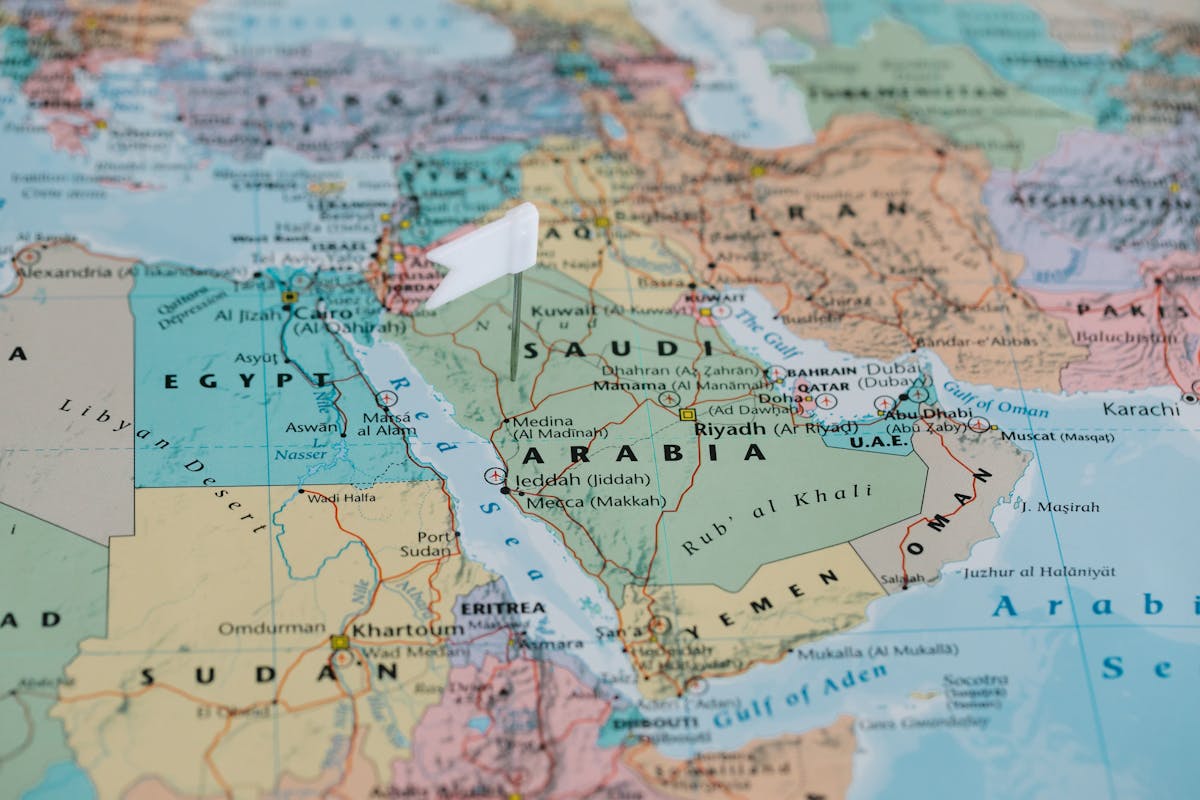
Middle East Map - US Israel Iran Military Campaign 2026

Map of the Middle East conflict zone | Free image via Pexels

🚨 Breaking Military Analysis: A comprehensive breakdown of the joint U.S.-Israel military campaign against Iran (Operation Epic Fury / Operation Lion's Roar), covering the ground situation as of early March 2026, Iranian leadership decapitation, nuclear infrastructure strikes, and regional escalation risks.
📋 Contents:
• Joint US-Israel Offensive: What Has Happened?
• Iranian Leadership Casualties
• US Military Losses & Iranian Retaliation
• Strait of Hormuz: Energy Markets Impact
• Global Response & Diplomatic Fallout
• What Next for Iran?
U.S.–Israel military campaign against Iran

 U.S.–Israel military campaign against Iran, the situation on the ground, Tehran’s options, and the risks of escalation in the near term (as of March 4, 2026):What has happened so far?

Joint U.S.–Israel Offensive:
A coordinated military campaign—often referred to by Israeli officials as Operation Lion’s Roar—began on 28 February 2026 with intensive air and missile strikes against Iranian strategic and military targets including defense sites, missile infrastructure and command facilities.

High-Level Iranian Leadership Impact:
Reports from multiple outlets indicate that Iran’s Supreme Leader Ayatollah Ali Khamenei was killed in the initial strikes.
Airspace Control:

Israeli and U.S. forces now claim near-total control of Iranian airspace, asserting significant degradation of Iranian surface-to-air and offensive capabilities.

Iranian Retaliation:
Tehran has launched missile and drone strikes against U.S. bases in the Gulf region and Israeli territory. There are reports of drone attacks reaching Saudi Arabia (including the CIA station in Riyadh) and combat engagements involving Iraqi and Gulf airspaces.

Regional Spillover:
Iran-aligned groups such as Hezbollah in Lebanon have opened additional fronts against Israel, triggering reciprocal strikes.

Casualties and Economic Impacts:

International Reaction:
Many states, particularly in the Global South, have condemned the offensive as a breach of international law and warned about dangers of escalating warfare.


2) Iran’s strategic options — the way forward

Given the current dynamics, Iran effectively has four main courses of action:

a) Continue conventional retaliation

Iran is likely to sustain missile/drone strikes on U.S. and Israeli assets as long as it can affect perceived costs. This includes proxy operations through allied militias across Iraq, Syria, and Lebanon.

Advantages:**

  • Preserves regime posture of defending sovereignty.

  • Imposes asymmetric costs on U.S. and Israeli forces.

Risks:**

  • Draws further retaliation and deeper U.S–Israeli operations inside Iran.

b) Escalate to broader regional conflict

Tehran’s strategy could expand to direct engagements involving the Gulf states, Iraq, and possibly Yemen’s Houthis, targeting critical shipping routes such as the Strait of Hormuz. This could disrupt global energy flows and mobilise external powers. (Reports confirm such disruptions are already underway.)

c) Harden defenses and attritional resistance

Iran also retains underground infrastructure, mobile missile systems, and hardened air defenses. Focusing on defensive depth and attritional warfare increases costs to the adversary without provoking high-intensity leaps in conflict.

d) Leverage diplomatic or negotiation channels

While current Iranian leadership has rejected negotiations with Washington, international mediation (e.g., by the UN, China, Turkey, or European powers) remains a potential stabilising mechanism—especially if battlefield costs mount for the U.S. or Israel.


3) Immediate risks — how dangerous could this be in days to come?

✔ Prolongation and intensification of direct strikes:
Military planners on all sides suggest the campaign may expand beyond initial limited goals, prolonging combat and deepening strikes into Iranian territory.

✔ Wider Middle East escalation:

Proxies (Hezbollah, Iraqi militias) and allied states could broaden involvement—potentially drawing Saudi Arabia, UAE, or even indirect Russian/Chinese diplomatic pressures into the conflict.

✔ Strait of Hormuz instability:
Iran has the capacity to close or hinder shipping through Hormuz, threatening global oil supply and potentially triggering military interdictions.

✔ Domestic Iranian instability:
The killing of Khamenei may create internal power struggles and nationalist mobilization, which could harden Tehran’s stance and complicate internal unity. This may limit Iran’s willingness to de-escalate.

✔ Risk of miscalculation:
In fast-moving high-intensity conflict, single incidents (accidental shoot-downs, civilian casualties, strikes on third-party assets) can rapidly widen the war footprint.


4) Strategic assessment

Best-case scenario:
Limited and controlled de-escalation through international mediation, freeze in direct offensive operations, and negotiation on nuclear and security guarantees.

Worst-case scenario:
Multi-front regional war drawing in proxies and Gulf states, major disruption of global oil markets, and a protracted, high-cost conflict akin to a large conventional war.


Col Rajendra Shukla


via Blogger https://ift.tt/Ud2yD0C
March 5, 2026 at 10:59AM
via Blogger https://ift.tt/YzSOT7A
March 5, 2026 at 11:13AM
via Blogger https://ift.tt/yWwjTYv
March 5, 2026 at 12:13PM
via Blogger https://ift.tt/h9tYE0K
March 5, 2026 at 01:13PM

✍️ Analysis by Col. Rajendra Shukla (Retd.)

This strategic overview is compiled by Colonel Rajendra Shukla, retired Indian Army officer and defence analyst. Read more of his expert geopolitical analysis at Best Information at Shuksgyan — India's go-to blog for military strategy, Indian politics, and global affairs.

SEO Keywords: US Israel Iran war 2026, Operation Epic Fury, Operation Lion's Roar, Iran nuclear strikes, Khamenei killed, Middle East war March 2026, US military Iran, Strait of Hormuz oil crisis, Iran regime change, India Iran conflict impact

U.S.–Israel military campaign against Iran

U.S.–Israel military campaign against Iran

 U.S.–Israel military campaign against Iran, the situation on the ground, Tehran’s options, and the risks of escalation in the near term (as of March 4, 2026):What has happened so far?

Joint U.S.–Israel Offensive:
A coordinated military campaign—often referred to by Israeli officials as Operation Lion’s Roar—began on 28 February 2026 with intensive air and missile strikes against Iranian strategic and military targets including defense sites, missile infrastructure and command facilities.

High-Level Iranian Leadership Impact:
Reports from multiple outlets indicate that Iran’s Supreme Leader Ayatollah Ali Khamenei was killed in the initial strikes.
Airspace Control:

Israeli and U.S. forces now claim near-total control of Iranian airspace, asserting significant degradation of Iranian surface-to-air and offensive capabilities.

Iranian Retaliation:
Tehran has launched missile and drone strikes against U.S. bases in the Gulf region and Israeli territory. There are reports of drone attacks reaching Saudi Arabia (including the CIA station in Riyadh) and combat engagements involving Iraqi and Gulf airspaces.

Regional Spillover:
Iran-aligned groups such as Hezbollah in Lebanon have opened additional fronts against Israel, triggering reciprocal strikes.

Casualties and Economic Impacts:

International Reaction:
Many states, particularly in the Global South, have condemned the offensive as a breach of international law and warned about dangers of escalating warfare.


2) Iran’s strategic options — the way forward

Given the current dynamics, Iran effectively has four main courses of action:

a) Continue conventional retaliation

Iran is likely to sustain missile/drone strikes on U.S. and Israeli assets as long as it can affect perceived costs. This includes proxy operations through allied militias across Iraq, Syria, and Lebanon.

Advantages:**

  • Preserves regime posture of defending sovereignty.

  • Imposes asymmetric costs on U.S. and Israeli forces.

Risks:**

  • Draws further retaliation and deeper U.S–Israeli operations inside Iran.

b) Escalate to broader regional conflict

Tehran’s strategy could expand to direct engagements involving the Gulf states, Iraq, and possibly Yemen’s Houthis, targeting critical shipping routes such as the Strait of Hormuz. This could disrupt global energy flows and mobilise external powers. (Reports confirm such disruptions are already underway.)

c) Harden defenses and attritional resistance

Iran also retains underground infrastructure, mobile missile systems, and hardened air defenses. Focusing on defensive depth and attritional warfare increases costs to the adversary without provoking high-intensity leaps in conflict.

d) Leverage diplomatic or negotiation channels

While current Iranian leadership has rejected negotiations with Washington, international mediation (e.g., by the UN, China, Turkey, or European powers) remains a potential stabilising mechanism—especially if battlefield costs mount for the U.S. or Israel.


3) Immediate risks — how dangerous could this be in days to come?

✔ Prolongation and intensification of direct strikes:
Military planners on all sides suggest the campaign may expand beyond initial limited goals, prolonging combat and deepening strikes into Iranian territory.

✔ Wider Middle East escalation:

Proxies (Hezbollah, Iraqi militias) and allied states could broaden involvement—potentially drawing Saudi Arabia, UAE, or even indirect Russian/Chinese diplomatic pressures into the conflict.

✔ Strait of Hormuz instability:
Iran has the capacity to close or hinder shipping through Hormuz, threatening global oil supply and potentially triggering military interdictions.

✔ Domestic Iranian instability:
The killing of Khamenei may create internal power struggles and nationalist mobilization, which could harden Tehran’s stance and complicate internal unity. This may limit Iran’s willingness to de-escalate.

✔ Risk of miscalculation:
In fast-moving high-intensity conflict, single incidents (accidental shoot-downs, civilian casualties, strikes on third-party assets) can rapidly widen the war footprint.


4) Strategic assessment

Best-case scenario:
Limited and controlled de-escalation through international mediation, freeze in direct offensive operations, and negotiation on nuclear and security guarantees.

Worst-case scenario:
Multi-front regional war drawing in proxies and Gulf states, major disruption of global oil markets, and a protracted, high-cost conflict akin to a large conventional war.


Col Rajendra Shukla


via Blogger https://ift.tt/Ud2yD0C
March 5, 2026 at 10:59AM
via Blogger https://ift.tt/YzSOT7A
March 5, 2026 at 11:13AM
via Blogger https://ift.tt/yWwjTYv
March 5, 2026 at 12:13PM

India at the Crossroads: Reservation Politics, Minority Appeasement, Islamic Terror & Modi's Political Future

India at the Crossroads: Reservation Politics, Minority Appeasement, Islamic Terror & Modi's Political Future By Our Political De...