Military Analysis Geopolitics India
US–Israel–Iran War 2025: Strategic Dynamics and Their Military & Economic Impact on India
Photo by Annie Spratt / Unsplash Free License
I. The Strategic Landscape: A Powder Keg in the Middle East
The Middle East has entered one of its most volatile phases since the 2003 Iraq War. The triangle of strategic tension between the United States, Israel, and Iran has shifted from a cold shadow war to an era of direct military confrontation, fundamentally reshaping regional security architecture and sending shockwaves across global markets and geopolitical alignments.
The immediate catalyst was Hamas's October 7, 2023 attack on Israeli soil — the deadliest single-day assault on Jewish people since the Holocaust — which triggered Israel's Operation Iron Swords in Gaza. What began as a counterterrorism campaign rapidly escalated into a multi-front conflict involving Hezbollah in Lebanon, Houthi rebels in Yemen, and Iranian-backed militias across Iraq and Syria. Crucially, this culminated in two unprecedented milestones: Iran's direct ballistic missile and drone attacks on Israeli territory (April and October 2024) and Israel's retaliatory strikes on Iranian soil, marking the first time since the 1948 Arab-Israeli War that Iran and Israel engaged in direct kinetic exchanges.
The United States, for its part, deployed carrier strike groups, activated Iron Dome resupply chains, and conducted direct interceptions of Iranian projectiles — effectively becoming a co-belligerent in operational terms, even while avoiding a formal declaration of war. As of early 2025, the theater of conflict spans five operational axes: Gaza, the West Bank, Southern Lebanon, the Red Sea/Bab-el-Mandeb Strait, and Iranian-Israeli air corridors over the Persian Gulf.
II. Military Dimensions: Escalation Dynamics & Capability Assessments
Israel's Military Posture: The Israel Defense Forces (IDF) have demonstrated extraordinary technological capability. The layered air defense architecture — comprising Iron Dome, David's Sling, and Arrow-3 — successfully intercepted over 99% of Iranian ballistic projectiles in the April 2024 salvo, a feat without precedent in the history of missile defense. However, Iran's October 2024 strike (approximately 180 ballistic missiles) exposed the limits of interceptor inventory, highlighting an unsustainable attrition trajectory. The elimination of Hezbollah Secretary-General Hassan Nasrallah in September 2024 was a major tactical victory, yet decisive strategic outcomes in Gaza remain elusive.
Iran's Strategic Calculus: Iran's direct strikes mark a profound doctrinal shift — from proxy deterrence to overt power projection. Tehran's forces possess significant asymmetric advantages: an estimated 3,000+ ballistic missiles, advanced drone swarm capabilities, and the ability to threaten the Strait of Hormuz, through which approximately 21% of global petroleum liquids transit. Iran's nuclear program continues to advance, with enrichment levels sufficient for multiple devices, though weaponization timelines remain classified.
US Military Engagement: Washington has maintained a delicate balance — robust support for Israel alongside deliberate restraint against direct conflict with Iran. The deployment of USS Gerald R. Ford and USS Dwight D. Eisenhower carrier strike groups, forward positioning of F-22 Raptors, and active participation in intercepting Iranian projectiles signals deep operational commitment. Meanwhile, Operation Poseidon Archer — targeted strikes against Houthi missile infrastructure in Yemen — underscores US willingness to expand the theater rather than concede Red Sea access.
III. Economic Fallout: Oil Markets, Shipping, and Global Supply Chains
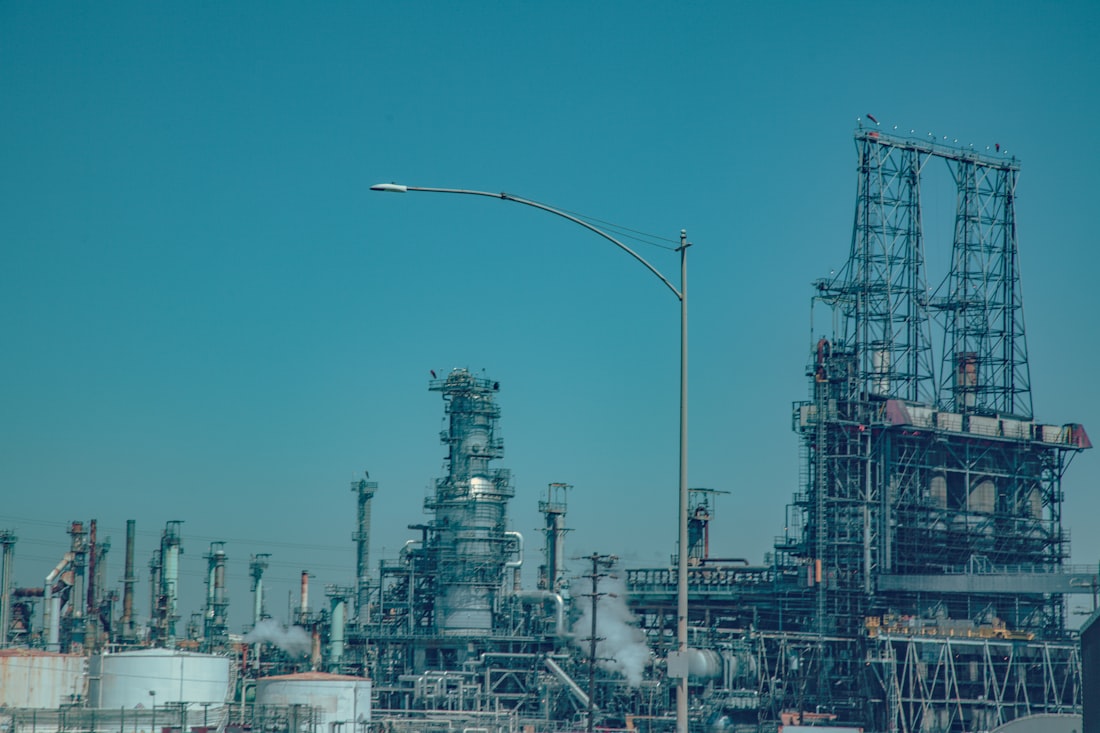
Photo by Unsplash / Unsplash Free License
The conflict has introduced structural volatility into global energy markets. Brent crude, which traded near $75/barrel pre-October 7, 2023, spiked to $95/barrel during peak escalation periods and remains range-bound between $80–90 due to persistent risk premiums. A potential Israeli or US strike on Iranian oil infrastructure — particularly the Kharg Island terminal, which handles 90% of Iranian exports — could remove 1.5–2 million barrels per day from global supply, with analysts projecting a spike to $130–150/barrel in a worst-case scenario.
Houthi attacks on commercial shipping in the Red Sea have forced major carriers to reroute around the Cape of Good Hope, adding 10–14 days to Europe-Asia transit times and raising freight rates by over 200% on key routes. This has amplified inflationary pressures globally, particularly in Europe and South Asia, disrupting just-in-time supply chains across electronics, automotive, and consumer goods sectors. The economic cost of Red Sea disruption has already exceeded $20 billion in rerouting expenses and cargo delays globally.
IV. India's Strategic Exposure: Navigating Competing Pressures

Photo by Sukanya Basu / Unsplash Free License
India finds itself at a uniquely complex inflection point — economically exposed, strategically hedged, and diplomatically constrained. As the world's fifth-largest economy and third-largest oil consumer, India cannot afford to be a passive spectator in this conflict.
Military and Defense Dimensions: India maintains deep defense partnerships with Israel, which is its second-largest defense supplier after Russia. Israeli systems — including Barak-8 air defense missiles, Heron and Harop drones, Spike anti-tank missiles, and Phalcon AWACS — are deeply integrated into Indian Army, Navy, and Air Force inventories. Any prolonged Israeli military attrition, or US pressure on arms pipelines, could impact technology transfers and spares supply chains critical to Indian operational readiness.
Concurrently, India maintains historically significant ties with Iran, including a $400 million equity stake in the Chabahar Port project — India's strategic gateway to Central Asia and Afghanistan bypassing Pakistan. The US has issued waivers for Chabahar given its strategic importance, but the risk of secondary sanctions remains a persistent pressure point for Indian policymakers. India's "Strategic Autonomy" doctrine now faces its stiffest test, as Washington increasingly expects New Delhi to align more explicitly with the Western coalition against Iran.
Energy and Economic Security: India is the world's third-largest oil importer, meeting approximately 85% of crude requirements through imports. The Gulf region — including Iraq, Saudi Arabia, and the UAE — accounts for over 60% of India's crude imports. An escalation-driven oil price spike to $130+/barrel would devastate India's Current Account Deficit (CAD), weaken the Indian Rupee, and re-ignite inflation just as the RBI has brought it near target levels. India's diaspora remittances from the Gulf — approximately $40 billion annually — and its workforce of nearly 9 million expatriates in the region face direct vulnerability. The Red Sea disruption has simultaneously impacted Indian textile, pharmaceutical, and engineering goods exports to European markets, as freight surcharges erode competitiveness.
V. Conclusion: India's Path Forward
The US-Israel-Iran conflict is not India's war — but its consequences land squarely on India's doorstep. New Delhi must pursue a calibrated four-track strategy: First, maintain its defense-industrial relationship with Israel while accelerating domestic indigenization under the Atmanirbhar Bharat initiative; second, protect Chabahar through continued diplomatic engagement with both Washington and Tehran; third, aggressively hedge energy risk through supply diversification and strategic petroleum reserve expansion; and fourth, leverage its position as a neutral interlocutor — as it did during the Russia-Ukraine conflict — to play a constructive diplomatic de-escalation role, enhancing its global standing in the process.
India's strategic moment is not to choose sides, but to demonstrate that in a fragmenting world, a capable, neutral, and economically resilient democracy can shape outcomes — without firing a single shot. The measure of India's foreign policy sophistication over the next 12–24 months will be whether it can preserve its multivector partnerships intact while the Middle East continues to burn.
Tags: US Israel Iran War 2025 | Middle East Conflict India Impact | India Oil Prices 2025 | Red Sea Shipping Disruption | India Israel Defense Relations | India Iran Chabahar Port | India Strategic Autonomy | India Military Analysis | Iran Nuclear Program | Middle East Geopolitics 2025
Disclaimer: This analysis is based on open-source intelligence and geopolitical data available up to January 2025. The situation is rapidly evolving; readers are advised to consult current intelligence assessments and verified news sources for the latest developments. This article does not represent the official position of any government or military organization.
via Blogger https://ift.tt/L6tTXMy
March 31, 2026 at 04:17PM

No comments:
Post a Comment