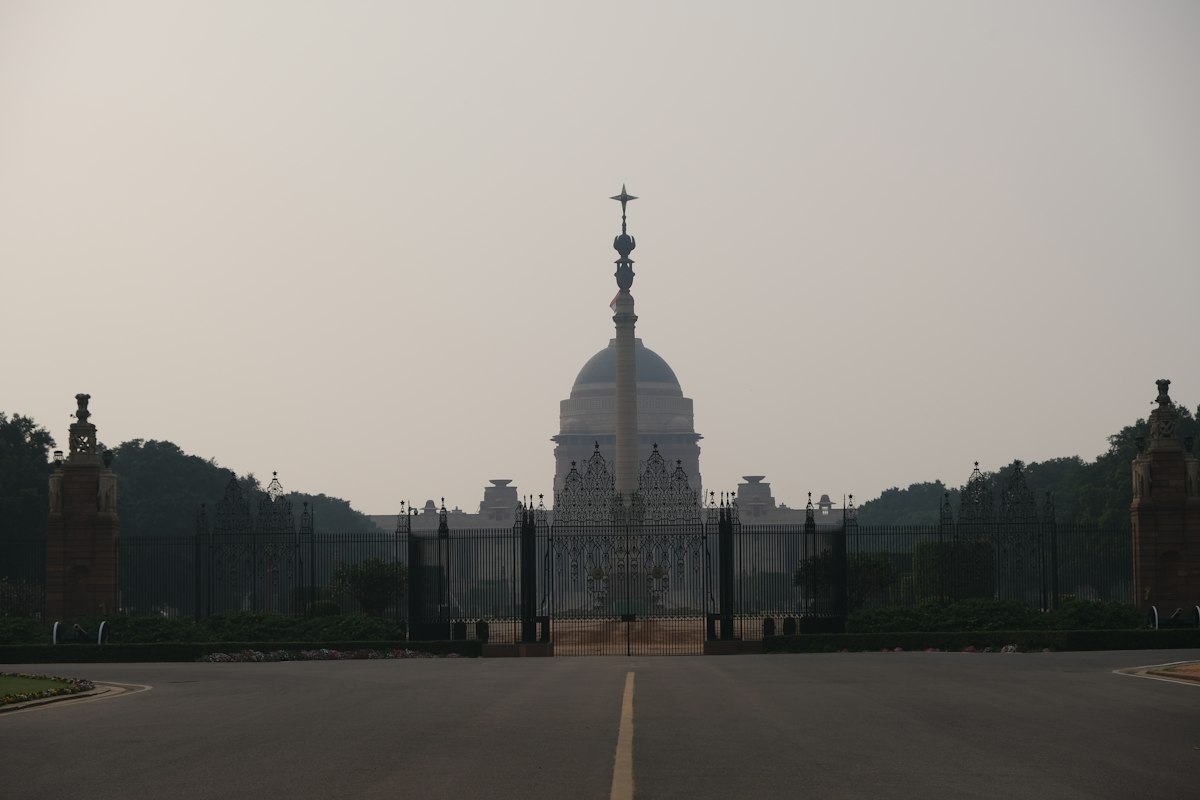
Photo: India Parliament Building | Free image via Unsplash
• Part I: The SC/ST Act – Purpose, Provisions & the Misuse Debate
• Part II: UGC Regulations – Education, Reservation & General Category Grievances
• Part III: Narendra Modi & BJP – Political Future & Challenges
• Part IV: How These Issues Shape India's Political Future
• Conclusion: India at the Crossroads
India at the
Crossroads: SC/ST Act Controversy, UGC Reforms, and the Political Future of
Narendra Modi
An In-Depth
Analysis of India’s Political Landscape | March 2026
India, the world’s largest democracy, finds
itself at a defining political crossroads as it navigates the turbulent waters
of social justice legislation, educational reform, and electoral politics.
Three issues have come to dominate national discourse in recent months: the
ongoing controversy surrounding the Scheduled Castes and Scheduled Tribes
(Prevention of Atrocities) Act, the University Grants Commission’s new
regulatory framework, and the political trajectory of Prime Minister Narendra
Modi and his Bharatiya Janata Party (BJP)-led National Democratic Alliance
(NDA) government. Each of these issues cuts to the heart of questions about
fairness, social equity, governance, and the future of Hindu society in a
rapidly changing India.
Part I: The SC/ST (Prevention
of Atrocities) Act – Purpose, Provisions, and the Misuse Debate
Background and Legislative History
The Scheduled Castes and Scheduled Tribes
(Prevention of Atrocities) Act was originally enacted in 1989, born out of a
grim recognition that India’s constitutionally marginalized communities
continued to face severe discrimination, violence, and humiliation despite
decades of formal legal equality. The Act was a decisive legislative response
to centuries of caste-based oppression — the practice of untouchability, forced
labour, physical violence, and social exclusion that formed the lived reality
of millions of Dalits and Adivasis across the country. The Act was strengthened
significantly by an amendment in 2015 and further reinforced by the Supreme
Court’s reversal of its own controversial 2018 dilution order, following
widespread protests that swept through India. Today, the SC/ST Act remains one
of the most powerful pieces of anti-discrimination legislation in the world,
providing for stringent punishment for a wide range of atrocities committed
against members of these communities.
The Act’s key provisions include
non-bailable arrest of accused persons, special courts for speedy trial, the
shifting of the burden of proof in certain circumstances to the accused, and
protection from anticipatory bail for those charged under the Act. These
provisions were deliberately designed to be stringent, given the historical
pattern of local police and courts being complicit in shielding upper-caste
perpetrators while denying justice to Dalit victims.
The Misuse Controversy

In recent years, a vocal section of Indian
society — predominantly from the upper and general castes — has raised
allegations of widespread misuse of the SC/ST Act. The core complaint is that
the Act’s stringent provisions, particularly the non-bailable arrest clause and
the absence of anticipatory bail, are being weaponized for personal vendettas,
property disputes, professional rivalries, and political scores rather than
genuine cases of atrocity. Several district court judges, legal professionals,
and BJP-affiliated organizations have pointed to data suggesting high acquittal
rates in SC/ST Act cases as circumstantial evidence of fabricated complaints.
Critics argue that the mere filing of a case — even a false one — causes
irreparable harm to the accused, who faces immediate arrest, public
humiliation, career damage, and social ostracism before any judicial
determination of guilt.
The Supreme Court of India stirred a
political firestorm in March 2018 when a two-judge bench, in the Subhash
Kashinath Mahajan case, ruled that there should be a preliminary inquiry before
an arrest under the SC/ST Act and that anticipatory bail should be available to
the accused. The judgment, authored by Justice A.K. Goel, was celebrated by
general category groups as a “safeguard against misuse” but condemned by Dalit
organisations and political parties as a judicial dilution of a hard-won
protection. The nationwide protests — including a Bharat Bandh called by Dalit
organisations that resulted in violence and deaths — demonstrated the depth of
feeling on the issue. Parliament subsequently overturned the Supreme Court’s
dilution through the SC/ST (Amendment) Act of 2018, restoring the original
stringent provisions.

The Counterargument: A Law That Remains
Necessary
Dalit scholars, civil rights activists, and
opposition leaders counter that the narrative of “misuse” is itself a
politically motivated construct designed to weaken a law that genuinely
protects the most vulnerable citizens of India. They point to the National
Crime Records Bureau (NCRB) data, which consistently shows that crimes against
Scheduled Castes and Scheduled Tribes have been increasing — not decreasing —
year on year. They argue that high acquittal rates in SC/ST cases reflect not
false complaints but rather the failures of the criminal justice system:
witness intimidation, police reluctance to properly investigate, hostile
prosecutors, and an overall system that continues to be biased against the poor
and the marginalized. Furthermore, they note that under-reporting of atrocities
is far more pervasive than false reporting. Many Dalit victims never approach
police or courts out of fear of retaliation, social pressure, or a deeply
rooted mistrust of institutions that have historically failed them.
Political Implications

The SC/ST Act debate sits uncomfortably
within the BJP’s political strategy. The party has sought simultaneously to
cultivate Dalit support — recognizing the demographic reality that Scheduled
Castes comprise over 16% of India’s population and are essential to electoral
success — and to respond to the grievances of its upper-caste and OBC base who
feel the law is being weaponized against them. This balancing act has become
increasingly difficult. The 2024 general elections saw a notable erosion of
BJP’s Dalit support base, particularly in Uttar Pradesh, where the Samajwadi
Party made inroads with a coalition of OBC and Dalit voters. The BJP’s response
has been to elevate Dalit faces in its leadership, appoint Scheduled Caste
politicians to high offices, and continue to promote the legacy of Dr. B.R.
Ambedkar, but questions remain about the sincerity of these gestures given the
party’s ideological heritage in the RSS, an organisation that has historically
been associated with upper-caste Hindu orthodoxy.
Part II: UGC Regulations –
Education, Reservation, and the General Category Grievance
The UGC Regulatory Framework
The University Grants Commission (UGC) is
the apex regulatory body for higher education in India, responsible for setting
standards, disbursing grants, and ensuring quality across Indian universities
and colleges. Over the past decade, the UGC has undergone significant
regulatory changes under the direction of the Ministry of Education,
introducing new frameworks for appointments, promotions, and the reservation of
teaching positions in higher educational institutions. These changes have
become a focal point of controversy among general category students and
faculty, many of whom — particularly from the upper-caste Hindu communities —
allege that the new frameworks are structurally discriminatory against them.
The Reservation Debate in Higher Education
India’s reservation policy in educational
institutions has been constitutionally mandated since independence, initially
providing for 22.5% reservation for Scheduled Castes and Scheduled Tribes. The
Mandal Commission’s implementation in 1990 extended an additional 27%
reservation for Other Backward Classes (OBCs), bringing total reservations to
49.5%. The 103rd Constitutional Amendment in 2019 added a further 10%
reservation for Economically Weaker Sections (EWS), which was intended
primarily to benefit upper-caste Hindus who were economically disadvantaged but
did not qualify for SC/ST or OBC reservations. Despite this EWS reservation —
upheld by the Supreme Court in 2022 — general category Hindu communities
continue to express deep dissatisfaction with the overall reservation
architecture.
The UGC’s 2018 notification on reservation
in university faculty positions, which shifted the unit of calculation for
reservation from the department level to the central institution level, was a
particularly contentious development. The original departmental-level
calculation had significantly reduced the number of reserved vacancies in
practice, and the Supreme Court had upheld this interpretation in 2017. The
subsequent legislative and regulatory reversal to the institution-level
calculation restored a larger number of reserved posts for SC/ST/OBC
candidates, leading to protests from general category faculty and academic
associations who argued that meritocracy in higher education was being
compromised.
The National Education Policy and General
Category Concerns
The National Education Policy (NEP) 2020,
one of the Modi government’s flagship reforms, promised a transformative
overhaul of Indian education. While widely praised for its progressive elements
— including a multi-disciplinary approach, emphasis on mother-tongue
instruction, and flexible degree structures — critics from the general category
Hindu community have raised concerns about how UGC regulations implementing the
NEP interact with the reservation framework. Some argue that the expansion of
higher educational access promised by the NEP has been disproportionately
beneficial to reserved category students due to quotas, while the general
category student — often from a middle-class Hindu family that does not qualify
for EWS based on income criteria — finds themselves squeezed out of competitive
institutions despite academic merit.
There are also specific concerns about the
UGC’s regulations on the appointment of Vice-Chancellors and senior academic
positions. New UGC norms issued between 2023 and 2025 have been criticized by
some sections of academia for allegedly prioritising ideological alignment with
the ruling party’s Hindutva worldview through the mechanism of
government-appointed search committees. Conversely, others argue that the new
norms have inadvertently created obstacles for non-reserved category scholars
in a competitive academic job market already squeezed by budget constraints and
a freeze on permanent appointments in many central universities. The result is
a growing sense of alienation among general category Hindu academics who feel
their career prospects are being systematically diminished through a
combination of reservation, contractualisation, and politically driven
appointments.
Is the UGC Framework “Against” General
Category Hindus?
It is important to note that framing UGC
regulations as being “against” general category Hindus requires careful
qualification. The constitutional basis of reservation policy is the principle
of affirmative action — a recognition that centuries of caste discrimination
have created structural disadvantages that cannot be overcome by formal
equality alone. The Supreme Court has repeatedly upheld reservation as a
constitutional imperative, not a form of reverse discrimination. The EWS
reservation specifically addressed some of the economic hardship concerns of
the non-reserved general category. Nevertheless, the perception of unfairness
is politically real and electorally potent. The growing resentment among upper
and middle-class general category Hindus — particularly in states like
Rajasthan, Gujarat, and Maharashtra — has been a factor in electoral contests,
and parties across the spectrum have had to engage with this sentiment. The
demand for a Caste Census (supported by the INDIA Alliance) adds another dimension,
as general category communities fear that any data-driven recalibration of
reservation quotas could further reduce their share of opportunities in
education and government employment.
Part III: Narendra Modi and
the BJP – Political Future and Challenges Ahead
The Modi Era: A Political Assessment
Narendra Damodardas Modi has been the
dominant figure in Indian politics for over a decade. Having transformed the
BJP from a party that lost badly in 2004 and 2009 into an electoral juggernaut
that won commanding majorities in 2014 and 2019, Modi’s third term — secured
after the 2024 general elections — marks both the peak and the beginning of a
new, more complex chapter of his political career. The 2024 elections produced
a significant surprise: while the NDA retained power, the BJP on its own fell
short of a majority, winning 240 seats against the 272 needed for a simple
majority in the Lok Sabha. This forced Modi to rely on coalition partners —
particularly Nitish Kumar’s JDU and Chandrababu Naidu’s TDP — in a way that has
constrained the government’s legislative boldness and introduced new political
dynamics.
Achievements of the Modi Government
The BJP-led government can point to a
substantial list of achievements over its tenure. The abrogation of Article 370
in Jammu and Kashmir in 2019 — fulfilling a decades-old BJP manifesto promise —
remains one of the most dramatic and controversial acts of the government. The
construction and consecration of the Ram Mandir in Ayodhya in January 2024 was
celebrated as the fulfillment of a civilisational aspiration for millions of
Hindus, and its political impact was profound. India has emerged as the world’s
fifth largest economy under Modi’s watch, and the government has invested
heavily in infrastructure: highways, railways, airports, and digital
connectivity have seen transformative expansion. Social welfare schemes such as
Jan Dhan Yojana (financial inclusion), Ujjwala Yojana (free LPG connections for
rural households), Swachh Bharat Mission (sanitation), Ayushman Bharat
(healthcare insurance), and PM Awas Yojana (affordable housing) have reached
hundreds of millions of beneficiaries, particularly in rural India, and are
widely credited with consolidating the BJP’s grassroots support base.
Challenges and Criticisms
However, the Modi government’s third term
has been accompanied by a growing list of unresolved challenges. Unemployment —
particularly youth unemployment — remains India’s most pressing economic
problem. Despite impressive GDP growth figures, job creation has lagged far
behind the pace required to absorb the approximately 10 million young Indians
entering the workforce each year. The agrarian crisis continues, with farmer
protests over minimum support prices for crops and concerns about the
corporatisation of agriculture having periodically disrupted politics, most
dramatically during the massive farmer protests of 2020-2021 that forced the
government to repeal the three farm laws. Inflation, particularly in food
prices, has eroded the purchasing power of ordinary Indians and remains a
source of popular discontent.
Critics also point to concerns about
democratic institutions. The independence of the judiciary, the Election
Commission, the Central Bureau of Investigation (CBI), the Enforcement
Directorate (ED), and the media have all been questioned by opposition parties
and civil society organisations who allege that these institutions have been
weaponized for political purposes. The government’s critics in academia,
journalism, and civil society have faced defamation cases, sedition charges
(under the now-modified Section 124A of the IPC), and ED investigations,
leading international press freedom indices to consistently rank India’s media
environment as highly constrained. The government and BJP supporters, however,
dismiss these criticisms as opposition propaganda and argue that institutional
actions reflect legitimate enforcement of the law.
The Opposition: Strength, Fragmentation,
and the INDIA Alliance
The INDIA (Indian National Developmental
Inclusive Alliance) opposition coalition performed better than expected in the
2024 elections, preventing the BJP from securing a single-party majority. The
Congress party, led by Rahul Gandhi, showed significant revival, winning
approximately 99 seats — a marked improvement over its 2019 and 2014
performances. The Samajwadi Party emerged as the second-largest opposition
force, and various regional parties in Tamil Nadu, West Bengal, and Kerala
continued to hold their ground. However, the INDIA Alliance has struggled to
maintain cohesion between elections, with internal disputes over seat-sharing,
leadership ambitions, and policy differences frequently threatening to fracture
the coalition. Mamata Banerjee’s Trinamool Congress, an original founding
member, distanced itself from the alliance, and various smaller partners have
shown wavering commitment. Without a single credible national alternative to
Modi’s personal charisma and brand, the opposition remains fundamentally
reactive rather than proactively agenda-setting.
State Elections and the BJP’s Electoral
Prospects
State assembly elections between 2024 and
2026 have produced a mixed picture. The BJP has continued to hold power in its
Hindi heartland strongholds — Madhya Pradesh, Rajasthan (regained in 2023),
Chhattisgarh, Haryana, and Uttarakhand — while facing losses in southern states
where it has historically struggled. The Congress party has consolidated its
hold in Karnataka, Telangana, and Himachal Pradesh. The AAP and Congress
continue to compete for Delhi, while Maharashtra politics remains an
extraordinarily complex theatre of shifting alliances. For the BJP, the crucial
battleground remains Uttar Pradesh, where the 2027 assembly elections will be
closely watched as a barometer of Modi’s popularity. The caste arithmetic in UP
— with OBC communities, Dalits, and Muslims constituting the bulk of the
electorate — means the BJP under Chief Minister Yogi Adityanath must constantly
navigate between Hindutva consolidation and broader caste-based coalition
building.
Modi’s Personal Political Brand and the
Succession Question
As of March 2026, Narendra Modi, born in
September 1950, is 75 years old. While he remains physically active and
politically dominant, questions about succession have begun to be discussed in
political circles, even if not openly within the BJP, which has historically
been reluctant to acknowledge any leader as a potential Modi successor. Home
Minister Amit Shah and Uttar Pradesh Chief Minister Yogi Adityanath are
frequently cited as potential successors, representing two distinct strands of
Hindutva politics — Shah’s organisational shrewdness versus Yogi’s
religio-cultural appeal to the Hindu base. The RSS, the ideological parent of
the BJP, will play a decisive role in shaping the post-Modi transition, and its
preferences have not always aligned perfectly with the BJP’s electoral
calculations. The absence of an acknowledged heir apparent remains a structural
vulnerability for the BJP going into the 2029 general elections.
Part IV: The Intersection –
How These Issues Shape India’s Political Future
The SC/ST Act controversy, the UGC
reservation debate, and the political trajectory of the Modi government are not
isolated issues — they are deeply interconnected threads in the fabric of
contemporary Indian politics. Together, they illuminate the central tensions of
a democracy where the aspirations of a historically marginalized majority of
the population — Dalits, Adivasis, OBCs, and minorities — are in constant
negotiation with the interests and identity of the upper and middle-class
general category Hindu, who increasingly feels that the post-independence
social contract has been tilted against them.
The BJP’s political genius has been its
ability to articulate a vision of Hindu unity — a Hindutva umbrella — that
seeks to paper over these intra-Hindu divisions by directing political energy
against a perceived “Other” (Muslims, the Congress “appeasement” narrative, and
“anti-national” forces). This strategy worked brilliantly in 2014 and 2019.
However, the 2024 results suggest that the economic anxieties of Dalits and
OBCs — over jobs, prices, and opportunities — cannot be indefinitely managed
through religious mobilisation alone. The opposition’s success in framing the
2024 election around Constitution-protection, reservation-protection, and
economic justice clearly resonated, particularly among younger, first-time
voters.
The Caste Census Dilemma
One of the most politically explosive
issues in Indian politics as of 2026 is the demand for a comprehensive Caste
Census. The Congress party and the INDIA Alliance have made this a central
demand, arguing that accurate data on the OBC population is necessary to
properly calibrate reservation policy and government programmes. Several
states, including Bihar (under Nitish Kumar’s leadership), have already
conducted their own caste surveys, and the data from Bihar suggests that OBCs
and EBCs (Extremely Backward Classes) constitute nearly 63% of the state’s
population, far exceeding the 27% OBC reservation under the Mandal framework.
If a national caste census produces similar findings across India, it could
create irresistible political pressure for expanding OBC reservation beyond the
current 27%, which would further diminish the share of the general category in
government jobs and educational institutions. The Modi government has been
notably reluctant to commit to a national caste census, wary of the political
Pandora’s box it would open.
Conclusion: India at the
Crossroads
India in 2026 is a nation of extraordinary
dynamism and deep contradiction. It is simultaneously the world’s most populous
democracy and one grappling with profound questions about the nature of its
social contract. The SC/ST Act, for all its controversy, remains an essential
bulwark against a form of discrimination that is far from eradicated. The
solution to its alleged misuse lies not in weakening its protections but in
strengthening the investigative and judicial mechanisms that ensure cases are
genuinely and fairly processed. The UGC’s regulatory framework and the
reservation system in education represent a long-running attempt to correct
historical inequity, and while the grievances of general category Hindus about
educational and employment opportunities deserve serious policy attention, the
dismantling of affirmative action would be a deeply regressive step that
ignores the stark realities of caste discrimination that persist across India.
As for Narendra Modi and his government,
the political future is neither as bright as his most ardent supporters believe
nor as bleak as his harshest critics predict. Modi remains the most
consequential Indian political leader since Indira Gandhi, and his government
has delivered tangible welfare gains to hundreds of millions of Indians. But
the coalition constraints of the third term, the unresolved economic
challenges, the alienation of significant sections of the Dalit and OBC
electorate, and the looming question of succession present real hurdles. The
2029 general election will be fought in a very different India — an India with
a larger, more digitally connected, and more economically aspirational young
electorate that will demand answers to questions of jobs, prices, and equality
of opportunity that go beyond the politics of identity and temple-building.
The true test of Indian democracy will be
whether it can resolve these tensions — between equity and merit, between
historical justice and present aspiration, between national unity and the
legitimate diversity of its people — through dialogue, constitutional
processes, and a commitment to the dignity and opportunity of every Indian
citizen, regardless of caste, religion, or social background. That resolution,
if it comes, will define India’s century.
— End of Article —
✍️ About the Author
Colonel Rajendra Shukla (Retd.) is a retired Indian Army officer, strategic analyst, and political commentator based in New Delhi. He writes on Indian politics, geopolitics, military strategy, and current affairs at Best Information at Shuksgyan. With decades of service experience, he brings a unique defence and governance perspective to complex national issues.
🔗 Related Articles on Shuksgyan
📢 Found this article insightful? Share it with friends and colleagues who follow Indian politics and geopolitics. Subscribe to Best Information at Shuksgyan for more in-depth analysis on Indian democracy, military strategy, and world affairs.
Keywords: SC ST Act 2026, UGC Reforms India, Narendra Modi BJP future, India caste census, Dalit rights India, Indian reservation policy, Indian elections 2024 2026, India democracy analysis, BJP political future, India geopolitics

No comments:
Post a Comment