https://www.profitableratecpm.com/shc711j7ic?key=ff7159c55aa2fea5a5e4cdda1135ce92 Best Information at Shuksgyan

Pages

Monday, July 22, 2024

Recovery of Austrian-made assault rifle "Steyr AUG" from terrorists in Jammu and Kashmir


Implications of recovery of Austrian-made assault rifle "Steyr AUG" from terrorists in Jammu and Kashmir


On 17 July 2024, two foreign terrorists were killed by the Army while thwarting an infiltration attempt across the Line of Control in Keran sector. Steyr AUG assault rifle recovered from the slain terrorists

The recovery of an Austrian-made assault rifle from two foreign terrorists killed in Keran sector of Jammu and Kashmir on 18 July has added a new and complex dimension to the ongoing terrorism in the Union Territory.

The first weapon recovered from a terrorist in Jammu and Kashmir was on 12 September 1988, when terrorists attacked the house of then Deputy Inspector General of Police (DIG) Ali Mohammad Watali in Raj Bagh Residential area of ​​Srinagar city.


A terrorist named Aijaz Dar, resident of nearby Jawahar Nagar area, was killed in retaliatory firing by security personnel outside the DIG's house and an assault rifle was recovered from him. Another senior police officer, Shaikh Owais, was the Srinagar Superintendent of Police (SP) at that time. Mr. Owais also lived in the same area and was one of the first senior officers to arrive at the DIG's residence.


The weapon was not in police service and was not a standard weapon of the army at the time. A meeting of experts convened by the army identified the weapon as a Kalashnikov.


It belonged to the family of assault rifles, also known as the AK platform, AK rifle, or simply AK, based on an original design by Mikhail Kalashnikov. Experts identified the rifle as an AK-47, formally known as Avtomat Kalashnikova, the original weapon of the Kalashnikov rifle family.


It was developed in the Soviet Union in the mid-20th century by Russian small arms designer Mikhail Kalashnikov.


"The name AK-47 stands for Automat Kalashnikova 1947, the year it was first produced. In 1949, the AK-47 became the assault rifle of the Soviet army," the officer said.


Over the years, since 1988, terrorists have begun to use long-range sniper rifles and successor versions of the AK series rifles, such as the AK-54 and AK-74. The years of production of these rifles are indicated, and they have improvements on the original AK-47 version.


Jammu and Kashmir police had not been issued AK series assault rifles till then. To counter enemy firepower, police, paramilitary and army were issued AK series assault rifles later on in addition to Indian made INSAS rifles.


"Possession of AK assault rifles by terrorists proved beyond doubt that they were trained and armed by Pakistani army instructors. Due to Russian presence in Afghanistan and Pakistan's support to Afghan militias, there was virtually no border between the two countries at that time and Pakistan had a large stock of AK rifles," said a senior intelligence official.


As terrorism intensified with the infiltration of foreign mercenaries into Jammu and Kashmir in the mid-1990s, terrorists increasingly used improvised weapons such as AK-54s, AK-74s and under-barrel grenade launchers.


Because the foreign mercenaries were battle-hardened, security forces have had to meet the growing challenge by incorporating semi-special forces and soldiers trained in mountain warfare into their counterterrorism operations in Jammu and Kashmir. "Jammu and Kashmir Police has also undergone major changes in the training of its special forces. They are equipped with modern assault rifles, are proficient in their use and undergo intensive training to develop stamina and concentration. A commitment to eradicate terrorism and establish peace was the preamble to this training," said a senior police official who oversees the physical and weapons training of the local police force.

Biden Drops Out Of Re-election Battle With Trump, Endorses Kamala Harris

 Biden Drops Out Of Re-election Battle With Trump, Endorses Kamala Harris


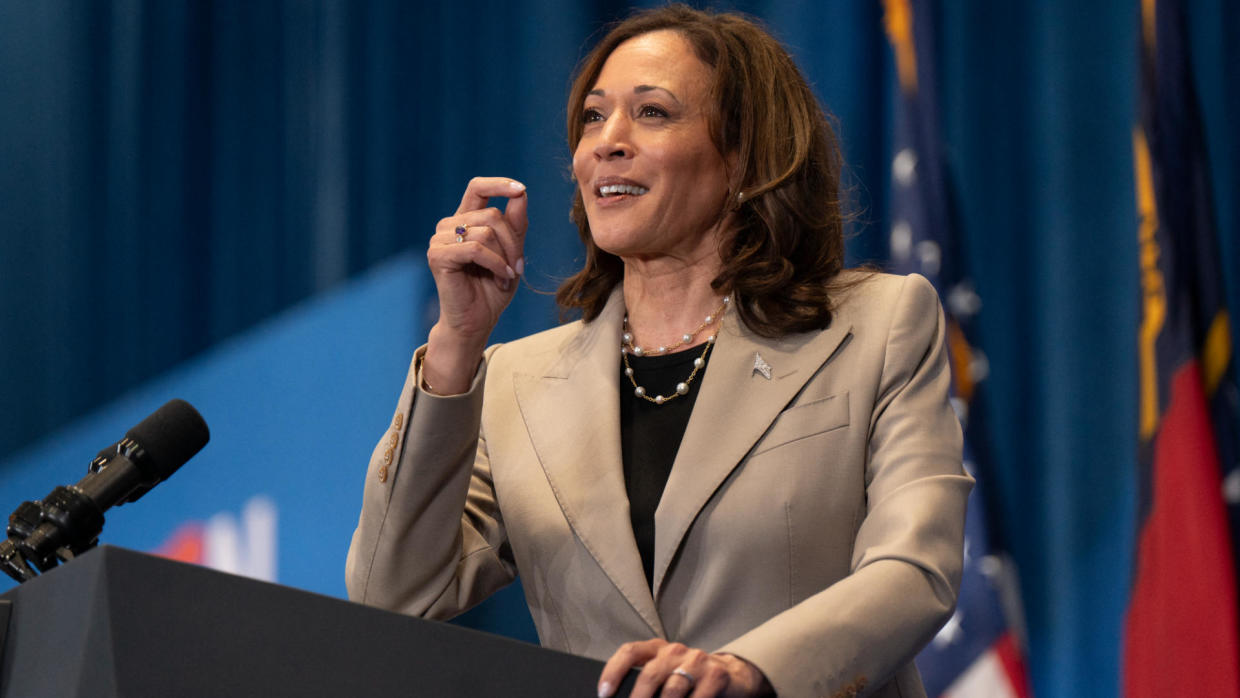
Joe Biden on Sunday dropped out of the US presidential election and endorsed Vice President Kamala Harris as the Democratic Party's new nominee, in a political earthquake that upends an already extraordinary 2024 race for the White House.

Biden, 81, said he was acting in the "best interest of my party and the country" by bowing to weeks of pressure after a disastrous June debate against Donald Trump stoked worries about his age and mental fitness.


The stunning move throws Democrats into fresh turmoil ahead of the November 5 election. But it could also reenergize the demoralized party, with Harris swiftly confirming her goal to become America's first woman president and to "defeat Donald Trump."

Trump reacted with a stream of posts on his Truth Social network, saying that because Biden is not "fit to run" for president, he is also not "fit to serve."


However, the dramatic shift will wrong-foot Republicans, whose campaign was solely focused on Biden and will now instead feature 78-year-old Trump -- the oldest presidential nominee in US history -- up against a far younger opponent.


The move also transforms what had been a highly unpopular and dragging Trump-Biden rematch into one of the most compelling presidential campaigns in modern American politics.


Biden's withdrawal was widely expected at one point. The announcement finally came without warning while he was recovering from COVID-19 at his Delaware beach house. In a letter published on


X, Biden said being president was the "greatest honor of my life." He said he planned to address the nation later this week. The White House later announced that no public events were scheduled for Monday.


"While it has always been my intention to run for reelection, I believe it is in the best interest of the party and the country if I step down and devote the remainder of my term to performing the duties of the presidency," he wrote.


Soon after, he expressed his "full support and endorsement" of Harris, and his campaign filed an official notice changing its name to "Harris for President."


Almost immediately, expressions of support for Harris poured in, not only from Democratic Party officials but also from those seen as potential rivals for the nomination, such as California Governor Gavin Newsom.


Meanwhile, Democratic fundraising group ActBlue reported that Harris had received $27.5 million in donations from small donors in just five hours.


"Unite the Nation"

Democrats must now rush to endorse their new candidate at their party's convention in Chicago on August 19.


Harris, the first Black and South Asian vice president in U.S. history, praised Biden's "selfless and patriotic act" and vowed that Biden will "earn and win." Former Democratic President Barack Obama, who still wields great influence, warned that "uncharted waters" awaited.


Biden's decision came after a period of forced isolation at his Rehoboth Beach home, where he had few family or staff around to consult while recovering from COVID-19.


First Lady Jill Biden responded simply by reposting her statement with two hearts.


In a clear sign of how Republicans will try to portray Harris, Trump's new running mate J.D. Vance said Biden was "the worst president of my lifetime" "every step of the way."


"Mental deterioration"

Biden's decision to step down capped a tense and confusing phase of the US election campaign. Trump survived an assassination attempt at a campaign rally on July 13, but Democrats had been divided for weeks over whether Biden should step down.


He is the first Democrat in U.S. history to have a president withdraw so late into an election campaign.


After the shock of the June 27 debate, Biden resisted calls for his resignation for more than three weeks, during which he often seemed lost and stood with his mouth open.


Meanwhile, Harris struggled to make an impression in her first years in the White House, but performed well on key issues such as abortion during the campaign.


In recent weeks, the Biden team has reportedly been secretly conducting surveys of voters comparing Trump, a former California prosecutor, to a convicted felon.


Biden took office in January 2021, promising to heal the "soul of America" ​​after four tumultuous years under the Trump administration and the shock of the January 6, 2021, storming of the Capitol by his supporters.


Former Vice President Obama, known for his gaffes, strongly supported Ukraine's fight against Russian aggression in 2022 and pushed through a massive COVID-19 recovery plan and historic subsidies for green industries.

Sunday, July 21, 2024

Army chief reviews security situation at PHQ Jammu

Army chief reviews security situation at PHQ Jammu


 Jammu, witnessing spiralling terror activities, Saturday saw two back-to-back crucial high-level security review meetings – chaired by the Lieutenant Governor Manoj Sinha and the Chief of Army Staff (COAS) General Upendra Dwivedi, separately to deliberate on disconcerting scenario and evolve an effective stratagem to take on “new challenges.”

According to the army’s official statement, during a meeting with the Lieutenant Governor, the COAS, while discussing security dynamics, assured a synergetic approach by armed forces and security forces. In the high-level security review meeting chaired by Gen Dwivedi (at PHQ, Jammu), focus remained on thwarting the malevolent design of terrorists and anti national elements in the region.

As per official sources, the strategy evolved, during the first meeting chaired by Gen Dwivedi at PHQ Jammu, was three-pronged – effective plugging of infiltration routes bringing it (infiltration) to zero level; removal of operational flaws with perfect synergy among all security agencies and result-oriented counter-terrorism operations to wipe out terrorists and their eco-system in J&K.

Later in the evening, at Raj Bhawan, during the review meeting chaired by the Lieutenant Governor, the Army Chief and heads of other security agencies briefed him (LG Sinha) about the deliberations held in the earlier meet, steps being taken in counter insurgency operations, multifarious new challenges being faced and the counter-strategy.

Following briefing and reviewing security scenario, LG Sinha directed them to go full throttle to completely annihilate terrorism and their support system with synergised operations and 360 degree security grid in place to check infiltration.

The twin-meetings assumed special significance as they were convened two days after the crucial meet of Cabinet Committee on Security (CCS) headed by the Prime Minister Narendra Modi, followed by Multi Agency Centre (MAC) functioning review meeting on July 19 by the Union Home Minister Amit Shah in the union capital.

This was Army Chief’s second visit to Jammu this month.

“Army Chief Gen Dwivedi had specifically come for the high-level security review meeting, to be participated by all security chiefs at Police Headquarter Jammu. Following the meeting, he was scheduled to meet the Lieutenant Governor Manoj Sinha at Raj Bhawan to brief him about the outcome of the (PHQ) meeting during one-on-one interaction. However, later as the schedule changed and LG Sinha chaired a high-level security review meeting at Raj Bhawan in the evening, Gen Dwivedi participated in it along with the Chiefs of other security and intelligence agencies. Following it, he left for the union capital,” sources stated.

Gen Dwivedi had reached here at around 2.20 pm and directly drove to PHQ Jammu to chair the meeting, which was attended by chiefs of all security and intelligence agencies including IB chief Tapan Deka, RAW chief Ravi Sinha, Director Generals of BSF, CRPF, Director General of Police, J&K R R Swain, ADGP Law and Order Vijay Kumar, ADGP Jammu Anand Jain.

All DIGs and SSPs too attended the meeting, few in person and others virtually.

Later, the Additional Directorate General of Public Information (ADG-PI) summed up the itinerary of the Army Chief’s visit and his engagement in Jammu.

“General Upendra Dwivedi #COAS met Shri Manoj Sinha Hon’ble LG J&K today and deliberated on the prevailing security dynamics in the region. COAS assured the Hon’ble LG J&K on a synergetic approach by Armed Forces and Security Agencies to tackle the present situation and maintain peace and stability in the region,” it posted.

“General Upendra Dwivedi #COAS also chaired a high level ‘Joint Security Review Meeting’ at Jammu focusing on thwarting the malevolent design of terrorists & anti national elements in the region. All stakeholders from Security Forces and Intelligence Agencies, operating in UT of J&K, attended the same,” ADG-PI post read.

Earlier, the Chief of the Army Staff (COAS) General Upendra Dwivedi had chaired a high level joint security review meeting at Nagrota, during his maiden visit to J&K on July 3, to deliberate on security dynamics in the Jammu region, mainly on the LoC.

The deliberations had focussed on the prevailing security dynamics in the region. The security review had underscored the imperative of synergy and seamless coordination between all armed forces and security agencies to maintain peace and stability in the region.

“Focus during today’s meeting was to deliberate on fast-changing security dynamics, assess operational preparedness and evolve an effective stratagem to take on “new challenges” posed by battle-hardened terrorists,” sources said.

“New challenge is multi-fold. New challenges are to find and destroy infiltration routes with effective plugging; to take on battle-hardened terrorists; their advanced weaponry and modern communication devices. It is suspected that among these well trained terrorists, there may be Pak army regulars,” they added.


via Blogger https://ift.tt/BCHREVb
July 21, 2024 at 05:14PM
via Blogger https://ift.tt/wWa6Fpj
July 21, 2024 at 06:13PM

Army chief reviews security situation at PHQ Jammu

Army chief reviews security situation at PHQ Jammu


 Jammu, witnessing spiralling terror activities, Saturday saw two back-to-back crucial high-level security review meetings – chaired by the Lieutenant Governor Manoj Sinha and the Chief of Army Staff (COAS) General Upendra Dwivedi, separately to deliberate on disconcerting scenario and evolve an effective stratagem to take on “new challenges.”

According to the army’s official statement, during a meeting with the Lieutenant Governor, the COAS, while discussing security dynamics, assured a synergetic approach by armed forces and security forces. In the high-level security review meeting chaired by Gen Dwivedi (at PHQ, Jammu), focus remained on thwarting the malevolent design of terrorists and anti national elements in the region.

As per official sources, the strategy evolved, during the first meeting chaired by Gen Dwivedi at PHQ Jammu, was three-pronged – effective plugging of infiltration routes bringing it (infiltration) to zero level; removal of operational flaws with perfect synergy among all security agencies and result-oriented counter-terrorism operations to wipe out terrorists and their eco-system in J&K.

Later in the evening, at Raj Bhawan, during the review meeting chaired by the Lieutenant Governor, the Army Chief and heads of other security agencies briefed him (LG Sinha) about the deliberations held in the earlier meet, steps being taken in counter insurgency operations, multifarious new challenges being faced and the counter-strategy.

Following briefing and reviewing security scenario, LG Sinha directed them to go full throttle to completely annihilate terrorism and their support system with synergised operations and 360 degree security grid in place to check infiltration.

The twin-meetings assumed special significance as they were convened two days after the crucial meet of Cabinet Committee on Security (CCS) headed by the Prime Minister Narendra Modi, followed by Multi Agency Centre (MAC) functioning review meeting on July 19 by the Union Home Minister Amit Shah in the union capital.

This was Army Chief’s second visit to Jammu this month.

“Army Chief Gen Dwivedi had specifically come for the high-level security review meeting, to be participated by all security chiefs at Police Headquarter Jammu. Following the meeting, he was scheduled to meet the Lieutenant Governor Manoj Sinha at Raj Bhawan to brief him about the outcome of the (PHQ) meeting during one-on-one interaction. However, later as the schedule changed and LG Sinha chaired a high-level security review meeting at Raj Bhawan in the evening, Gen Dwivedi participated in it along with the Chiefs of other security and intelligence agencies. Following it, he left for the union capital,” sources stated.

Gen Dwivedi had reached here at around 2.20 pm and directly drove to PHQ Jammu to chair the meeting, which was attended by chiefs of all security and intelligence agencies including IB chief Tapan Deka, RAW chief Ravi Sinha, Director Generals of BSF, CRPF, Director General of Police, J&K R R Swain, ADGP Law and Order Vijay Kumar, ADGP Jammu Anand Jain.

All DIGs and SSPs too attended the meeting, few in person and others virtually.

Later, the Additional Directorate General of Public Information (ADG-PI) summed up the itinerary of the Army Chief’s visit and his engagement in Jammu.

“General Upendra Dwivedi #COAS met Shri Manoj Sinha Hon’ble LG J&K today and deliberated on the prevailing security dynamics in the region. COAS assured the Hon’ble LG J&K on a synergetic approach by Armed Forces and Security Agencies to tackle the present situation and maintain peace and stability in the region,” it posted.

“General Upendra Dwivedi #COAS also chaired a high level ‘Joint Security Review Meeting’ at Jammu focusing on thwarting the malevolent design of terrorists & anti national elements in the region. All stakeholders from Security Forces and Intelligence Agencies, operating in UT of J&K, attended the same,” ADG-PI post read.

Earlier, the Chief of the Army Staff (COAS) General Upendra Dwivedi had chaired a high level joint security review meeting at Nagrota, during his maiden visit to J&K on July 3, to deliberate on security dynamics in the Jammu region, mainly on the LoC.

The deliberations had focussed on the prevailing security dynamics in the region. The security review had underscored the imperative of synergy and seamless coordination between all armed forces and security agencies to maintain peace and stability in the region.

“Focus during today’s meeting was to deliberate on fast-changing security dynamics, assess operational preparedness and evolve an effective stratagem to take on “new challenges” posed by battle-hardened terrorists,” sources said.

“New challenge is multi-fold. New challenges are to find and destroy infiltration routes with effective plugging; to take on battle-hardened terrorists; their advanced weaponry and modern communication devices. It is suspected that among these well trained terrorists, there may be Pak army regulars,” they added.


via Blogger https://ift.tt/BCHREVb
July 21, 2024 at 05:14PM

"No Place We Won't Reach": Israel After Airstrikes 1,800 Km Away In Yemen


Israeli warplanes today struck targets around the Houthi-held Red Sea port of Yemen's Hudaydah, retaliating for a drone attack on Tel Aviv by the Iran-backed rebels that killed a man and exposed a vulnerability in Israeli air defences. The rebels claimed that three people had been killed in the strikes, which triggered a raging fire and plumes of black smoke.

Called Operation 'Outstretched Arm', these strikes are the furthest from the Israel territory ever conducted by their Air Force, the country said. This is the first attack claimed by Israel in the Arabian peninsula's poorest country.

"This operation struck targets 1,800 kilometres from our borders," Prime Minister Benjamin Netanyahu said in a video statement. "It clarifies to our enemies that there is no place where the long arm of the State of Israel won't reach."

Explaining the strikes, the Israel Defence Forces (IDF) in a statement said that it struck targets around the Yemen port as it serves as an "entryway of Iranian weapons for the Houthi terrorist regime and as a significant economic source for them."

"Over the past few months, the Houthis have been operating in order to destabilise the Middle East. The Houthi terror attacks are funded and directed by Iran, harming the maritime freedom in the area, regional ports, the Suez Canal and global trade as a whole," the IDF added.

The Israeli strikes killed three people and wounded 87, the rebel-run health ministry said in a statement carried by Huthi media. The ministry said earlier that most of the wounded had severe burns.

Footage aired by the rebels' Al-Masirah television showed casualties being treated in hospital, many of them bandaged and lying on stretchers in packed rooms.  

A man interviewed by the broadcaster said many of the wounded were port employees. "The city is dark, people are on the streets, petrol stations are closed and seeing long queues," he said.

The Houthis started targeting Israel with drones and missiles shortly after the war between Israeli forces and Hamas in Gaza began in October. None of those attacks are believed to have caused significant damage in Israel until now, with most projectiles being intercepted or failing to reach the country.

#IsraelHamasWar #IDF #Israelairstrikes #IsraeldestroyingHamasTunnels #Gaza #Hezbollah #IslamicTerrorism #USPresident #Biden #IlonMusk #PMModi #Egypt #Lebanon #IronDome #USTroops  #shuksgyan #pmmodi #netanyahu #lebanon  #idf #israelarmy #alshifa  #iraniandrone #Houthyterrorists  #donaldtrump #republicantrump #uspresidentialimmunity #barackobama #isis #moscowattack   #putin   #usa #trumpforpresident #joeretardbiden #idf  #abkobar400paar #narendramodi #bjp370 #Trudeau #canadawithkhalistan #trudeauwithkhalistan #sjaishankar #rafah #israeldestroyrafah #israelitanksinrafah #electioncommissionofindia #eci #evm #elonmusk #georgesorostoolkit 

Bangladesh top court scraps most quotas that caused deadly unrest


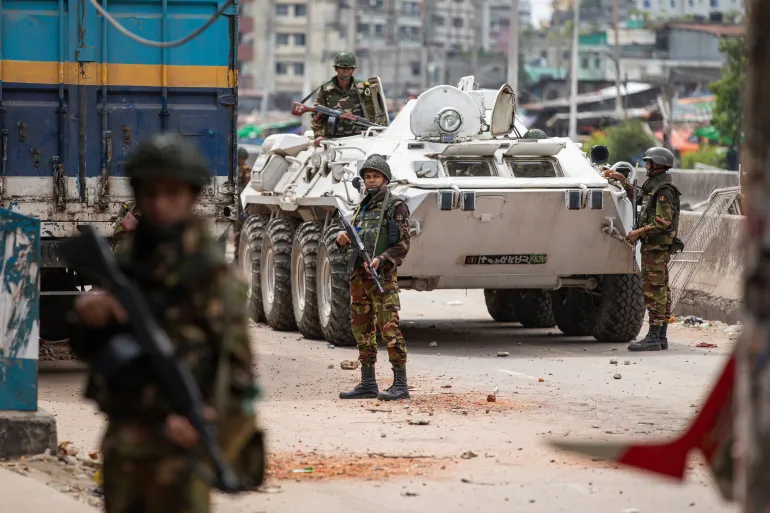
Bangladesh’s Supreme Court has scaled back a controversial job quota system after nationwide unrest over the past week during which more than 100 people were killed, according to local media.

Students have been demanding an end to a controversial quota system that reserved 30 percent of government jobs for descendants of veterans who fought in Bangladesh’s war of independence in 1971. They say the quota favours allies of the governing Awami League party, which led the independence movement against Pakistan.  

The Supreme Court ordered that the quota for veterans’ descendants be cut to 5 percent, with 93 percent of jobs to be allocated on merit. The remaining 2 percent will be set aside for members of ethnic minorities and transgender and disabled people.

Sunday’s verdict comes after weeks of demonstrations – mostly led by students – that turned deadly on Tuesday after groups linked to the Awami League attacked protesters. Campaigners have accused the police of using “unlawful force” against protesters.

Student groups responsible for organising the protests have welcomed the Supreme Court’s decision but decided to press on with demonstrations until their key demands are met, including the release of those jailed and resignations of the officials responsible for the violence.

Curfew and shoot-at-sight orders

Earlier, the government of Prime Minister Sheikh Hasina imposed a curfew, called in the army and gave shoot-at-sight orders to quell the biggest protests since her re-election to a fourth successive term this year.

Since last week, universities have remained shut and Bangladesh has been cut off from the outside world due to a communications blockade. Violence continued to escalate as police used tear gas, fired rubber bullets and hurled smoke grenades to scatter stone-throwing protesters.

Home Minister Asaduzzaman Khan said the curfew, which was imposed before the top court ruling, would be eased for two hours for people to stock up on supplies before continuing for an “uncertain time”.

Army chief reviews security situation at PHQ Jammu


 Jammu, witnessing spiralling terror activities, Saturday saw two back-to-back crucial high-level security review meetings – chaired by the Lieutenant Governor Manoj Sinha and the Chief of Army Staff (COAS) General Upendra Dwivedi, separately to deliberate on disconcerting scenario and evolve an effective stratagem to take on “new challenges.”

According to the army’s official statement, during a meeting with the Lieutenant Governor, the COAS, while discussing security dynamics, assured a synergetic approach by armed forces and security forces. In the high-level security review meeting chaired by Gen Dwivedi (at PHQ, Jammu), focus remained on thwarting the malevolent design of terrorists and anti national elements in the region.

As per official sources, the strategy evolved, during the first meeting chaired by Gen Dwivedi at PHQ Jammu, was three-pronged – effective plugging of infiltration routes bringing it (infiltration) to zero level; removal of operational flaws with perfect synergy among all security agencies and result-oriented counter-terrorism operations to wipe out terrorists and their eco-system in J&K.

Later in the evening, at Raj Bhawan, during the review meeting chaired by the Lieutenant Governor, the Army Chief and heads of other security agencies briefed him (LG Sinha) about the deliberations held in the earlier meet, steps being taken in counter insurgency operations, multifarious new challenges being faced and the counter-strategy.

Following briefing and reviewing security scenario, LG Sinha directed them to go full throttle to completely annihilate terrorism and their support system with synergised operations and 360 degree security grid in place to check infiltration.

The twin-meetings assumed special significance as they were convened two days after the crucial meet of Cabinet Committee on Security (CCS) headed by the Prime Minister Narendra Modi, followed by Multi Agency Centre (MAC) functioning review meeting on July 19 by the Union Home Minister Amit Shah in the union capital.

This was Army Chief’s second visit to Jammu this month.

“Army Chief Gen Dwivedi had specifically come for the high-level security review meeting, to be participated by all security chiefs at Police Headquarter Jammu. Following the meeting, he was scheduled to meet the Lieutenant Governor Manoj Sinha at Raj Bhawan to brief him about the outcome of the (PHQ) meeting during one-on-one interaction. However, later as the schedule changed and LG Sinha chaired a high-level security review meeting at Raj Bhawan in the evening, Gen Dwivedi participated in it along with the Chiefs of other security and intelligence agencies. Following it, he left for the union capital,” sources stated.

Gen Dwivedi had reached here at around 2.20 pm and directly drove to PHQ Jammu to chair the meeting, which was attended by chiefs of all security and intelligence agencies including IB chief Tapan Deka, RAW chief Ravi Sinha, Director Generals of BSF, CRPF, Director General of Police, J&K R R Swain, ADGP Law and Order Vijay Kumar, ADGP Jammu Anand Jain.

All DIGs and SSPs too attended the meeting, few in person and others virtually.

Later, the Additional Directorate General of Public Information (ADG-PI) summed up the itinerary of the Army Chief’s visit and his engagement in Jammu.

“General Upendra Dwivedi #COAS met Shri Manoj Sinha Hon’ble LG J&K today and deliberated on the prevailing security dynamics in the region. COAS assured the Hon’ble LG J&K on a synergetic approach by Armed Forces and Security Agencies to tackle the present situation and maintain peace and stability in the region,” it posted.

“General Upendra Dwivedi #COAS also chaired a high level ‘Joint Security Review Meeting’ at Jammu focusing on thwarting the malevolent design of terrorists & anti national elements in the region. All stakeholders from Security Forces and Intelligence Agencies, operating in UT of J&K, attended the same,” ADG-PI post read.

Earlier, the Chief of the Army Staff (COAS) General Upendra Dwivedi had chaired a high level joint security review meeting at Nagrota, during his maiden visit to J&K on July 3, to deliberate on security dynamics in the Jammu region, mainly on the LoC.

The deliberations had focussed on the prevailing security dynamics in the region. The security review had underscored the imperative of synergy and seamless coordination between all armed forces and security agencies to maintain peace and stability in the region.

“Focus during today’s meeting was to deliberate on fast-changing security dynamics, assess operational preparedness and evolve an effective stratagem to take on “new challenges” posed by battle-hardened terrorists,” sources said.

“New challenge is multi-fold. New challenges are to find and destroy infiltration routes with effective plugging; to take on battle-hardened terrorists; their advanced weaponry and modern communication devices. It is suspected that among these well trained terrorists, there may be Pak army regulars,” they added.

CJI рд╕ूрд░्рдпрдХांрдд рдЬрд╕्рдЯिрд╕ рд╕्рд╡ाрдоीрдиाрдерди рдХे рдкрдХ्рд╖ рдоें рджेрд╢ рдХे рдХाрдмिрд▓ рдкूрд░्рд╡ рдЬрдЬों рдиे рдЙрддрд░ рдХрд░ рд╕ोрдиिрдпा рдЧैंрдЧ рдХे рдмрджрдиाрдо рдХрд░рдиे рдХे рдиैрд░ेрдЯिрд╡ рдХो рдз्рд╡рд╕्рдд рдХрд░ рджिрдпा

CJI рд╕ूрд░्рдпрдХांрдд рдЬрд╕्рдЯिрд╕ рд╕्рд╡ाрдоीрдиाрдерди рдХे рдкрдХ्рд╖ рдоें рджेрд╢ рдХे рдХाрдмिрд▓ рдкूрд░्рд╡ рдЬрдЬों рдиे рдЙрддрд░ рдХрд░ рд╕ोрдиिрдпा рдЧैंрдЧ рдХे рдмрджрдиाрдо рдХрд░рдиे рдХे рдиैрд░ेрдЯिрд╡ рдХो рдз्рд╡рд╕्рдд рдХрд░ рджिрдпा CJI рд╕ू...