https://www.profitableratecpm.com/shc711j7ic?key=ff7159c55aa2fea5a5e4cdda1135ce92 Best Information at Shuksgyan

Pages

Saturday, September 21, 2024

Hezbollah Commander, with $7 Million Bounty, Fatally Struck in Beirut


Hezbollah Commander, with $7 Million Bounty, Fatally Struck in Beirut

Hezbollah reports that 483 of its members were killed by Israel from October 7 in multiple conflicts at the Israel-Lebanon border and in Syria.

Israel confirmed the precise airstrike on Beirut that resulted in the death of Ibrahim Aqil, leader of Hezbollah's Radwan Force, on Friday. The assault struck a gathering of top commanders, resulting in the deaths of a minimum of 14 individuals, which included 10 prominent officials.

Here are key points regarding this significant event:

Aqil, a high-ranking military member of Hezbollah who is sought by the United States for his involvement in the 1983 bombings of the US Embassy and Marine barracks in Beirut, was acknowledged by Hezbollah as a crucial leader. Hezbollah has officially verified his death, hailing him as a notable leader in jihad. The United States had offered a $7 million reward for Aqil's capture due to his role in the 1983 bombings that resulted in the deaths of numerous Americans in Lebanon. Aqil was implicated in the abduction of American and European captives during the 1980s.  

The airstrike targeted Hezbollah's stronghold in southern Beirut, causing extensive destruction such as a large crater and a collapsed high-rise structure. Rescue personnel persisted in combing through the debris in search of any remaining survivors. Hezbollah launched numerous rockets at Israeli military positions in retaliation for the airstrike. 

The death of Aqil is a significant loss for Hezbollah's leadership, particularly given its proximity to the recent death of Fuad Shukr in an Israeli airstrike. Both individuals held prominent positions in Hezbollah's military division and were integral in orchestrating assaults against Israel. 

The airstrike occurred after a series of bombings that occurred over the past week, aimed at disrupting Hezbollah's communication infrastructure and resulting in the casualties of 37 militants. Israeli military authorities have reported that Aqil was fatally shot during a meeting with fellow commanders to strategize future assaults on Israel, including a potential incursion into northern Israeli territories. The Israel Defense Forces (IDF) characterized the gathering as a component of Hezbollah's "Conquer the Galilee" strategy, intended to breach Israeli communities.

The United Nations and neighboring parties voiced apprehension regarding the escalating tensions. Stephane Dujarric, the spokesperson for UN Secretary-General Antonio Guterres, urged all parties to exercise restraint. Iran, a supporter of Hezbollah, strongly condemns the strike and accuses Israel of expanding the scope of the conflict. The attack has been denounced by Iran's foreign ministry as a breach of international law, and Hezbollah has promised retaliation. Israel, nonetheless, justified the operation as essential for safeguarding its national security.

Admiral Daniel Hagari, an Israeli military spokesperson, emphasized Israel's intention to neutralize threats to its citizens without pursuing a wider conflict. The Israel-Lebanon border has seen frequent exchanges of fire between Hezbollah and Israeli forces since the Gaza war commenced in October. The conflict was initiated by Hamas' fatal assault on Israel on October 7, leading to Hezbollah's involvement in the war. 

Hezbollah has initiated rocket assaults on northern Israel, escalating in frequency in recent weeks. Lebanon's Health Ministry confirmed that the attacks resulted in the deaths of 14 individuals and injuries to 66 others, with expectations of a higher casualty toll. Local residents have characterized the bombardment as one of the most intense in recent years.

#IsraelHamasWar #IDF #Israelairstrikes #IsraeldestroyingHamasTunnels #Gaza #Hezbollah #IslamicTerrorism #USPresident #Biden #IlonMusk #PMModi #Egypt #Lebanon #IronDome #USTroops  #shuksgyan #pmmodi #netanyahu #lebanon  #idf #israelarmy   #iraniandrone #Houthyterrorists  #donaldtrump #republicantrump #uspresidentialimmunity #barackobama #isis   #putin   #usa #trumpforpresident #joeretardbiden #idf   #narendramodi  #Trudeau #canadawithkhalistan #trudeauwithkhalistan #sjaishankar #rafah #israeldestroyrafah   #israelitanksinrafah #electioncommissionofindia #eci #evm #elonmusk #georgesorostoolkit #kamalaharris
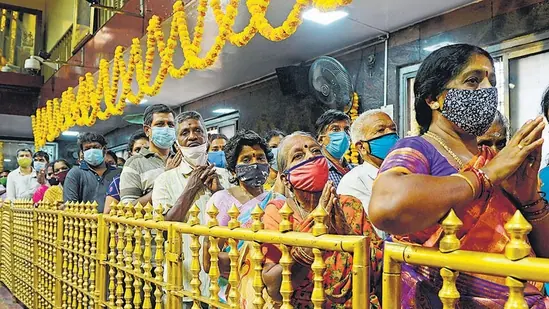

Animal fat' in Tirupati laddus: Supplier of ghee to Balaji temple and reasons for Nandini's withdrawal


'Animal fat' in Tirupati laddus: Supplier of ghee to Balaji temple and reasons for Nandini's withdrawal 


Tirupati laddus controversy: Health minister JP Nadda requested a report from the Andhra Pradesh government and pledged appropriate action upon review. 


The Tirupati laddus controversy has escalated into a significant political debate, with the Tirumala Tirupati Devasthanams supporting Chief Minister N Chandrababu Naidu's statement regarding the presence of animal fat in the renowned 'prasadam'. In contrast, YS Jagan Mohan Reddy of the YSRCP criticized the allegations as "outrageous". 


Amid mounting concerns over the Tirupati laddus issue, the Central government intervened on Friday, as Union Health Minister JP Nadda sought a report from the Andhra Pradesh government and assured suitable action following a thorough assessment. The Food Minister, Pralhad Joshi, has requested an inquiry into the accusations. Tirumala Tirupati Devasthanams stated at a press conference in Tirupati that lab tests indicated the presence of animal fat, specifically 'Lard' (pig fat), and other impurities. The executive officer, J Shyamala Rao, mentioned that the board is currently in the process of blacklisting the contractor responsible for supplying 'adulterated' ghee. This statement from TTD follows a lab report presented by the ruling Telugu Desam Party (TDP) supporting N Chandrababu Naidu's claim of animal fat being used in Tirupati laddus during the previous YSRCP government. Shyamala Rao further stated that the legal process will commence, highlighting that the suppliers exploited the absence of an in-house testing facility, leading to compromised quality due to the practice of sending samples to external labs at unfeasible rates. He pointed out that suppliers exploited these shortcomings by providing ghee priced between ₹320 and ₹411, deeming this price range unsuitable for delivering pure cow ghee. Despite prior warnings, four ghee tankers from AR Foods were initially found to be of inferior quality. Rao stated that the S-value analysis performed on the sample sent to the reputable NDDB CALF in Anand showed results beyond the standard thresholds, indicating the potential presence of foreign fats like soya bean, sunflower, palm kernel fat, lard, and beef tallow.

Friday, September 20, 2024

US 'Deadly.' Missiles to Stay in the Philippines Indefinitely, China Deems it a Real Security Threat

US 'Deadly.' Missiles to Stay in the Philippines Indefinitely, China Deems it a Real Security Threat


The U.S. has been marked as 'Deadly.' Missiles to Stay in the Philippines Indefinitely, China Deems Them a Real Security Threat


The Philippines has confirmed that the Typhon mid-range missile system will be permanently stationed in the country, a decision which may unsettle China. The United States Army initially deployed the ground-based missile system 'Typhon' in April 2024 during Exercise Balikatan 24 and Exercise Salaknib 24, as tensions between the Philippines and China escalated. 

Despite more than four months passing since its deployment, the lethal system has yet to be removed. The Philippines Army made it clear on September 17 that the Typhon will remain in the country indefinitely. According to Col. Reynaldo Balido Jr., the Deputy Head of the Philippine Army and Head of Public Affairs, the Typhon missile system is currently in use for military training by Filipino troops. Balido stated during a press briefing at Camp Aguinaldo in Quezon City that the system has not yet been removed and training is still ongoing. He emphasized that its withdrawal will only happen after decisions are made by the US and Philippine governments.

The system is currently positioned at an undisclosed location in northern Luzon. This marks the United States' inaugural deployment in the Indo-Pacific region post-Cold War, notably within the first island chain in Asia. The deployment signals the conclusion of an approximately 40-year pause subsequent to the culmination of the US-Soviet Union Intermediate-Range Nuclear Forces (INF) Treaty in 1987. The treaty forbade the production and utilization of ground-launched missiles within the range of 500–5,500 kilometers. Nevertheless, the United States withdrew from the Treaty in 2019 due to purported violations by Moscow and in reaction to China's growing military capabilities, particularly in missile technology.

China has strongly denounced the deployment.

During a meeting at the Shangri-La Dialogue in Singapore, Chinese Defense Minister Dong Jun labeled the deployment as a "significant threat to regional security" in conversations with US Secretary of Defense Lloyd Austin. The Chinese government has called on the Philippines and the US to remove the system, stating that it could lead to an escalation in the arms race.


via Blogger https://ift.tt/QjA6PD5
September 20, 2024 at 03:15PM

US 'Deadly.' Missiles to Stay in the Philippines Indefinitely, China Deems it a Real Security Threat


The U.S. has been marked as 'Deadly.' Missiles to Stay in the Philippines Indefinitely, China Deems Them a Real Security Threat


The Philippines has confirmed that the Typhon mid-range missile system will be permanently stationed in the country, a decision which may unsettle China. The United States Army initially deployed the ground-based missile system 'Typhon' in April 2024 during Exercise Balikatan 24 and Exercise Salaknib 24, as tensions between the Philippines and China escalated. 

Despite more than four months passing since its deployment, the lethal system has yet to be removed. The Philippines Army made it clear on September 17 that the Typhon will remain in the country indefinitely. According to Col. Reynaldo Balido Jr., the Deputy Head of the Philippine Army and Head of Public Affairs, the Typhon missile system is currently in use for military training by Filipino troops. Balido stated during a press briefing at Camp Aguinaldo in Quezon City that the system has not yet been removed and training is still ongoing. He emphasized that its withdrawal will only happen after decisions are made by the US and Philippine governments.

The system is currently positioned at an undisclosed location in northern Luzon. This marks the United States' inaugural deployment in the Indo-Pacific region post-Cold War, notably within the first island chain in Asia. The deployment signals the conclusion of an approximately 40-year pause subsequent to the culmination of the US-Soviet Union Intermediate-Range Nuclear Forces (INF) Treaty in 1987. The treaty forbade the production and utilization of ground-launched missiles within the range of 500–5,500 kilometers. Nevertheless, the United States withdrew from the Treaty in 2019 due to purported violations by Moscow and in reaction to China's growing military capabilities, particularly in missile technology.

China has strongly denounced the deployment.

During a meeting at the Shangri-La Dialogue in Singapore, Chinese Defense Minister Dong Jun labeled the deployment as a "significant threat to regional security" in conversations with US Secretary of Defense Lloyd Austin. The Chinese government has called on the Philippines and the US to remove the system, stating that it could lead to an escalation in the arms race.

Switched-Off Phones, Lithium-Safe Bags! Enhanced Security After Pager Blasts


Switched-Off Phones, Lithium-Safe Bags! Enhanced Security After Pager Blasts

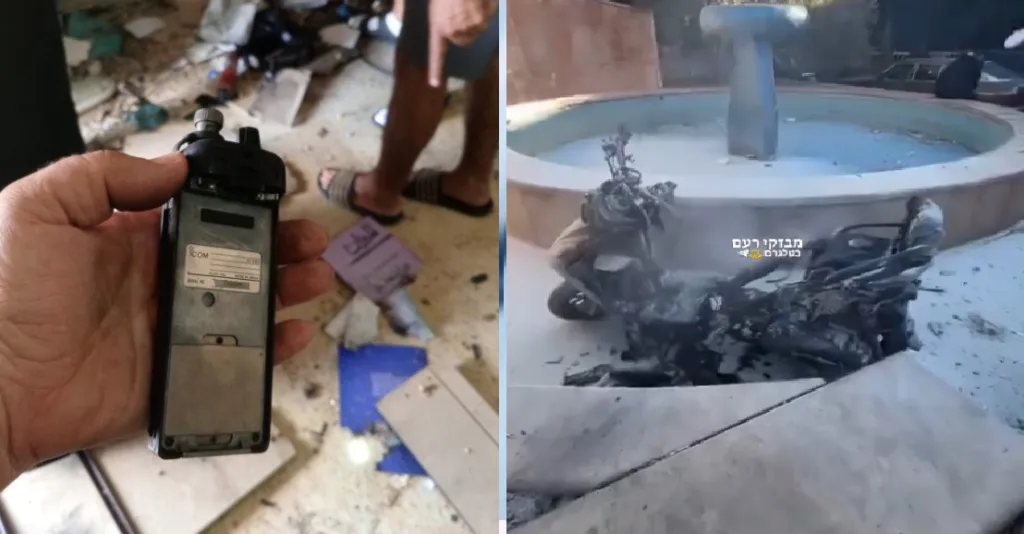
The rapidly evolving digital era, battery-powered gadgets have transitioned from being a mere convenience to becoming essential items. From smartphones and tablets to laptops and wearables, these devices have become essential in our daily routines, even while traveling by air. Recent events and new threats, however, have highlighted a concerning aspect of this convenience that could pose serious risks to air travel safety. The detonation of a Hezbollah leader's pager serves as a stark reminder that no device, regardless of its perceived harmlessness, is completely secure. This piece examines the vulnerabilities of battery-powered devices, the likelihood of exploitation, and the pressing need for improved safety measures in the aviation industry. The Hezbollah Pager Explosion: An Eye-Opener The detonation of a Hezbollah leader's pager was not an isolated occurrence; it was a striking and disquieting demonstration of the potential hazards inherent in the everyday gadgets we depend on. Pagers, once considered advanced communication technology before the era of smartphones, may now appear outdated. However, they still adhere to the foundational design principles shared by numerous contemporary portable electronic devices: they rely on lithium-ion batteries. These batteries are renowned for their exceptional energy density, efficiency, and compact dimensions, making them the prevalent power source in almost all current portable electronics, including smartphones and laptops. However, this event has highlighted a startling truth - apparently safe power sources can turn lethal when tampered with. 

The blast, believed to be caused by a manipulated battery, potentially containing an explosive material such as PETN, highlights a significant weakness in our growingly technology-reliant society. 

It indicates that even seemingly harmless electronic gadgets can be turned into dangerous weapons if misused. The fact that a small pager—something that could easily be overlooked or underestimated—could be rigged to cause such a devastating outcome emphasizes a notable security issue that reaches beyond this specific event. This incident underscores the importance of reevaluating our approach to battery-operated devices, particularly in secure settings such as airports. Up to this point, the emphasis has been on the convenience and utility of these devices. The proliferation of pagers has altered the conversation, leading us to address the potential hazards linked to the extensive adoption of lithium-ion batteries. 


These hazards are especially noticeable in settings where security is of utmost importance, like airports, government facilities, and other high-security zones. 


The message is evident: the ease of portable power carries substantial, frequently underestimated, risks. In a era characterized by widespread technology and increasing need for mobile power, it is essential to remain alert to the potential risks associated with battery-powered devices. The significant ease in which these devices can be altered and used as weapons by individuals with harmful motives should not be overlooked. This event compels us to carefully consider the intersection of our dependence on these technologies and the imperative for robust security measures to manage the accompanying risks. Additionally, the incident underscores the deficiencies in existing security protocols. Airports and other secure locations have made notable progress in detecting and preventing the smuggling of traditional weapons and explosives. However, the concealment of explosives within electronic devices poses a new challenge in terms of security threats. It is concerning that a small quantity of explosive material could be concealed inside a battery without being detected by traditional screening techniques. This requires a reassessment of existing security measures and the creation of more sophisticated screening technologies capable of detecting hidden threats. The wider implications of this occurrence are significant. It necessitates a reevaluation of the design, production, and oversight of battery-powered devices, particularly those intended for sensitive or high-risk settings.


Additionally, it emphasizes the significance of continuous exploration and advancement in battery safety technologies, along with the requirement for increased public knowledge regarding the potential hazards associated with these devices. In brief, the detonation of the Hezbollah leader's pager serves as a poignant reminder and impetus for all individuals and entities engaged in the manufacture, oversight, and utilization of handheld electronic gadgets.

Tirupati laddus controversy: Definition of 'beef tallow' as claimed by Chandrababu Naidu's TDP


Tirupati laddus controversy: Definition of 'beef tallow' as claimed by Chandrababu Naidu's TDP

The issue arises from the alleged utilization of beef tallow, a material produced from rendered fat obtained from beef segments such as rump roast, ribs, and steaks.

A significant dispute emerged in Andhra Pradesh following the assertion by the ruling Telugu Desam Party that "beef tallow," "lard" (pig fat-related), and fish oil were present in the ghee utilized for creating the laddus (sweets) at Tirupati temple.


Chief Minister of Andhra Pradesh, Chandrababu Naidu, accused the previous YSRCP government led by YS Jagan Mohan Reddy of using "animal fat" instead of ghee in the laddus offered at Tirupati shrine. TDP spokesperson Anam Venkata Ramana Reddy presented the lab report during a press conference, asserting that it confirmed the presence of "beef tallow" in the ghee sample provided by Tirumala Tirupati Devasthanams (TTD). "The lab analysis indicated the utilization of beef tallow, animal fat (lard), and fish oil in the production of the ghee distributed to Tirumala, with an S value of 19.7," he stated.

YouTube channel of the Supreme Court of India compromised on Friday, September 20


The official YouTube channel of the Supreme Court of India was compromised on Friday, September 20, with unauthorized videos promoting cryptocurrency being posted. This incident represents a potential security breach on a crucial social media platform used for live streaming significant court cases and matters of public interest.

 The hackers published videos endorsing XRP, a digital currency created by Ripple Labs, a United States-based company. The recordings of the hearings sought by viewers have been made private. Instead, a live video titled 'Brad Garlinghouse: Ripple Responds To The SEC’s $2 Billion Fine! XRP PRICE PREDICTION' has been published. The top court's docket included several priority cases, such as a Public Interest Litigation (PIL) requesting a fixed time limit for the Centre to announce the appointment of judges recommended by the SC Collegium.

The court was also preparing to hear a plea from the Muslim side challenging an Allahabad high court decision that dismissed their objection to the cases filed by Hindu parties regarding the Krishna Janmabhoomi-Shahi Idgah dispute. The channel has recently aired the sensitive suo motu case about the rape and murder of a trainee doctor at RG Kar Hospital in Kolkata.

India at the Crossroads: Reservation Politics, Minority Appeasement, Islamic Terror & Modi's Political Future

India at the Crossroads: Reservation Politics, Minority Appeasement, Islamic Terror & Modi's Political Future India at the Crossroa...