Get Advise on Date of Birth and Remedies
Get Advise on Date of Birth and Remedies
via Blogger https://ift.tt/gT6vxGi
November 21, 2024 at 04:28PM
via Blogger https://ift.tt/k60mBur
November 21, 2024 at 05:13PM
Get Advise on Date of Birth and Remedies
Get Advise on Date of Birth and Remedies
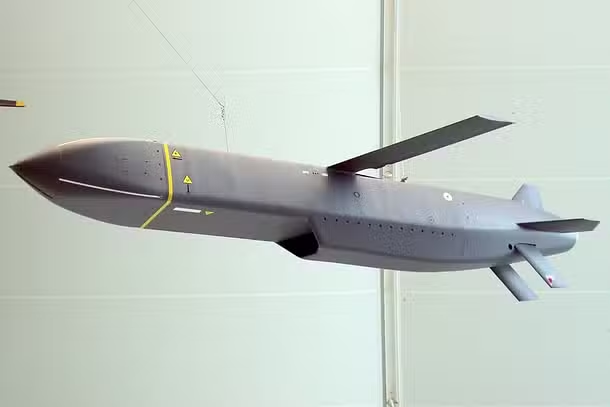
Following US missile strikes, Ukraine has launched British-made 'Storm Shadow' missiles to target military sites deep within Russian territory.
This action represents a significant escalation in the conflict, now in its 1,000th day. The decision to deploy these long-range cruise missiles is believed to be in response to Russia's use of North Korean troops in support of its military operations, a move that Western officials have criticized as a dangerous escalation.
This marks the first time Ukraine has employed British-supplied cruise missiles outside its borders. Previously, the UK had authorized their use only within Ukraine. The decision to allow these missiles to be used against Russian targets is said to be a response to Moscow's increasing reliance on unconventional allies and tactics.
Reports indicate that the missile strikes targeted military locations in Russia's Kursk region and intercepted others over the Black Sea city of Yeysk, as detailed by Russian military-affiliated channels. Just prior to these reported strikes, US President Joe Biden greenlit the use of Army Tactical Missile Systems (ATACMS) by Ukraine to target Russian positions. These US weapons were recently used to attack a Russian arsenal in Bryansk.
While Washington has disregarded Moscow's warnings of nuclear escalation as mere talk, global concerns have been raised by Russia's updated nuclear doctrine. This doctrine allows for a nuclear response to any large-scale aerial assault or threat to Russia's sovereignty, aligning with Putin's efforts to showcase his country's nuclear capabilities.
Ukrainian President Volodymyr Zelenskyy has been actively seeking Western assistance, stressing the importance of targeting Russian logistics hubs for Ukraine's defense. Zelenskyy has criticized previous limitations on the use of advanced Western weapons, arguing that these restrictions have encouraged Moscow to conduct destructive airstrikes on Ukrainian cities.
With Joe Biden's term ending in two months, President-elect Donald Trump has promised to prioritize ending the conflict. However, the specifics of Trump's plan remain unclear, and both sides seem committed to strengthening their positions before potential negotiations.

India’s missile is ranked among the top 10 hypersonic missiles globally. Russia’s Zircon missile is also a hypersonic weapon, capable of travelling 1,000 kilometers at speeds between 9,800 and 11,000 kilometers per hour. Russia has deployed this missile in the ongoing conflict with Ukraine due to its high speed and maneuverability.
India successfully conducted a test-fire of the hypersonic missile LRAShM, boasting a range of 1,500 kilometers and a speed of 11,113 kilometers per hour. India is also in the process of developing the BrahMos-2, expected to reach 600 kilometers in range and speeds of 6,000 kilometers per hour.
Additionally, Russia’s Zircon missile and another hypersonic air-launched ballistic missile, Kinzhal, are formidable with strike ranges of 1,000 and 2,000 kilometers respectively, reaching speeds up to 12,350 kilometers per hour. The U.S. is equipped with the Air-Launched Rapid Response Weapon (AGM-183A ARRW), featuring a range of 1,600 kilometers and a speed of 24,500 kilometers per hour, designed to target high-value objectives.
Russia’s Avangard is a hypersonic glide vehicle with a range of 6,000 kilometers, traveling at a speed of 24,500 kilometers per hour, making it capable of carrying nuclear weapons. Another of Russia’s missiles, RS-28 or Satan-2, may be classified as a ballistic missile but reaches speeds qualifying it as a hypersonic missile, covering a range of 18,000 kilometers at speeds of 24,500 kilometers per hour.
North Korea’s Hwasong-15 is a powerful missile with a range of 13,000 kilometers, reaching speeds of up to 27,000 kilometers per hour. America’s Minuteman-III is an established ICBM missile, operational since 1970, boasting a range of 13,000 kilometers and speeds of 28,300 kilometers per hour.
America’s UGM-133 Trident II is a ballistic missile launched from a submarine, covering up to 12,000 kilometers at maximum speeds of 29,400 kilometers per hour. China’s DF-41 stands out as the fastest and most modernized ICBM, with capabilities of covering distances up to 15,000 kilometers at speeds of 30,625 kilometers per hour.

Maharashtra exit poll results: BJP-led Mahayuti will retain power, predict pollsters
In the Maharashtra assembly election 2019, the BJP won 105 seats, the undivided Shiv Sena won 56 seats, and the undivided NCP won 54 seats.
The ruling BJP-led Mahayuti alliance is predicted to retain power in Maharashtra according to exit polls on Wednesday.
Peoples Pulse exit poll suggests that the BJP-led alliance will secure 175-195 seats, while the Congress-led MVA alliance will win 85-112 seats. Other parties and independents are expected to win 7-12 seats.
Matrize also forecasts a significant victory for the BJP-Shiv Sena-NCP alliance, estimating they will win between 150 and 170 seats. Meanwhile, the Congress-Shiv Sena (UBT)-NCP (SCP) alliance is predicted to claim 110-130 seats. Other parties and independents may secure 8-10 seats.
P-Marq exit poll anticipates a close competition in Maharashtra with the BJP-led alliance potentially winning between 137 and 157 seats. The Congress-led alliance is projected to secure between 126 and 146 seats, while others may win 2-8 seats.
News 24-Chanakya exit poll also suggests a strong victory for the Mahayuti alliance, with the BJP-led coalition likely to win 152-160 seats, and the Congress-led alliance expected to win 130-138 seats.
According to Lokshahi Marathi-Rudra, a tight race is forecast between the two alliances in Maharashtra. The NDA is anticipated to win between 128 and 142 seats, while the INDIA bloc may secure 125-140 seats. Other parties could win 18-23 seats.
In the Maharashtra assembly election 2019, the BJP won 105 seats, the undivided Shiv Sena won 56 seats, and the undivided NCP won 54 seats. The Congress emerged with 44 seats. This election marks the first Maharashtra assembly election following the internal disputes and split within Shiv Sena and NCP.
Millions of people cast their votes in coastal Maharashtra and mineral-rich Jharkhand on Wednesday.
Maharashtra is currently governed by the Mahayuti alliance, which includes the BJP, Shiv Sena, and Ajit Pawar's NCP. On the other hand, the opposition's MVA alliance, consisting of the Congress, Shiv Sena (UBT), and NCP (SCP), aims to overthrow the BJP-led alliance from power.
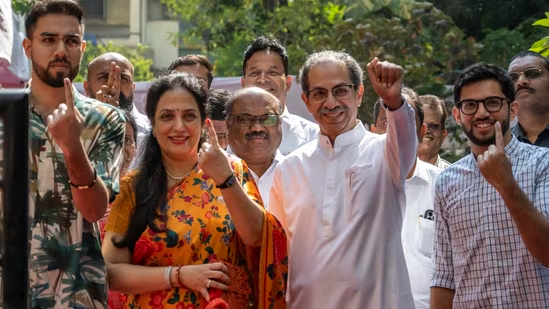
With a voter turnout of 65.02%, Maharashtra has seen its highest participation since the 1995 assembly election. The state recently held elections to select a new 288-member assembly on November 20. This turnout surpasses the figures from previous elections, including the 2024 Lok Sabha elections and the 2019 assembly election. Top celebrities, politicians, and activists made appeals to encourage people to vote, highlighting the Election Commission of India's efforts to ensure a smooth voting process at polling stations.
As reported by the Election Commission of India (ECI) by 11:30pm on Wednesday, Kolhapur had the highest turnout at 76.25%, followed by Gadchiroli at 73.68% and Jalna at 72.30%. In contrast, Mumbai City district, including ten assembly segments, had the lowest turnout at 52.07%. Thane and Mumbai Suburban districts had voter turnouts of 56.05% and 55.77%, respectively, despite having 18 and 26 constituencies each.